Introduction
Good communication helps families trust you and helps children get the right support. This article gives simple, practical steps child care providers and directors can use to share a child’s #progress in ways families understand and value. You will see ideas for daily notes, conferences, screening conversations, and helpful tools. The tips are friendly, respectful, and easy to try.
Why it matters:
1) Families who know how children are doing can join in teaching and practice at home. 2) Early sharing about skills or worries helps children get services faster. For tools and training on family partnerships, see Building Strong Partnerships by ChildCareEd.
Note: state requirements vary - check your state licensing agency when you report progress or refer for services.
How can I make short daily updates families will actually read?
Daily updates should be quick, clear, and specific. Parents like to know mood, meals, naps, and one learning highlight. Use a consistent format so families know where to look.
- Start with a one-sentence snapshot: “Sam was happy at circle time and shared blocks.”
- Include 3 quick parts each day:
- 🙂 Mood & behavior (e.g., calm, social)
- 🍽️ Meals & rest (what they ate, nap length)
- 📚 Learning highlight (new word, block tower, potty step)
- Give one small tip families can try at home (e.g., read a picture book about trucks).
- Use tools and templates like the ChildCareEd Daily Reports guide and the Preschool Daily Report form Buy Now $0.00 to save time.
Best practices:
- Be positive and truthful.
- Keep language simple, avoid jargon.
- Use photos when possible (with family permission).
Daily notes build the bridge for deeper talks later. They show families you notice small wins and care about each child’s #development.
When and how should I share a developmental concern with families?
Talk with families in person whenever you have repeated concerns. Prepare and be kind. Use facts and examples, not labels. For step-by-step tips, see ChildCareEd’s How to Talk to Parents About Developmental Concerns and the CDC training module How to Talk with Parents about their Child’s Development.
- Prepare before the meeting:
- 📄 Collect notes or a milestone checklist done over several days.
- 🔍 Use a screening tool like PEDS or a milestone checklist; see PEDS for guidance.
- In the meeting:
- 🙂 Start with strengths you see.
- 🔈 Share specific examples: “He doesn’t use two-word phrases yet during group time.”
- 🤝 Ask parents what they see at home and invite their ideas.
- Offer clear next steps:
- 📞 Suggest monitoring, a referral, or a screening. Explain the referral path and local supports (Help Me Grow shows a good model: Discussing Developmental Concerns).
- 🗓️ Set a follow-up date to share progress.
Common mistakes to avoid:
- Using scary words like “delay” without explanation.
- Rushing the conversation at drop-off or pick-up.
- Not documenting what you observed and what you discussed.
Be gentle, factual, and team-focused. Parents will trust you more when you show respect and a plan.
What tools and formats show progress best?
Use a mix of tools so families see both day-to-day steps and long-term growth. Combine short notes, portfolios, data, and stories.
- Progress snapshots (weekly or monthly): a 1-page bullet list of skills worked on and next goals. Keep this simple and share in person or by print/email.
- Learning portfolios: collect 3–5 samples a term (drawing, photo of block work, short teacher note). Portfolios show real work and let parents see growth over time. See sample portfolio ideas from 2care2teach4kids and report templates like those at SampleTemplates.
- Assessment + narrative: Use simple data when useful, but always add a short teacher narrative so numbers make sense. Research shows parents need explanation to trust scores; read why in Communicating Progress.
- Checklists and screenings: Use tools like PEDS or milestone checklists to guide conversations and referrals. PEDS explains how to use parent concerns to decide next steps: Introduction to PEDS.
Tips for formats:
- Keep language at a 4th–5th grade level.
- Highlight 1–2 strengths and 1 target skill per note.
- Record dates and brief examples for each skill.
Using mixed tools helps families see both small wins and big changes. This builds trust and keeps your #partnership strong.
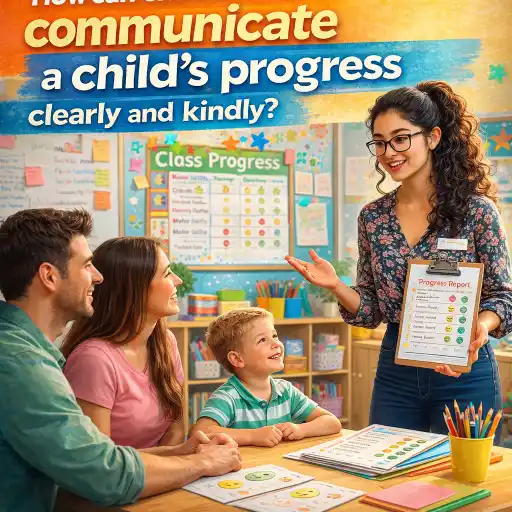
How do I run a respectful and useful parent-teacher conference?
Conferences are a key place to share progress, listen, and plan together. Plan ahead and respect families’ time and culture. Childcare resources like Preschool Plan-It give helpful logistics: Parent Teacher Conferences. ChildCareEd also offers training on hard conversations: Hard Conversations with Parents.
- Before the meeting:
- 📅 Schedule by appointment and tell parents the topic.
- 📋 Send a short pre-conference form asking parents their top 1–2 concerns.
- 🧾 Prepare a 1-page progress summary and two work samples.
- During the meeting:
- 🙂 Start with strengths and a quick positive story.
- 🔁 Share observations and invite the parent’s view.
- 🧭 Use “we” language: plan small steps and who will do each step at home and school.
- ⏰ Keep to the scheduled time and end with clear next steps.
- After the meeting:
- ✍️ Document the meeting notes and agreed actions in your records.
- 📆 Set a follow-up check-in (phone, note, or meeting).
Be culturally responsive. If families speak another language, arrange translation or use visuals. ChildCareEd’s Bridging Cultures  Buy Now $55.00 training helps with this.
Conclusion
Clear, respectful communication about a child’s #development helps families, teachers, and children succeed. Use short daily notes, simple tools, and planned conferences. When concerns arise, prepare, use a checklist, and work with parents as partners. For more tips and templates, see ChildCareEd resources like Building Strong Partnerships and How to Create Effective Daily Reports. And courses like Engaging Families for Child Success Buy Now $55.00, Beyond the Classroom: Connecting Families to Essential Services Buy Now $55.00 , and Bridging Cultures: Family Communication & Collaboration Buy Now $55.00.
FAQ
- How often should I give a progress report? Short daily notes and a monthly or term progress snapshot work well. Use conferences once or twice a year and when concerns come up.
- What if a parent gets upset? Stay calm, listen, repeat their view, and offer next steps. Document the conversation and follow up.
- Can I use apps to send notes? Yes. Digital notes and photos help busy families. Keep privacy rules in mind and get permission for photos.
- Which screening tool should I use? PEDS and milestone checklists are widely used. For deeper clinical screening, refer per local procedures. See PEDS and CDC resources.
Remember to keep your tone warm, factual, and team-focused. Your care and clear communication make a big difference in a child’s life. #communication #families #partnership
- 45 Hour Child Growth and Development
- Easy Steps to Resume and Interview Success
- CDA Family Child Care Credential
- Tracking Progress, Shaping Futures: Observation & Assessment Skills
- CDA Bridge Bundle: Family Child Care
- CDA Bridge Bundle: Family Child Care without Portfolio Review
- Texas Director Credential
- Bridging Cultures: Family Communication & Collaboration
- Supporting Families and Caregivers in Language and Literacy
- CDA Certification en Español: Recursos y Consejos para Educadores Bilingües
- 🔍 ¿Qué ves cuando observas a un niño aprender?
- 10 Ejemplos de Cómo la Cultura Influye en el Desarrollo Infantil
- Capacitación en Salud y Seguridad Preventiva en Línea para Proveedores de Cuidado Infantil
- Regulaciones de Licenciamiento de Cuidado Infantil en California para Centros y Hogares de Cuidado Infantil Familiar
- Proporciones de Cuidado Infantil y Tamaños de Grupo por Edad en Maryland (Guía Rápida para Centros y Hogares)
- Proporciones de Cuidado Infantil y Tamaños de Grupo por Edad en Nueva Jersey (Guía Rápida para Centros y Hogares)
- Proporciones de Cuidado Infantil y Tamaños de Grupo por Edad en Virginia (Guía Rápida para Centros y Hogares)
- Lista para Abrir una Guardería en Casa en Georgia: Cómo Empezar
- Lista para Guardería en Casa en Texas: Cómo Iniciar una Guardería en el Hogar
- Cómo Trabajar en el Cuidado Infantil en Carolina del Norte: Requisitos y Pasos
- Cómo Trabajar en el Cuidado Infantil en California: Requisitos y Pasos
- Cómo Trabajar en el Cuidado Infantil en Wisconsin: Requisitos y Pasos
- Requisitos para Guarderías en Casa en Georgia
- What Communication Skills Does Every Childcare Teacher Need?
- How can Michigan childcare and preschool programs support gifted children?
- Cómo simplificar la capacitación para sus empleados de daycare
- How can child care providers track development without comparing children?
- How Can Providers Notice Developmental Progress Hidden in an Infant’s Daily Routine?
- How Can You Share a Child’s Unfinished Learning Without Calling It Failure?
