Outdoor play is wonderful for young children. It helps them grow strong, learn new words, and explore the world. But plants can sometimes be #poisonous or cause rashes. This short guide helps DC child care directors and teachers spot hazards, prevent expo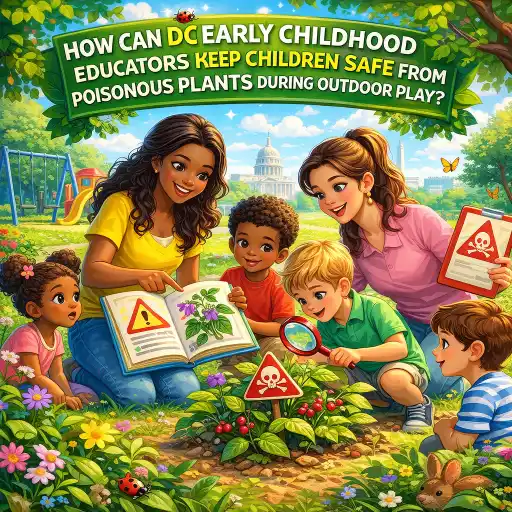 sures, and act fast if a child is exposed. It uses simple steps you can train staff to do every day. For more detailed tools and plant lists, see List of Non-Poisonous Plants for Children and Creating Safe Outdoor Play Environments.
Why this matters
1) Young children explore with their hands and mouths. That makes them more likely to touch or taste a plant.
2) A small routine (identify, remove, teach, supervise) cuts the chance of harm a lot. Use simple daily checks so your whole team feels confident.
How can I identify poisonous plants on a DC playground?
Use a step-by-step approach so identification is simple and repeatable.
- 🔎 Walk the site and list every plant children can reach. Take photos of leaves, berries, flowers, and seed pods.
- 📚 Compare photos to trusted resources like the ChildCareEd plant lists (Lists and Images of Poisoning Plants Buy Now $0.00) and the ChildCareEd guide on safe plants (non-poisonous plants).
- 🌿 Check region-specific lists. For local toxic plant ideas, see regional pages (example: Top Toxic Plants in DC area).
- ⚠️ Remove or block any plant you cannot positively ID as safe. It’s okay to be cautious. Label plants you keep so staff and families know what is safe and what to avoid.
- 🔁 Make ID part of a monthly check. New seedlings, volunteer trees, or garden swaps can add risky plants without you noticing.
Why use these steps? They are practical and fast. When staff can name the plant, they can say yes/no to allowed contact. For quick classroom plant ideas and safe choices, see How to Build a Classroom Garden. Remember: state requirements vary - check your state licensing agency.
What steps stop children from touching or eating dangerous plants during outdoor play?
Prevention combines the environment, rules, and supervision. Use these numbered actions to make the safety routine clear.
- 📍 Map and zone your outdoor area. Mark play zones, garden zones, and staff-only plant beds. Post a simple map where staff sign in (The Outdoor Classroom).
- 🧯 Eliminate reach: pull up or replace poisonous plants, or put a sturdy barrier around them. If removal is not possible, make the area off-limits.
- 🪧 Label plants clearly. Use easy words and pictures for children and quick IDs for staff (name + “Do not eat” or “Safe to touch”). ChildCareEd recommends labeling as a safety and learning tool (non-poisonous plants).
- 👀 Use an active supervision routine: assign zones, move while watching, and do a 1–3 minute hazard scan before each outdoor block (daily hazard scan ideas).
- 🧑🏫 Teach 3 simple rules to children and repeat them: 1) Ask an adult before touching, 2) Do not taste any plant, 3) Wash hands after playing in the garden.
Common prevention supplies: gloves for staff, trowels to remove volunteers, garden labels, and a simple plant ID folder. For more on general outdoor hazards and planning, see Creating Safe Outdoor Play Environments. Use the hashtags in notes and family emails like #outdoor and #safety to help parents find your tips. Keep your message positive: plants are learning tools when adults plan and supervise. This protects curious #children and supports safe nature play for all.
What should staff do if a child touches or eats a poisonous plant?
Act fast, stay calm, and follow a clear step-by-step plan. These are practical steps to train staff on.
- 🩺 If the child is breathing poorly, having seizures, losing consciousness, or swelling of the face/throat — call 911 right away.
- 📞 If the child is alert, call Poison Control at 1-800-222-1222 for immediate guidance. Poison control experts help with most exposures (Poisoning: First Aid).
- 💧 For skin contact with urushiol (poison ivy/oak/sumac): rinse skin with lots of water and soap or dish soap as soon as possible. NIOSH and other guides advise washing quickly to remove the oil (NIOSH poisonous plant facts).
- 👕 Remove contaminated clothing and wash separately. Wash any tools or toys that touched the plant. Urushiol can stay on surfaces for a long time.
- 📋 Document the incident: time, plant involved (if known), what steps you took, who you called, and any actions by medical personnel. Share the info with families and licensing if required.
Simple first-aid tips from health sources: cool compresses, calamine lotion for itching, and when needed, medical care for large rashes or breathing problems (Poison ivy: what to do). Keep a printed emergency flowchart near your first-aid kit. Remind staff that they should not try to make a child vomit or use home remedies without Poison Control advice. For prevention and emergency planning guidance, see Children and Poisoning - Seconds Matter.
How can programs train staff and work with families to keep outdoor play safe?
Training and family partnerships make safety steady, not accidental. Use short, repeated training and clear family notes.
- 🧑🏫 Run 15–30 minute practice sessions: practice the daily hazard scan, the move-ins for bad weather, and the response steps for plant contact. Use ChildCareEd courses like The Outdoor Classroom to build staff skills.
- 📣 Communicate with families: send a one-page note about your plant rules, what to wear outside, and what you will do if exposure happens. Include the Poison Control number and your emergency plan. Partner with your local library—or tie into Library Lovers' Month—to share age-appropriate books and library programs about plants and nature that reinforce the safety rules at home.
- 🤝 Make a plant policy and post it: who identifies plants, who removes them, and how staff log checks. Add the note to staff files so substitutes follow the same routine.
- 📦 Offer a gear library: lend gloves, boots, rain pants so families can send children ready for messy outdoor play. Programs in other states use gear libraries successfully (Washington outdoor tips).
- ✅ Do short refreshers: monthly plant ID walks, quarterly emergency drills, and quick checks after storms or landscaping work.
State and local rules matter: state requirements vary - check your state licensing agency. In DC, coordinate with local licensing and parks staff if you plan changes to outdoor planting. When staff and families use shared language and routines, outdoor time becomes safer and more joyful. Teach children plant rules as part of your daily routine so safety becomes a habit, not a lecture. This helps protect curious learners and keeps your program strong.
Conclusion
- 🟢 Do a plant ID and remove unknowns.
- 🟢 Use daily hazard scans and active supervision.
- 🟢 Train staff and tell families the plan.
- 🟢 Know emergency steps: Poison Control 1-800-222-1222 and 911 for severe signs.
Small, repeated routines keep children safe and let them enjoy #outdoor learning with plants. For quick tools and lists to share at staff meetings see ChildCareEd resources: safe plant choices and outdoor hazards guidance.
- 45 Hour Child Growth and Development
- 1,2,3, Eyes on Me: Classroom Safety
- CDA Bridge Bundle: Family Child Care without Portfolio Review
- CDA Bridge Bundle: Infant/Toddler without Portfolio Review
- CDA Bridge Bundle: Preschool without Portfolio Review
- Creating Safe & Healthy Child Care Environments
- Texas Director Credential
- Family Child Care: Building, Premises, and Outdoor Safety
- CDA Certification en Español: Recursos y Consejos para Educadores Bilingües
- Cuáles Son las Señales de Alerta en el Desarrollo Infantil que Todo Educador Debe Conocer?
- ❄️ ¿Qué actividades al aire libre funcionan bien para los niños de Illinois en cada estación? 🌷🍂
- Recursos en Español sobre el Sueño Seguro del Bebé
- ¿Cuáles son las mejores actividades del Día de la Tierra para niños en casa o en el aula?
- 10 Ejemplos de Cómo la Cultura Influye en el Desarrollo Infantil
- Consejos de Supervisión Activa para Salones de Preescolar y el Juego al Aire Libre
- Cómo Trabajar en el Cuidado Infantil en Carolina del Norte: Requisitos y Pasos
- How can DC early childhood educators keep children safe from poisonous plants during outdoor play?
- How can Florida early childhood educators protect children from poisonous plants, bugs, and outdoor hazards?
- How can Washington child care programs keep playgrounds safe from stinging insects, slugs, and harmful plants?
- How can Washington early childhood programs keep children safe from poisonous plants and forest wildlife outdoors?
- How can Oklahoma early childhood educators keep children safe from poisonous plants, spiders, and snakes outdoors?
- How can DC child care programs keep kids safe outdoors from insects, wildlife, and bites?
- How can Florida child care programs keep kids safe from snakes, insects, and harmful plants on the playground?
- Celebrando la amistad en el cuidado infantil durante el Día de los Mejores Amigos
- Canciones, juegos y preguntas de círculo para niños
- What’s Happening Outside? Fall Science Adventures for Preschoolers
- How Can Child Care Providers Make Outdoor Learning Meaningful, Safe, and Inclusive?
