Introduction
Transitions can feel like the hardest part of the day. Small changes—moving from play to #circletime, cleaning up toys, or lining up to go outside—often spark confusion, running, or tears. Good news: simple, practiced steps make those moments calm and predictable. Use clear #routines, short cues, and visuals so children know what comes next and feel safe. For quick ideas and research-based tips, see How Can I Make Transitions and Daily Routines Easier in My Classroom? and Smooth Days Start Here: Schedules & Routines That Really Work.
Why it matters: when transitions go well, you get more teaching time, children gain self-control, and the classroom feels kinder and safer. Keep it simple: one routine at a time, consistent words, and short practice sessions. Also remember: state requirements vary - check your state licensing agency.
How can I make circle time calm and useful for everyone?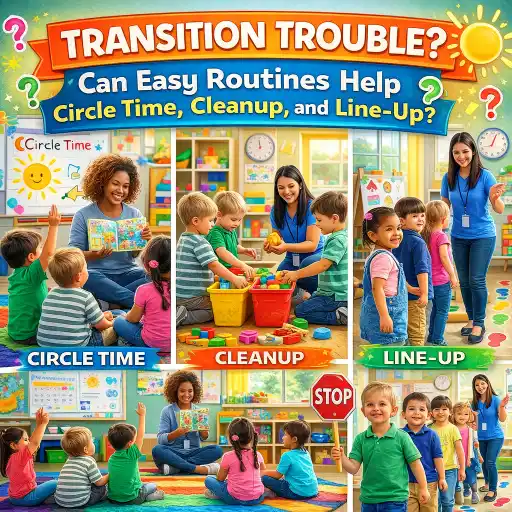
Circle time can set the tone for the whole day. Try a short, predictable routine so children know what to expect and can move from free play to group focus with less upset. First, post a picture of the day’s order at child eye level and review it each morning — this visual cue helps many learners, as explained in How to Create a Classroom Schedule.
Use a consistent attention signal and practice it. For example, teach “1, 2, 3, Eyes on Me” or a short call-and-response. Practice 2–3 minutes at circle time for several days so the cue becomes automatic; ChildCareEd shares playfully effective attention signals in Positive Classroom Management: Attention Signals.
Try a 4-step circle routine:
- 🔔 Warning: give a 2-minute then 30-second reminder.
- 🎵 Signal: use your practiced attention cue once.
- ✅ One clear action: “Sit criss-cross, hands in lap.”
- 👏 Quick praise: name one child who followed instructions.
Keep circle time short and interactive: 5–10 minutes for toddlers, 10–20 for preschoolers depending on age. Use songs, short counting, and one question so children participate. If a child needs extra help, offer a quiet spot near the teacher or an individual visual schedule. For more teaching ideas and scripts, see the ChildCareEd article on attention signals above and their resource on managing transitions How to Handle Transitions Without Meltdowns.
What simple cleanup routines really work?
Cleanup is a big transition each day and a chance to teach responsibility. Make cleanup short, clear, and fun so it doesn’t become a meltdown. Use a consistent cleanup song or cue and teach exact steps. ChildCareEd recommends using the same cleanup routine daily in Smooth Days Start Here.
Try this step-by-step cleanup plan (practice it like a skill):
- ⌛ Advance warning: announce "Two minutes!"
- 🎶 Signal and action: play the cleanup song once, then say the job each child will do.
- 🧺 Assigned task: give every child 1–3 clear tasks (e.g., put blocks in blue bin).
- 🏁 Finish cue: use a final signal to gather on the carpet or at the table.
Use helpers and rotate jobs so children feel ownership. Small groups or table-based cleanups are faster and reduce waiting time. Add visual job cards at each table to support non-readers. Popular classroom tips include using tongs for picking up small items or making cleanup a short contest — both ideas are practical and classroom-tested (see cleanup ideas in the transition activities collection like at Preschool-Plan-It).
Common mistakes and fixes:
- 🚫 Mistake: vague directions. ✅ Fix: give 1–3 specific tasks per child.
- 🚫 Mistake: no warning time. ✅ Fix: always give a 2-minute and 30-second warning.
- 🚫 Mistake: too many choices. ✅ Fix: limit choices to two to help decision-making.
Celebrate quick, calm cleanups with brief praise so children learn the routine is valued. For more printable checklists like end-of-day routines, see ChildCareEd’s End-of-Day Classroom Closing Checklist Buy Now $0.00.
How do I get a quiet, orderly line-up that really works?
Line-up is often where noise and running start. Turning line-up into an earned privilege helps. Try rotating who gets to line up first instead of a fixed order—this gives children motivation to clean up and be quiet. Miss Giraffe’s long-running tips show how changing line order and praising tidy tables speeds transitions (Miss Giraffe's Class).
Use these steps to teach and keep a calm line:
- 🟢 Choose a clear, marked spot for the line (tape, carpet edge, or floor markers).
- 🔁 Make line order earned: praise tidy tables and call them forward.
- 🎯 Teach exact waiting posture: face forward, hands behind back, quiet mouths.
- 🧭 Give short practice drills: 2–3 times each week until it becomes routine.
Use visual reminders and jobs (line leader, door helper) and switch jobs weekly so more children learn the routines. If children get chatty, reset quickly: send the first quiet child up and gently guide others back to their seats to try again—consistency matters. Line-up songs and short chants help too; Little Learning Corner and other online collections offer many transition songs you can adapt (18 Transition Songs).
Tip: never accept rough play or running in line. Use calm, short statements and re-teach the steps. When the group does well, notice specifics: “I like how Mia kept her hands to her sides.” Small, specific praise goes a long way.
How do I teach routines so staff, children, and families stay consistent?
Consistency across adults and clear family communication make routines stick. Start small: pick one routine (circle time, cleanup, or line-up) and practice it daily for 1–2 weeks. ChildCareEd suggests using visual schedules and shared language across staff to support predictability (How to Handle Transitions Without Meltdowns).
Use this 5-step teaching plan:
- 👋 Model: show the exact steps and words.
- 🔁 Practice: do it 3–5 times with the whole group.
- ✅ Coach: give brief, specific feedback to children who try.
- 📷 Visuals: post picture steps and job cards at child height.
- 🤝 Share: tell families one short strategy to use at home (one sentence at pick-up).
Train staff together so everyone uses the same cues and phrases. Use short role-plays in staff meetings and a simple classroom checklist to track fidelity. If a child needs extra support, create an individual picture schedule and involve the family in planning. For evidence-based transition practices, see the CSEFEL brief on helping children make transitions (CSEFEL What Works Brief #4).
Common pitfalls to avoid:
- 📉 Inconsistency across staff — fix by choosing one routine and practicing it together.
- ⏱️ Not planning transition time — fix by building short buffers into your schedule.
- 🗣️ Long lectures to kids — fix by using short, clear directions and practice.
FAQ
- Q: How long should I practice a new routine? A: 1–2 weeks of short daily practice usually shows improvement. Keep reminders afterward.
- Q: What if one child resists every time? A: Use an individual visual schedule, give limited choices, and partner with the family. Involve your director or a behavior coach if needed.
- Q: Can songs really help? A: Yes—songs and signals shorten transitions and hold attention. See song lists at Little Learning Corner.
- Q: Should I change routines mid-year? A: Only if a routine stops working. Re-teach the new routine clearly if you change it.
Conclusion
Start with one small change: pick a consistent signal, post a visual step chart, and practice the routine daily. Use short warnings, specific jobs, and lots of brief praise. These steps reduce meltdowns, grow children’s independence, and give staff more time for teaching. For ready-made resources and trainings you can use right away, explore ChildCareEd’s courses like Every Moment Matters: Schedules and Transitions  Buy Now $55.00 and Moving About the Classroom: Effective Transitions for Everyday Buy Now $35.00. You’re doing important work—small routines practiced kindly will make big, lasting differences for your #children and your day.
- 45 Hour Child Growth and Development
- CDA Home Visitor Subject Area 3 Part 3 Birth to 5
- Moving About the Classroom: Effective Transitions for Everyday
- Birth to Five CDA Credential with Portfolio Review
- Pediatric RSV First Aid & CPR/AED
- Self-Regulation & Change: Helping Children Cope
- Texas Director Credential
- Every Moment Matters: Schedules and Transitions
- Moving About the Classroom: Effective Transitions for Everyday
- Confidence Boosters for Preschoolers
- Can simple indoor movement games teach listening and cooperation to preschoolers in Oklahoma?
- How can visuals, routines, and gentle words support Georgia preschoolers with special needs?
- How can Washington early childhood educators manage classrooms with routines, calm transitions, and choice?
- How can active listening improve care in early childhood settings?
- How can teachers make back-to-school easier for everyone?
- Canciones, juegos y preguntas de círculo para niños
- ABA Classroom Supports for Children with Autism
- Preschool Circle Time Ideas for Learning and Connection
- How Can I Make Transitions in My Preschool Classroom Smooth and Calm?
- How do I build a fall routine that actually sticks in my classroom?
- How can we develop classroom routines that preschoolers can follow?
- How can songs and routines be used to teach emotional skills in early childhood?
- How Can Child Care Programs Help Children Transition from Summer to Structured Routines?
- First Week of Preschool Lesson Plans: 5 Days of Easy Activities and Routines
- Mixed-Age Daycare Schedule: How to Plan a Day for Different Age Groups
- Preschool Schedule That Works: When to Plan Centers, Circle Time, and Outdoor Play
- How Can Child Care Providers Create a Preschool Schedule That Supports Learning and Well-Being?
- How Can Child Care Providers Avoid Power Struggles with Young Children?
- How Can Providers Build Strong Routines That Reduce Challenging Behavior?
