Self-regulation means helping children stop, think, and choose what to do next. Preschool teachers and directors teach these skills every day. In this article you will get clear ideas you can use in your #classroom right away. We explain what self-regulation is, why it matters, simple routines and games to practice, and when to ask for extra help. You will see links to helpful ChildCareEd resources like How to Promote Self-Regulation Skills in Young Children and quick guides on sensory breaks. Use these ideas with families and staff. Remember: state requirements vary - check your state licensing agency.
What is self-regulation and why does it matter?
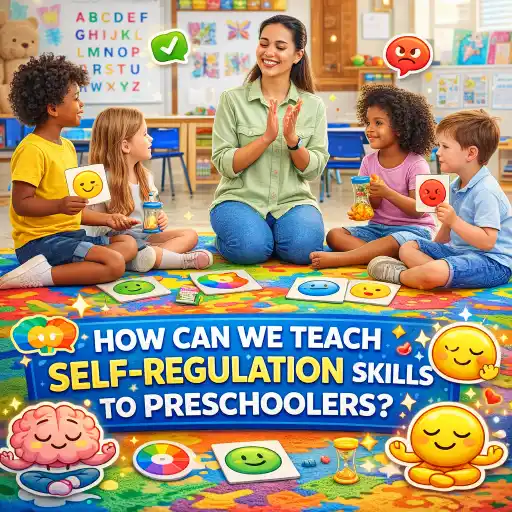
1) Self-regulation is the ability to notice feelings, calm the body, and choose a safe action. For preschoolers this looks like waiting for a turn, using words instead of hitting, or taking a deep breath before answering. ChildCareEd explains these basics in How to Promote Self-Regulation Skills in Young Children.
2) Why it matters:
- Children who learn #selfregulation join group activities and follow directions more easily. See research about early skills and long-term outcomes in the OECD summary on early learning (OECD).
- Self-regulation supports learning and friendships. It helps children calm after big feelings and try again.
- Teaching these skills reduces disruptions and makes the room kinder and safer for everyone.
3) A quick note: young children are still building these skills. They need coaching, practice, and kind adults who model calm. For the seven key principles of building these skills, see Seven Key Principles of Self-Regulation Buy Now $0.00.
How can we teach self-regulation every day in the classroom?
Use simple, repeatable steps you and your team do every day. Try the short order: Connect → Calm → Coach. Practice tools when children are calm, not only during meltdowns. ChildCareEd shows practical classroom routines in How to Promote Self-Regulation Skills and ideas for calm spaces in What simple emotional regulation tools help children ages 2–5?.
- 🧑🤝🧑 Co-regulate: Get down to child level, name the feeling, and breathe together. Model short phrases: "I feel frustrated. Breathe with me."
- 🧰 Teach tiny tools often: balloon breathing, turtle breaths, 5-finger breathing. Practice for 1–2 minutes at circle time so children know them when upset. See short tools at ChildCareEd tools.
- 📅 Use routines and visuals: visual schedules, countdowns, and simple picture rules make transitions smoother. CSEFEL materials on transitions give clear strategies (CSEFEL).
- 💪 Include heavy work: pushing a cart, carrying books, or wall push-ups help bodies calm. See heavy work ideas in Heavy Work Activities Buy Now $0.00.
Teach the plan: 1) Show it, 2) Practice it, 3) Praise the attempt. Keep language short and kind. Use the calm-down area as a choice, not a punishment. For setup tips see sensory breaks and the free Peace Corner tools on ChildCareEd.
What activities and games build self-regulation?
Games teach self-control while children play. Short games build attention, memory, and stopping skills. ChildCareEd lists many classroom games in Executive function in preschool: games.
- 🎵 Freeze Dance — music on, music off. Children stop on cue to practice body control.
- 🚦 Red Light, Green Light — stop/go control and listening practice.
- 🤖 Simon Says — listening, working memory, and rule-following.
- 🧸 Turn-taking with a timer — teaches waiting and fairness. Use short turns at first.
- 💪 Heavy work stations — carry books, push a loaded wagon, or do animal walks to give calming proprioceptive input (Heavy Work Activities Buy Now $0.00).
- 🧘 Short yoga or breathing breaks — 1–3 minutes of guided breathing improves attention. See mindful breathing research summarized in Investigating Emotion Exploration.
Tips:
- Keep games 2–5 minutes.
- Use lots of praise: "You waited! That was hard. Great job!"
- Make changes for children who need shorter or simpler steps. If a child needs screenings or extra support, use tools listed at the Early Childhood Mental Health resource for screening (CECMHC).
When should we get help and how do we avoid common mistakes?
Most children will learn with consistent routines and practice. But sometimes you will need more support. Watch for these signs that a child needs help:
- 🛑 Frequent hurting of self or others.
- 🛑 Meltdowns many times a day or meltdowns that last a long time.
- 🛑 Little change after weeks of consistent supports and practice.
If you see these signs, partner with families, your director, a mental health consultant, or early intervention. Screening tools and referral guidance are available at CECMHC (Finding Social Emotional Screening Tools). For classroom strategies for children with attention needs, see CDC guidance on classroom supports for ADHD (CDC - ADHD in the Classroom).
If you are concerned a child’s persistent low mood or changes in behavior might be depression rather than typical preschool upset, see our guide on subtle signs of depression and local AFSP support for identification tips and community resources.
Common mistakes and fixes:
- 🚫 Mistake: Only teach calming tools during meltdowns. ✅ Fix: Practice tools daily when children are calm (ChildCareEd tools).
- 🚫 Mistake: Using the calm corner as punishment. ✅ Fix: Teach it as a safe choice and rehearse with children.
- 🚫 Mistake: Too many instructions at once. ✅ Fix: Use one short sentence and one choice.
Keep good notes about triggers, time of day, and what helps. Share data with families and specialists. And remember: state requirements vary - check your state licensing agency. If you want more training, explore ChildCareEd courses like Self-Regulation & Change: Helping Children Cope  Buy Now $16.00 and From Tantrums to Triumphs Buy Now $25.00.
Conclusion — Quick takeaways and FAQ
Quick takeaways (short):
- Teach simple tools often: practice breathing, stopping games, and heavy work. #preschoolers #calming #sensory #routine
- Use routines, visuals, and co-regulation. Praise effort.
- Track patterns and ask for help if safety or frequent meltdowns occur.
FAQ (short):
- Q: How long should a calm corner visit be? A: 2–5 minutes to reset, longer only with staff nearby.
- Q: How often should we practice tools? A: Daily short practice (1–3 minutes) builds skills.
- Q: Who should I contact if a child needs more support? A: Family, program director, mental health consultant, or early intervention team.
- Q: Where can I find lesson plans and printables? A: ChildCareEd resources like the Peace Corner and Calm-Down Kit checklists (search ChildCareEd).
You are doing important work. Small, steady steps help children build lasting self-regulation skills. Use the links above for quick tools and training, share wins with your team, and keep practicing.
- Lesson Planning for Preschoolers
- 45 Hours Director-Administration ONLINE
- 45 Hour Preschool Methods and Materials
- 45 Hour Infant and Toddler Methods and Materials
- Pediatric RSV First Aid & CPR/AED
- CDA Bridge Bundle: Preschool without Portfolio Review
- Texas Director Credential
- Moving About the Classroom: Effective Transitions for Everyday
- How can positive guidance help manage big feelings during indoor play in Oklahoma classrooms?
- What Social-Emotional Learning Activities Work Best for Toddlers in Minnesota Classrooms?
- How can child care teams help children manage big emotions?
- Celebrando la amistad en el cuidado infantil durante el Día de los Mejores Amigos
- How can we talk about tornado drills so Oklahoma preschoolers learn without fear?
- How can child care providers support emotional development in toddlers?
- How Can We Teach Self-Regulation Skills to Preschoolers?
- How can child care teams help children manage big feelings?
- Can we tame the ‘monsters’ of big emotions in young children?
- How can preschool teachers teach mindfulness and calm-down skills so young children actually use them?
- How can child care teams best support children during tantrums and emotional outbursts?
- How can daily routines teach self-regulation to young children?
- How Can Staying Calm Help Children Calm Down? Co-Regulation Strategies for Child Care Teams
- How can child care providers teach children to name and manage emotions?
- How Do You Explain Ego to a Child Without Making It Sound Like a Bad Thing?
- Why Are Coping Skills Important for Preschoolers?
- How Can Child Care Providers Help Children Develop Self-Control?
- What Is Co-Regulation and How Can Child Care Teachers Use It?
- How Can Child Care Providers Help Children Develop Self-Control?
