Young #toddlers need simple ways to learn feelings and self-control. In Minnesota classrooms, small, repeatable activities help children name feelings, calm their bodies, and grow trusting relationships. This short guide gives practical ideas you can try tomorrow, links to helpful resources, and reminders about screening and rules. Why it matters: strong early #SEL supports learning, lowers stress, a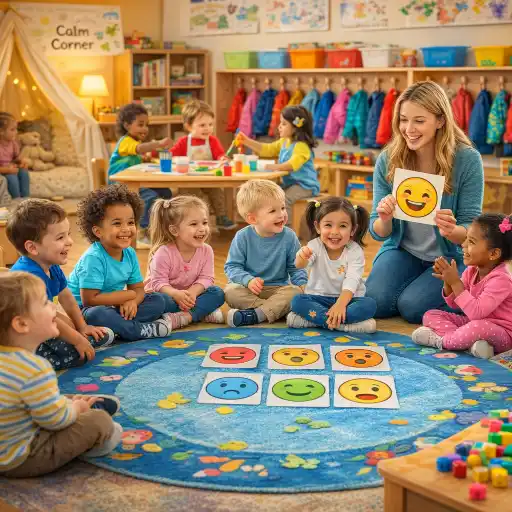 nd helps teachers keep the classroom calm and safe. Use short moments each day to teach words and actions — they add up. Use seasonal hooks—like National Grouch Day activities—to teach handling negative emotions with playful, age-appropriate scripts and humor.
What easy SEL activities can we use with toddlers right away?
Try 1–3 minute, repeatable activities that are playful and predictable. Keep the steps small and use visual supports.
- 📚 Read a feelings book and ask 1 question: “How does this face look?” See more read-aloud ideas at ChildCareEd: Emotions for Kids.
- 🟢 Emotion Check-In: Put 2–3 picture faces low on the wall. Upon arrival, children point to how they feel. For activity ideas, try Emotion Sorting Games.
- 🧱 Play-Doh Faces: Give each child a card and Play-Doh to make a face (happy/sad/mad). ChildCareEd’s free Emotions Playdough Activity shows steps.
- 🕺 Movement Sort: Call a feeling and a movement ("happy — hop!"). Movement helps regulation and keeps toddlers engaged.
Why these work:
- They use play, which toddlers love.
- They teach emotion words and body clues together.
- They are repeatable—practice builds skills.
Common mistakes and how to avoid them:
- ❌ Teaching only when a child is upset → ✅ Practice daily when calm.
- ❌ Too many feeling choices at once → ✅ Start with 2–3 (happy, sad, mad).
How can routines and calm-down spaces teach regulation for toddlers?
Consistent routines and a safe, calm spot help toddlers learn to notice and manage big feelings. Use short, practiced steps and simple language so toddlers can follow along.
- 🧑🤝🧑 Connect → Calm → Coach: 1) Get to child level and reassure, 2) Offer a quick calm tool, 3) After calm, coach one small skill. See practical steps at ChildCareEd: What simple emotional regulation tools help children ages 2–5?.
- 😮💨 Teach 1 breath tool and practice during circle time: bubble breath, balloon breath, or 5-finger breathing.
- 🪑 Calm-Down Area Checklist: soft mat, feeling faces, 2–3 tools (squeeze ball, sensory bottle, small book). Use the Calm Down Strategy Cards Buy Now $0.00 for simple visuals.
- 🔁 Practice when calm: planned 1–2 minute visits, teach what the calm spot is for—never use it as punishment.
Tips for toddlers:
- Keep scripts tiny: “Breathe with me — 1,2,3.”
- Model calm: name your feeling and the tool you use.
- Give choices: “Breathe or squeeze the ball?”
Remember: state requirements vary - check your state licensing agency. For Minnesota programs, follow local safety and sanitation rules when setting up tools and spaces.
How should Minnesota classrooms screen and track social-emotional needs?
Screening and tracking help you spot children who need extra support and connect families to services. Minnesota recommends specific tools and local resources.
- 📋 Use recommended screens: Minnesota’s Dept. of Health lists social-emotional tools like the ASQ: SE-2 and Pediatric Symptom Checklist. These help identify needs early.
- 🔍 Observe daily: use a short social-emotional checklist or the Child Social-Emotional Competence Checklist Buy Now $0.00 to note skills like sharing, waiting, and calming.
- 🤝 Partner with Help Me Grow MN: local milestones and family supports are listed at Help Me Grow MN. This helps link families to services when needed.
- 📈 Track patterns: log triggers, time of day, and what helps. Use data to plan supports or make referrals.
When to get extra help:
- Frequent harming of self/others, long daily meltdowns, or no response to usual tools → share notes with families and seek mental health consultation.
- Use state and local referral pathways—early intervention can help toddlers catch up.
How can we coach staff and involve families to build lasting SEL skills?
Staff and families are the strongest partners in toddler SEL. Training, consistent messages, and family partnership make activities stick.
- 📘 Train staff: Recommend ChildCareEd courses such as Opportunity for Growth: Emotional Development
 Buy Now $16.00 and Turning Behavior Around for Toddlers and Preschoolers Buy Now $25.00. These build skills for guiding toddlers.
 - 🧩 Use the Pyramid Model and CSEFEL strategies to plan universal supports and targeted lessons — see National Center for Pyramid Model Innovations and CSEFEL.
- 📣 Communicate with families: share what you're teaching, give one home practice (2 steps max), and ask about home calming routines.
- 👩👧👦 Respect culture: ask families what feelings words they use at home and include those words in the classroom.
Practical staff coaching tips:
- Model one script each week so staff can practice: e.g., “You look sad. Let’s take a breath.”
- Observe and give 2 positive notes: one praise and one coaching tip.
- Offer short refreshers and share printable tools like calm cards and feeling charts from ChildCareEd.
Summary
1) Use short, playful SEL activities (books, Play-Doh faces, emotion check-ins). 2) Teach simple, calm tools and keep a safe, calm corner. 3) Screen and track using Minnesota-recommended tools and partner with local resources. 4) Train staff and involve families—consistency across school and home builds skills. Your small, steady steps make a big difference for toddlers’ #emotions and learning. For more printable activities and training, visit ChildCareEd resources like Emotions in Motion and the free Playdough activity above.
Quick FAQ for Busy Providers
- Q: How long should a calm corner visit be? A: 2–5 minutes, longer only with staff nearby.
- Q: What if a family disagrees with classroom tools? A: Ask what they use at home, share one reason the tool helps, and offer alternatives.
- Q: How many feeling words should we teach first? A: Start with 2–3 (happy, sad, mad), then add more slowly.
- Q: Where to get lesson plans and printables? A: See ChildCareEd lesson plans, like Social Skills Lesson Plan Buy Now $0.00 and resource pages.
You are doing important work. Small routines, predictable words, and playful practice help toddlers grow into children who can name feelings, calm down, and join friends in play. Keep it simple, steady, and kind.
- CDA Home Visitor Subject Area 3 Part 3 Birth to 5
- Emergent Learning & Development
- Social Foundations and Responsive Classrooms
- From Tantrums to Triumphs: Equipping Preschoolers with Self-Regulation Skills
- Moving About the Classroom: Effective Transitions for Everyday
- Family Child Care Health Essentials
- Baby Play: Planning Infant and Toddler Activities
- CDA Bridge Bundle: Infant/Toddler without Portfolio Review
- Wellness in Action: Teaching Healthy Habits to Children
- Moving About the Classroom: Effective Transitions for Everyday
- Bye Bye Winter: The Role of Outdoor Play in Early Childhood Development
- 🤯 ¿Por qué este niño está teniendo un comportamiento difícil de repente?
- 😅❌ ¿Cómo Puedo Manejar a un Niño que Dice “¡NO!” a Todo en el Aula?
- 😫🧸 ¿Qué hacer cuando un bebé no quiere dormir la siesta en el aula?
- 👧 ¿Cómo iniciar y abrir una guardería en Texas? Lo que necesitas saber
- ¿Cómo explicar los colores a un niño ciego? Actividades con tacto, sonido y emociones
- Ejemplos de Crianza Respetuosa vs. Crianza Permisiva
- Capacitación Previa al Servicio para Proveedores de Cuidado Infantil en Dakota del Norte
- What Social-Emotional Learning Activities Work Best for Toddlers in Minnesota Classrooms?
- How does play shape brain development in children under 5 — what do Minnesota educators need to know?
- Can Toddlers Do STEM in the Sandbox at Minnesota Daycares?
- How can we safely take toddlers on nature walks in Minnesota?
- How Does Temperament Affect How Minnesota Children Learn and Behave?
- Celebrando la amistad en el cuidado infantil durante el Día de los Mejores Amigos
- Canciones, juegos y preguntas de círculo para niños
- How can you turn summer days into learning moments at your Minnesota program?
- Do Toys Come Alive: How Can Pretend Play Spark Creativity in Your Daycare?
- Social-Emotional Activities for 2-Year-Olds: Big Feelings, Little Words, Big Growth
