Introduction
Sensory breaks are short, planned moments when children move, use their senses, or rest to help them calm or refocus. Child care leaders use these breaks to support learning, reduce meltdowns, and teach children how to manage big feelings. Using simple, safe strategies helps your #preschoolers and older kids stay ready to learn. Good resources from ChildCareEd include guides on building self-regulation and creating a calming space, such as How to Promote Self-Regulation Skills in Young Children and Creating a Peaceful Retreat.
1) What exactly are sensory breaks and what do they look like?
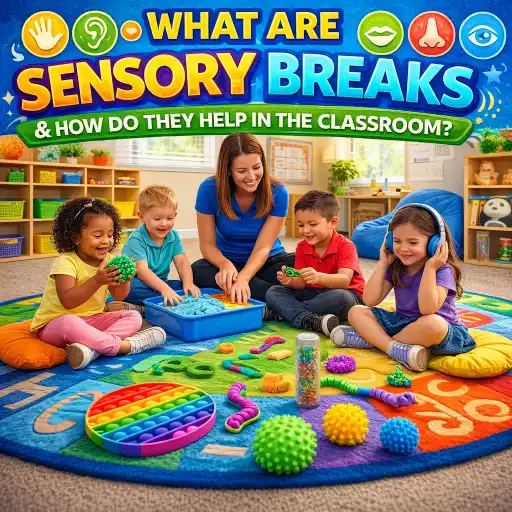
Sensory breaks are short pauses in the day that give children a change of activity and sensory input. They can be:
- 🧘 Breathing or yoga moments (1–3 minutes) to slow the body.
- 🏃 Active movement (running, jumping, animal walks) to use big muscles.
- 🎧 Quiet sensory time with headphones, a soft seat, or a sensory bottle.
- 💪 Heavy-work tasks (carrying books, pushing a cart) to give calming pressure.
These breaks can be whole-group, small-group, or one-on-one. Research and practice show movement just before focused tasks helps children be more on-task, especially after outdoor play or active games — see the findings summarized by the Center for Early Childhood Education (Effects of Outdoor Play on On-Task Behavior) and classroom movement ideas from Growing Hands-On Kids. A calm-down space or "peace corner" is a common place children can choose to go; ChildCareEd explains how to set one up in Creating a Peaceful Retreat.
2) Why do sensory breaks help—why does this matter?
Short answer: sensory breaks change a child’s body state so they can learn and behave better. Here’s why it matters for your #classroom:
- ⚖️ Regulation: Breaks help children move from upset or #wired to calm and ready. ChildCareEd gives practical calming tools and routines in What simple emotional regulation tools help children ages 2–5?.
- 🧠 Attention and learning: Studies show active play before group time raises on-task behavior, especially for boys and children in poverty (Eastern CT research).
- 🤝 Social and emotional skills: Teaching short, repeatable tools (balloon breathing, turtle breaths) builds independence and helps children use words instead of actions. ChildCareEd’s resources on self-regulation explain practice routines and classroom coaching (How to Promote Self-Regulation Skills).
- 🏫 Inclusion: Sensory breaks support children with ADHD, autism, or sensory needs. The CDC and other experts recommend accommodations like breaks and movement to help these learners (see CDC guidance on classroom supports for ADHD: CDC - ADHD in the Classroom).
Why it matters: simple breaks reduce disruptions, protect children’s dignity, and make your daily routines smoother. State requirements vary - check your state licensing agency when adding new materials or spaces.
3) How do you plan and deliver sensory breaks in a busy childcare setting?
Plan breaks so they are predictable, quick, and easy for staff to do. Follow these steps:
- 📅 Schedule: 1) short group brain breaks between circle and table work, 2) active outdoor play before long learning blocks, and 3) quick 30–90 second resets when needed. The Eastern CT study supports placing active play before focused group time (Effects of Outdoor Play).
- 🧰 Build a toolkit: 1) Calm Choice Cards and Calm-Down Kits from ChildCareEd are ready-to-use resources (Calm Choice Cards Buy Now $0.00, Calm-Down Kit Checklist Buy Now $0.00), 2) sensory bottles, fidgets, and a soft rug for a Peace Corner (Peace Corner).
- 👩🏫 Teach and practice: Model tools when children are calm. Use short practice sessions (2–5 minutes) and games like Red Light/Green Light, Freeze Dance, or Simon Says to teach stopping and waiting as advised by ChildCareEd and activity guides like Study.com and Growing Hands-On Kids (tools, ideas).
- 🔍 Supervision & choice: Make sure staff stay nearby and that the calm space is a choice, not a punishment. Use simple rules and visuals for the space (Peace Corner setup).
Quick checklist for staff: 1) keep breaks short, 2) vary movement types (heavy work, vestibular, tactile), 3) teach tools routinely, and 4) document what works. For sensory diet ideas and activity lists see SensorySmarts and Growing Hands-On Kids.
You can also explore From Tantrums to Triumphs: Equipping Preschoolers with Self-Regulation Skills Buy Now $25.00 and Self-Regulation & Change: Helping Children Cope  Buy Now $16.00, since both connect directly to sensory breaks, calming routines, and helping children build self-regulation skills in the classroom. (childcareed.com)
4) How can teams avoid common mistakes and know when to get extra help?
Common mistakes happen but are easy to fix. Here are pitfalls and solutions:
- 🚫 Mistake: Only offering tools during meltdowns. ✅ Fix: Practice tools daily while children are calm. ChildCareEd stresses teaching calming skills during calm moments (Self-Regulation).
- 🚫 Mistake: Using the calm corner as punishment. ✅ Fix: Teach it as a safe choice with clear, posted rules and rehearsals (Peace Corner).
- 🚫 Mistake: Too much visual clutter or over-decorated rooms that distract. ✅ Fix: Keep areas used for focused learning more sparse; use sensory or calm spaces with fewer visuals (APS study).
Signs to get extra help:
- 🛑 Frequent hurting of self or others.
- 🛑 Meltdowns many times a day or no response to tools over weeks.
- 🛑 Sudden big behavior changes after a trauma or change at home.
If you see these, partner with families, your director, a mental health consultant, or early intervention. ChildCareEd lists behavior and mental health resources that programs can use (Resources for Managing Behaviors). Remember: state requirements vary - check your state licensing agency.
Conclusion — Quick takeaways and FAQs
Short takeaways:
- ✅ Plan short, regular #sensory #breaks in your #classroom to support #selfregulation for #children.
- ✅ Teach tools when kids are calm and practice often.
- ✅ Use safe calm corners and simple sensory toolkits; prioritize staff coaching and family collaboration.
FAQ (short):
- Q: How long should a sensory break be? A: 30 seconds to 5 minutes depending on need. Short, targeted breaks work best.
- Q: Who chooses the break? A: Children can choose the calm corner or staff can offer it gently; teach choice first.
- Q: What if a child refuses help? A: Stay nearby, offer a simple choice, and practice tools later when calm.
- Q: Where to find tools and lesson plans? A: ChildCareEd has templates like Calm Choice Cards and Calm-Down Kit Checklists (Calm Choice Cards Buy Now $0.00, Calm-Down Kit Checklist Buy Now $0.00).
You’re doing essential work. Small, consistent sensory breaks give children the chance to learn how to calm themselves and stay ready for learning. Use the links above for quick tools and printable resources, and share what works with your team.
- Turning Behavior Around for Toddlers and Preschoolers
- Moving About the Classroom: Effective Transitions for Everyday
- CDA Home Visitor Subject Area 3 Part 3 Birth to 5
- Art from the Heart for Preschoolers: Open Ended Art Projects that Build Self-Esteem
- Play with Purpose: Supporting Children with Autism
- Diversity, Equity, and Inclusion in Education
- Texas Director Credential
- Anxiety: Signs & Strategies
- Moving About the Classroom: Effective Transitions for Everyday
- Shining a Light on Autism Awareness Month
- CDA Certification en Español: Recursos y Consejos para Educadores Bilingües
- Recursos en Español sobre el Sueño Seguro del Bebé
- Understanding ADHD in Young Children
- ¿Cuáles son las mejores actividades del Día de la Tierra para niños en casa o en el aula?
- Capacitación en Salud y Seguridad Preventiva en Línea para Proveedores de Cuidado Infantil
- Lista para Guardería en Casa en Illinois: Cómo Iniciar una Guardería en el Hogar
- Lista para Guardería en Casa en Texas: Cómo Iniciar una Guardería en el Hogar
- How can child care programs in New York support children with ADHD?
- How can I keep Children Active Indoors On Cold Days?
- How can daily routines teach self-regulation to young children?
- How Can Child Care Providers Understand and Support Sensory Needs in Young Children?
- How can early childhood classrooms become more sensory-friendly?
- How can childcare programs effectively support children with autism?
- How can structure and movement help children with ADHD thrive in your classroom?
- How Can Your Program Effectively Support Autistic Children?
- How Can Child Care Providers Create Sensory-Friendly Learning Spaces for All Children?
- How Can Child Care Providers Create Sensory-Friendly Classroom Spaces?
- How Can One Classroom Support Both Movers and Watchers?
- How Can Child Care Providers Plan an Accessible Field Trip?
