Young children have big feelings in small bodies. This article helps child care providers and directors learn simple, useful steps to support emotional growth in toddlers. You will find easy tools to use right away, ways to teach feelings during the day, signs to watch for, and how to avoid common mistakes. Read, try one idea, and share with your team. For more classroom resources and lesson plans, see Supporting Social and Emotional Development on ChildCareEd.
Why does emotional development matter for toddlers?
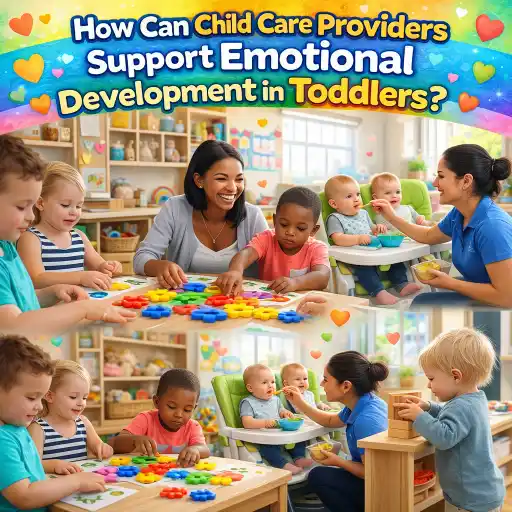
Emotional growth is the base for everything else a child will learn. When toddlers can name feelings, calm down, and get along with others, they can pay attention, follow directions, and join group activities. 1) It helps learning: children who are calmer can listen and try new tasks. 2) It helps friendships: naming feelings and sharing builds trust. 3) It builds lifelong skills: self-control and empathy help later school success. ChildCareEd explains why social-emotional learning matters in classrooms in The Importance of Social-Emotional Development.
Why it matters: toddlers are forming strong brain connections now. Small routines and kind responses from adults shape how children feel about themselves and others. The CDC also recommends sharing milestones and talking with families often — this helps adults spot needs early and celebrate progress (CDC Positive Parenting Tips).
Key hashtags you will see in this article: #emotions #toddlers #selfregulation #caregivers #preschoolers.
How can providers support emotional regulation during the moment and across the day?
- Immediate tools (use in the moment):
- 🔹 Get down to eye level and say, “I’m here.”
- 😮💨 Teach one-breath or balloon breaths — short and repeatable.
- 💪 Offer heavy work: carry a book, push a small cart, or wall presses.
- 🔁 Replace unsafe actions with a safe choice (squeeze toy, stomp).
- 📣 Use one short script: “Breathe with me — 1, 2, 3.”
- Daily practice (help children learn):
- 🎲 Play: Red Light/Green Light, Freeze Dance, Simon Says.
- 🧘 1–2 minute breathing at circle time with visuals.
- 🎵 Short brain breaks between activities to reset energy.
- 📅 Use visual schedules and countdowns to lower worry.
- Set a calm space: a soft rug, feelings chart, 2–4 calm tools (sensory bottle, soft toy). Teach visits when kids are calm and always supervise. See ChildCareEd calm corner ideas and calm tools like Calm Down Strategy Cards Buy Now $0.00.
Remember: state requirements vary - check your state licensing agency for safety and material rules.
How do we teach toddlers to recognize and express their feelings?
- Make naming feelings part of the day:
- 🟡 Arrival check-in: each child points to a feeling face.
- 🔵 Mirror faces: copy happy, sad, mad, scared faces.
- 🟢 Story pauses: ask, “How does this character feel?”
- Use hands-on tools:
- 📘 A simple book like My Book of Emotions Buy Now $0.00 helps teach words.
- 🎴 Feelings match games and playdough faces make learning playful.
- 🧸 Calm kits with a feelings chart help children point when words are hard.
- After calm moments do a short coach talk: 1) What happened? 2) How did you feel? 3) What can we try next? Keep coaching tiny and positive.
When should we ask for extra help and how do we avoid common mistakes?
Most toddlers grow with steady practice, but some need more support. Watch for patterns and ask for help when concerns repeat. ChildCareEd and CSEFEL offer guidance on next steps and planning (CSEFEL What Works Brief).
- Signs to get extra help:
- 🛑 Repeated, long meltdowns many times each day.
- 🛑 Frequent hurting of self or others despite supports.
- 🛑 Little or no response to usual calming tools after weeks.
- Team steps to take:
- 📋 Collect notes: triggers, time of day, what helps.
- 👥 Share observations with families, director, and a mental health consultant.
- 🔗 Use screening and referral tools (see CDC and local early intervention).
- Common mistakes and quick fixes:
- ❌ Mistake: Only teach tools during meltdowns. ✅ Fix: Practice daily when calm.
- ❌ Mistake: Long lectures in the moment. ✅ Fix: One short sentence + one choice.
- ❌ Mistake: Calm space used as punishment. ✅ Fix: Teach it as a safe choice and model use.
If you suspect trauma or deeper needs, partner with families and specialists early. Research shows relationship-focused, trauma-informed supports work best — see implementation findings like the RAND PEDALS report (RAND PEDALS).
Consider inviting families to ChildCareEd's parenting seminars so they learn practical strategies and build consistent approaches between home and the classroom.
Conclusion — Quick steps to try this week
- 🔁 Practice 1 breathing activity daily at circle time.
- 🧰 Set up a simple calm corner with a feelings chart and one sensory tool.
- 📝 Start a one-line log for any child who has repeated meltdowns (time, trigger, what helped).
- 🤝 Talk with families weekly about small wins and any concerns.
- 📚 For staff training and printable tools, see ChildCareEd courses like Opportunity for Growth: Emotional Development
 Buy Now $16.00 and free resources such as Calm Down Strategy Cards Buy Now $0.00.
You are doing important, steady work. Small routines, kind words, and repeated practice give toddlers the tools they need to manage feelings and join the group. Keep celebrating each small step.
Toddlers need short, steady, and practiced tools. Use the simple order: Connect → Calm → Coach. Try building these into your daily routine so children learn before a meltdown happens. For practical classroom ideas, see ChildCareEd’s guide How can child care providers support emotional regulation.Toddlers need simple words and lots of short practice. Use pictures and games so non-readers can point and show. ChildCareEd explains easy activities in How can we help children recognize and express their feelings?.- 45 Hour Child Growth and Development
- CDA Home Visitor Subject Area 3 Part 3 Birth to 5
- 45 Hour Preschool Methods and Materials
- Bienvenido! Welcoming All Families
- 45 Hour Infant and Toddler Methods and Materials
- CDA Bridge Bundle: Family Child Care without Portfolio Review
- CDA Bridge Bundle: Infant/Toddler without Portfolio Review
- CDA Bridge Bundle: Preschool without Portfolio Review
- Positive Attention: Interactions & Supervision for Infants & Toddlers
- Bye Bye Winter: The Role of Outdoor Play in Early Childhood Development
- CDA Certification en Español: Recursos y Consejos para Educadores Bilingües
- 🔍 ¿Qué ves cuando observas a un niño aprender?
- ¿Cuáles son los pasos, requisitos y opciones en línea para la certificación de 90 horas en cuidado de Infantes/Toddlers en Maryland?
- Proporciones de Cuidado Infantil y Tamaños de Grupo por Edad en Maryland (Guía Rápida para Centros y Hogares)
- Proporciones de Cuidado Infantil y Tamaños de Grupo por Edad en Virginia (Guía Rápida para Centros y Hogares)
- Cómo Ser Maestra de Preescolar en Maryland
- Capacitación CDA gratuita en Illinois
- How can New York childcare providers build self-confidence in toddlers?
- How can songs and routines be used to teach emotional skills in early childhood?
- Sleep Inertia in Toddlers: Why Waking Up Can Trigger Tears and Tantrums
- Social-Emotional Activities for 2-Year-Olds: Big Feelings, Little Words, Big Growth
- How Can Child Care Providers Support Healthy Brain Development in Young Children?
- How Can Child Care Providers Support Healthy Toddler Development?
- How Can Child Care Providers Turn Everyday Routines into Learning Opportunities?
- How Can Child Care Providers Support Infant and Toddler Development?
- What Developmental Milestones Should Teachers Know From Birth to Age 5?
- How Can You Help a Child Hold Two Feelings About the Same Event?
