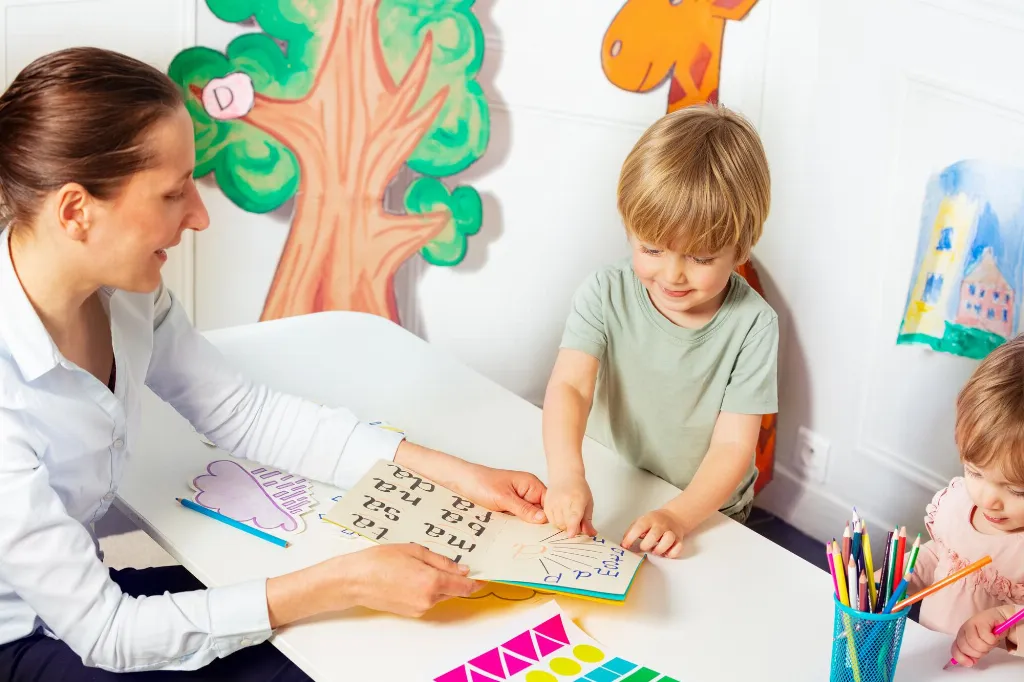
 Young children learn fast. Teachers help that learning every day by supporting a child’s whole self — body, mind, feelings, and words. In this article you will find clear, practical steps to use in your #preschool classroom. We focus on simple routines, play, relationships, and family partnerships to boost #growth #development #play #relationships #language.
What does "whole-child" support look like?
Whole-child support means helping every area of growth. That includes physical health, thinking skills, social-emotional learning, and language. Teachers can plan simple activities that touch several areas at once.
Try these steps:
- 🎯 Offer predictable routines so children feel safe (greet, circle time, choice time).
- 🧩 Use play as teaching — blocks, pretend centers, and games teach thinking and self-control. Read more in CDA and Play-Based Learning and the guide on play-based learning.
- 📚 Build language during every day: name objects, ask open questions, and read aloud often.
- 🤝 Create warm teacher-child connections. One-on-one moments help emotional skills grow. Find ideas in SEL Strategies in Early Childhood Education.
These small steps make a big difference when used every day.
How can teachers use play and routines to help learning?
Play is not just fun — it is how children learn to think, plan, and work with others. Use play to teach skills naturally.
For concrete strategies, lesson ideas, and training focused on using play to boost thinking, language, and self-regulation, see The Play’s the Thing!.
Simple ideas to try:
- 🎭 Set up a dramatic play area (doctor, store, post office). Props help children practice language and roles. See ideas in the dramatic play guide referenced at Dramatic Play and examples from ChildCareEd.
- 🧱 Use building and blocks to teach counting, balance, and problem solving.
- 🎵 Add songs, rhymes, and movement to daily transitions to strengthen memory and vocabulary.
- 📒 Rotate materials and follow children’s interests to keep play rich and meaningful.
Routines support learning: when children know what happens next, they can focus on the learning task. For tips on planning a play-friendly classroom, see Teaching Your Child About Feelings (course list) Buy Now $0.00 and Supporting Whole-Child Development.
How do teachers monitor development and partner with families?
Watching how children play and talk helps teachers notice growth or hard moments. Use checklists, notes, and short observations regularly.
Key steps:
- 📋 Use milestone checklists and note what you see. The CDC’s “Learn the Signs. Act Early.” tools are helpful: Developmental Monitoring and Screening.
- 🗣️ Share observations with families in a strengths-based way: say what the child can do, then suggest next steps.
- 🤝 Offer simple home activities — story ideas, games, or play prompts families can try.
- ⚠️ If you are worried, encourage families to talk with the child’s doctor or local early intervention. State requirements vary - check your state licensing agency.
1) Keep short, clear notes. 2) Use visuals and examples when you talk with families. 3) Respect family culture and routines. For training on observing and assessment, see Practicing Self-Care and Professionalism Buy Now $0.00 and the CDC Watch Me training at Watch Me! Module 1.
How do teachers include children with special needs and support social-emotional skills?
Inclusion and social-emotional learning (SEL) help every child feel they belong. Teachers can adapt activities and use clear supports.
Practical steps:
- 🧾 Make simple accommodations: visual schedules, calm corners, or small groups.
- 📚 Teach feelings and problem solving with stories, scripted social stories, and role play. CSEFEL provides these tools: CSEFEL Strategies.
- 🤗 Use consistent phrases and routines to support regulation (example: Turtle Technique).
- 🔗 Work with specialists, families, and the program director to write goals and supports. Training on inclusion is available at Mastering Inclusive Education.
SEL programs and coaching help teachers feel confident. For program examples and research, read the PEDALS implementation study at RAND and SEL strategies from ChildCareEd. The Pyramid Model provides a tiered approach to support all children: Pyramid Model resources.
Common mistakes — how to avoid pitfalls?
- ⚠️ Waiting too long to share worries. Talk early and kindly with families.
- ⚠️ Too much adult talk. Let children lead play more often.
- ⚠️ One-size-fits-all lessons. Adjust for each child’s pace and needs.
FAQ
- Q: How often should I document milestones?
A: Weekly notes and monthly checklist reviews work well for most classrooms. - Q: What if a family disagrees with my concerns?
A: Listen, share specific examples, offer resources, and suggest talking with the child’s doctor. - Q: Can play teach math and literacy?
A: Yes. Counting games, story-acting, and grocery play all teach academic skills naturally. - Q: Where can I get training?
A: ChildCareEd offers many courses on growth, SEL, inclusion, and play. See courses.
Conclusion
Teachers support children’s growth by combining warm relationships, play-rich learning, clear routines, and family partnerships. Use short observations, simple play ideas, and inclusive supports to reach every child. Keep learning—training and community help you improve.
For practical, course-based tools that match these ideas, explore ChildCareEd resources such as How Can Teachers Support Every Part of a Child’s Development? and Supporting Whole-Child Development. If you are considering formal training or a career pathway, explore the Early Childhood Education for Teachers course to begin your pathway to becoming a preschool teacher.
- 45 Hour Child Growth and Development
- 45 Hour Preschool Methods and Materials
- 45 Hour Infant and Toddler Methods and Materials
- 45 Hour School Age Methods and Materials
- CDA Bridge Bundle: Family Child Care without Portfolio Review
- CDA Bridge Bundle: Infant/Toddler without Portfolio Review
- Classroom Setup for Child Care
- CDA Bridge Bundle: Preschool without Portfolio Review
- Creating Environments that Nurture Growth and Community
- Child Growth and Development
- CDA Certification en Español: Recursos y Consejos para Educadores Bilingües
- Cuáles Son las Señales de Alerta en el Desarrollo Infantil que Todo Educador Debe Conocer?
- ¿Qué es la Certificación de 90 Horas para Cuidado Infantil en Maryland?
- ¿Cuáles son los pasos, requisitos y opciones en línea para la certificación de 90 horas en cuidado de Infantes/Toddlers en Maryland?
- Cómo Ser Maestra de Preescolar en Maryland
- How Teachers Support Children’s Growth and Development
- The Role of Teachers in Child Growth and Development
- How can we develop leadership skills in young children?
- Working in Maryland Child Care: Training, Requirements, and Career Tips
- Are You Ready to Be a Lead Teacher? 7 Signs You’re Prepared to Step Up
- Training for Preschool Teachers: What Should You Take After You Meet the Minimum Requirements?
- 45 Hour Infant and Toddler Certification: Is 45 Hours Enough to Be a Lead Teacher in Maryland?
- What Developmental Milestones Should Teachers Know From Birth to Age 5?
- How Can Child Care Leaders Set Boundaries Between Mentoring and Evaluating a New Teacher?
- What Training Do You Need to Become a Preschool Teacher?
- What Are the Most Important Child Care Training Courses for New Teachers?
- How Can AI Support a Teacher’s Professional Development Plan?
