Young children feel big feelings. As a child care provider or director, you can help them notice feelings, calm down, and try safer choices. This article gives simple, practical ways to teach emotional control. You will find short tools for the moment, ways to practice during the day, how to set up a calm spot, and when to get extra help. Use links to ChildCareEd for free ideas and lesson plans so staff can learn together. Remember: state requirements vary - check your state licensing agency.
Why does helping with emotional regulation matter?
1) It helps kids learn and make friends.
2) It builds skills that children use for life.
Why it matters: Children who can calm themselves can pay attention, follow directions, and feel secure. Teaching simple tools now helps them in preschool and beyond. For practical tools and course ideas, see ChildCareEd: What simple emotional regulation tools help children ages 2–5? and courses like Self-Regulation & Change  Buy Now $16.00.
1) What quick tools can staff use right when a child is upset?
- 🧑🤝🧑 Connect: Get down to their level, say “I’m here,” and use a soft voice.
- 😮💨 Calm with breath: Try balloon breathing, turtle breaths, or 5-finger breathing — short and repeatable. See ideas atChildCareEd'sd quick tools.
- 💪 Heavy work: Offer pushing, carrying, or wall push-ups to help their body reset; see Heavy Work Activities Buy Now $0.00.
- 🔁 Replace unsafe actions: Give a stomp, squeeze toy, or crunching activity instead of hitting.
- 📣 Short scripts: “Breathe with me — 1, 2, 3.” Keep coaching one sentence at a time.
Use a common words system like the Zones of Regulation so children and staff share the same language. Practice these tools often so kids learn #selfregulation and can name their #emotions.
2) How do we teach emotional tools so children really learn them?
Teaching works best when it is short, playful, and repeated. Build practice into your daily routine. Here are steps you can follow:
- 🎲 Play practice games:
- Red Light/Green Light to practice stopping.
- Freeze Dance for impulse control.
- Simon Says for listening and self-control.
- 🧘 Short daily breathing: 1–2 minutes during circle time with visuals and calm music.
- 🎵 Brain breaks: Quick movement or mindfulness between tasks (see general ideas at ChildCareEd techniques).
- 📅 Routines + visuals: Use schedules and countdowns so children feel secure and learn #co-regulation.
- 💬 Language practice: Teach feeling words with a Name Your Emotions Chart Buy Now $0.00. Label feelings often.
After calm moments, do brief coaching: (1) What happened? (2) What did you feel? (3) What can we try next? Keep notes on what helps so your team can track progress. For curriculum choices and evidence, see the CECMHC guide to social-emotional curricula at CECMHC: Finding Social-Emotional Curricula.
3) What should a calm-down area include, and how should staff use it?
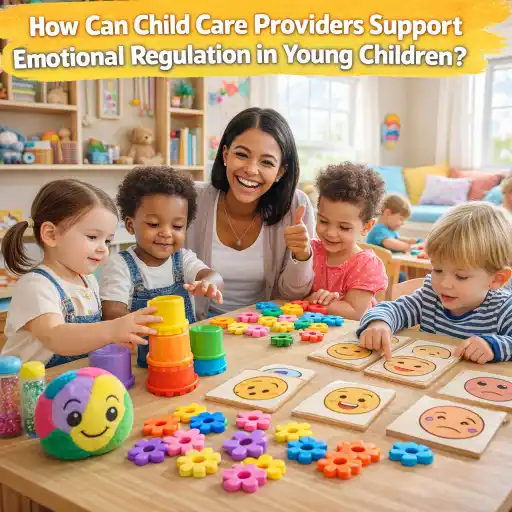
A calm-down space is a choice spot for children to reset — not a punishment. Set it up and teach it when everyone is calm. Use this checklist:
- 🪟 Space basics:
- Soft rug or small chair.
- Feelings chart so non-readers can point (Name Your Emotions Chart Buy Now $0.00).
- 2–4 calm tools: sensory bottle, breathing visual, soft toy, squeeze ball.
- Simple rule card: “This spot helps me calm.”
- 📚 Teach it ahead: Practice 2–5 minute visits during calm time so children know how to use it.
- 👀 Supervise and honor choice: Staff stays nearby; child chooses to use it. Avoid using aa as a time-out.
- 🔁 Keep it simple and safe; rotate materials to keep interest. For setup ideas and a kit checklist, see ChildCareEd calm corner ideas.
Safety note: state requirements vary - check your state licensing agency. Make sure items meet safety and sanitation rules and follow any local guidance on materials.
4) When should we ask for extra help,p and how do we avoid common mistakes?
Some children need more support. Watch for these signs and follow a team plan.
- 🛑 When to get extra help (look for patterns):
- Frequent harm to self or others.
- Many long meltdowns every day.
- Tools never help after weeks of practice.
- 👥 Team steps:
- Share observations with families and your director.
- Contact a mental health consultant or early intervention. ChildCareEd trainings like Implementing Trauma-Informed Care can guide staff.
- Use screening and referral tools (see CECMHC screening guide )
- 🚫 Common mistakes and quick fixes:
- ❌ Mistake: Teach tools only during meltdowns. ✅ Fix: Practice daily when kids are calm.
- ❌ Mistake: Long lectures in the moment. ✅ Fix: Use one short sentence and offer one choice.
- ❌ Mistake: Using a calm corner as punishment. ✅ Fix: Teach it as a safe choice and model its use.
- 📈 Track patterns: Log triggers, time of day, and what helps. Data guides referrals and supports. For programs and evidence, see the RAND review of SEL interventions: RAND evidence review.
If you suspect trauma or deeper needs, partner with families and specialists. The literature suggests trauma-informed, relationship-focused care helps children heal and learn — see research summaries like The role of child care in supporting maltreated infants and toddlers. Consider staff development that builds trauma-informed practice; for example, learn how the CDA Credential equips educators to support children through trauma.
Conclusion — What are the quick next steps?
- Practice 2–3 quick tools with your group each day.
- Set up a simple #calmcorner and teach it when calm.
- Use brief coaching and track patterns with notes.
- Share concerns early with families and refer when safety or patterns persist.
Remember your five focus words: #emotions, #selfregulation, #preschoolers, #calmcorner, #coaching. You are doing important work—small, steady steps help children build lifelong skills.
FAQ
- Q: How long should a calm corner visit last? A: 2–5 minutes for a reset; stay nearby for longer visits.
- Q: What if a child refuses help? A: Offer one choice, stay nearby, and practice skills when calm.
- Q: Where can staff get lesson plans? A: See ChildCareEd resources and printable tools (search Social Skills and Self-Regulation on ChildCareEd).
- Q: When to refer to specialists? A: If safety is a concern or supports don’t help after consistent practice—talk to families and mental health consultants.
- CDA Home Visitor Subject Area 3 Part 3 Birth to 5
- 45 Hour Preschool Methods and Materials
- Bienvenido! Welcoming All Families
- Pediatric RSV First Aid & CPR/AED
- CDA Bridge Bundle: Family Child Care without Portfolio Review
- Healing Young Hearts: Stress and Grief
- CDA Bridge Bundle: Infant/Toddler without Portfolio Review
- CDA Bridge Bundle: Preschool without Portfolio Review
- Texas Director Credential
- Stress Management and Mental Health
- Supporting Social Relationships Among Young Children
- Party Hats and Emotional Regulation: Helping Little Ones Navigate Big New Year Feelings
- 🔍 ¿Qué ves cuando observas a un niño aprender?
- Proporciones de Cuidado Infantil y Tamaños de Grupo por Edad en Maryland (Guía Rápida para Centros y Hogares)
- How Do You Explain Ego to a Child Without Making It Sound Like a Bad Thing?
- Can You Guess the Feeling? Emotion Games for Pre-K Kids
- What Does Compassion Look Like in Child Care? 10 Everyday Moments That Matter
- How Can Child Care Providers Support Healthy Brain Development in Young Children?
- How Can Child Care Providers Support Healthy Toddler Development?
- Why Are Coping Skills Important for Preschoolers?
- Why Do Young Children Show Challenging Behavior, and What Are They Trying to Communicate?
- How Can Child Care Providers Support Social-Emotional Development in Young Children?
- How Can Child Care Providers Integrate Social-Emotional Learning into Daily Activities?
- How Can Child Care Providers Support Children’s Mental Wellness?
- Why Is My Preschooler Suddenly Aggressive, and How Can Child Care Providers Help?
- How Can Child Care Providers Help Children Recover After They Make a Mistake?
- How Can Child Care Providers Teach Emotional Regulation to Toddlers and Preschoolers?
- How Can Child Care Providers Help Young Children Read Emotional Cues in Everyday Situations?
- How Can Child Care Providers Support Kindergarten Emotions on the First Day of School?
