Young children bring big feelings into the #classroom every day, but they are still developing the vocabulary and self-regulation skills needed to understand and manage those emotions. Child care providers can support this growth by naming feelings without judgment, modeling calm responses, using books and playful activities to explore emotions, and practicing coping strategies during peaceful moments. This guide offers practical, evidence-informed tools you can use immediately, including short teacher scripts, visual supports, daily routines, calming activities, family-partnership ideas, and guidance on when a child may need additional support. Building emotional vocabulary can reduce aggression, improve problem-solving, and strengthen #SEL, relationships, and long-term #regulation for #children. State requirements vary, so always check with your state licensing agency.
To strengthen these practices, explore ChildCareEd’s self-paced online course From Tantrums to Triumphs: Equipping Preschoolers with Self-Regulation Skills Buy Now $25.00. The training examines children’s social-emotional development and offers strategies for helping preschoolers express feelings, develop self-control, and navigate challenging moments with caregiver support. Providers can also take Self-Regulation & Change: Helping Children Cope  Buy Now $16.00, which focuses on responsive care, predictable routines, prosocial behavior, and techniques for building self-regulation in a calm, nurturing environment.
How do we begin: what are simple first moves to teach noticing and naming feelings?
Start with short, repeatable teacher language and visual supports. Follow these steps:
- 😊 Model emotion words: narrate your own feelings briefly: "I feel tired after morning tasks." See examples in How can we help children recognize and express their feelings?.
- Label what you see in the moment: "You look frustrated." This builds vocabulary and reduces intensity — a core idea in the CSEFEL briefs (CSEFEL What Works).
- Use a feelings chart at arrival or circle: quick check-ins (1–2 minutes) let children practice pointing or saying a word instead of acting out. ChildCareEd provides free charts and lesson ideas (Feelings check-in).
- Practice 2–3 feeling words first (happy, sad, mad). Add more gradually as children show mastery.
Why this works: emotional vocabulary creates distance from the intensity and allows coaching. Evidence-based guides emphasize short, consistent language paired with visuals for best results (CSEFEL).
What classroom routines and tools reliably support emotional regulation?
Make emotional learning daily, predictable, and visible. Practical items to build into the day:
- 📚 Daily micro-routines (2–5 minutes): morning check-in, one feelings word during circle, short breathing practice. See program-level suggestions in How Can Child Care Programs Teach SEL?.
- 🧸 Calm-down area: soft rug, 2–3 calm tools, feelings chart, picture choices — not a place for punishment. ChildCareEd calm-down posters and printable cards make setup simple (Calm Down Posters).
- 🧭 Visual routines and "first–then" language to reduce surprises (first clean-up, then outside).
- 🧘 Teach 1–2 calming techniques (balloon breaths, five-finger breathing) and practice them when children are calm. Research and practitioners like Incredible Years and ChildCareEd recommend rehearsing tools ahead of need (Incredible Years; Emotions in Motion).
Use consistent, simple language across staff. Programs with coaching and brief, repeated practices show better outcomes (SEL program guidance).
Which activities help children practice naming emotions and choosing calm actions?
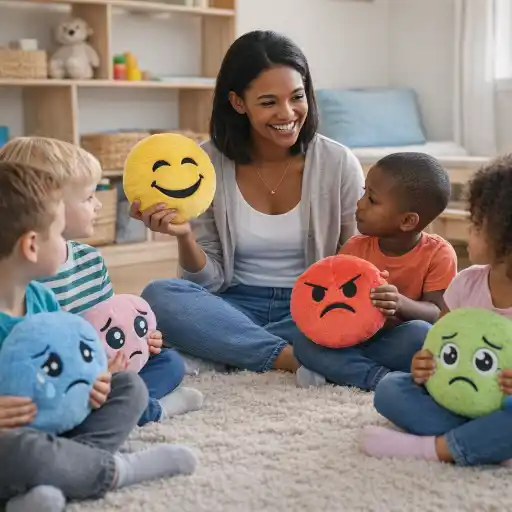
Play-based activities make emotional learning accessible and low-pressure. Try these classroom-ready options:
- 😊 Emotion sorting center: match faces or photos into emotion homes (start with 2–3 categories). See the free pack: Emotion Sorting Activities Buy Now $0.00.
- 📖 Story pauses: read a picture book and ask "How does this character feel?" Use follow-up: "What could help?" (many suggestions in ChildCareEd's reading activities: Emotions for Kids).
- 🧱 Playdough faces and role-play: children sculpt a face and name the feeling, then pick a calm tool to try next time.
- 🎲 Games that practice waiting and impulse control: Red Light/Green Light, Simon Says, Zones-based activities (see Zones activities).
- 📚 Book lists and puppets: use stories that normalize mixed feelings and model scripts for problem solving; a good resource list is at Scholastic.
Design activities with short rounds (3–7 minutes) and repeat them; repetition during calm moments makes them usable in crises (Fun Activities).
How should staff respond in the moment to big feelings without making things worse?
Use the simple Connect → Calm → Coach sequence and keep in-the-moment language brief and predictable. Steps to follow: For a seasonal example of supporting children through heightened feelings during celebrations, see strategies for navigating big New Year feelings.
- 🧑🤝🧑 Connect: get to the child's level, use a calm voice, and say one brief line: "I’m here. You’re safe." (Connect → Calm → Coach).
- 😮💨 Calm: offer one concrete calm option only ("Breathe with me" or "Squeeze the ball"). Practice these tools ahead of time so the child recognizes them during upset (Big feelings).
- 💬 Coach: once calmer, name the feeling and teach one short script: "You were angry. Next time say, ‘Help, please.’" Save longer teaching for after the child is calm.
Common mistakes to avoid:
- ❌ Only teaching skills during meltdowns — fix by daily practice.
- ❌ Long lectures in the moment — fix by one short phrase + one choice.
- ❌ Turning the calm corner into punishment — fix by teaching it as a safe choice and modeling its use (Emotions in Motion).
When should a program bring in extra support and how do we partner with families?
Bring in mental health consultants or make referrals when classroom strategies aren’t enough. Indicators and steps:
- 🛑 Indicators for extra help: frequent, long meltdowns; repeated harm to self/others; no improvement after consistent classroom supports (documented over weeks). See guidance in program-level SEL.
- 📋 Team steps: collect simple logs (trigger, response, what helped), share with families, meet with director and consultant, consider screening tools (see ECMHC ideas: ECMHC Ideas).
- 🤝 Family partnership: send one simple home practice (feelings check-in, breathe together), ask families how they calm at home, and align language and routines across settings (practical examples at ChildCareEd: Family partnership).
FAQ (brief answers):
- Q: How much time for SEL each day? A: Tiny daily steps (2–5 minutes) are effective.
- Q: What if a child refuses help? A: Stay nearby, offer a single choice, and try again later; practice tools when calm.
- Q: Which screening tools are good? A: See ECMHC and program guidance for ASQ:SE or DECA options.
- Q: How to keep staff practicing? A: Provide coaching, model scripts, and celebrate small wins—coaching increases fidelity (SEL program guide).
Summary
1) Start small: teach a few feeling words, practice 1–2 calming tools, and use visuals.
2) Make emotional learning daily and brief; rehearse tools in calm moments.
3) Use Connect → Calm → Coach in moments of intensity and save teaching for after the child is calm.
4) Partner with families and bring in specialists when patterns persist. For ready-made lessons, feeling charts, and printable activities, explore ChildCareEd resources like Emotions for Kids, Emotion Sorting Activities Buy Now $0.00, and the SEL program pages. Your consistent, steady practice helps children build lifelong skills for emotional health. #emotions #children #SEL #regulation #classroom
- The Montessori Assistant's Toolkit
- Growing the Whole Child: Health, Emotions & Early Learning
- Opportunity for Growth: Emotional Development
- CDA Bridge Bundle: Family Child Care without Portfolio Review
- Art from the Heart for Preschoolers: Open Ended Art Projects that Build Self-Esteem
- Healing Young Hearts: Stress and Grief
- CDA Bridge Bundle: Infant/Toddler without Portfolio Review
- CDA Bridge Bundle: Preschool without Portfolio Review
- Texas Director Credential
- Party Hats and Emotional Regulation: Helping Little Ones Navigate Big New Year Feelings
- Proporciones de Cuidado Infantil y Tamaños de Grupo por Edad en Nueva Jersey (Guía Rápida para Centros y Hogares)
- Proporciones de Cuidado Infantil y Tamaños de Grupo por Edad en Virginia (Guía Rápida para Centros y Hogares)
- How can positive guidance help manage big feelings during indoor play in Oklahoma classrooms?
- How Children Use Emotions to Connect with Others
- What Social-Emotional Learning Activities Work Best for Toddlers in Minnesota Classrooms?
- How can Georgia preschoolers manage big feelings and classroom routines?
- How can child care teams help children manage big emotions?
- Canciones, juegos y preguntas de círculo para niños
- Cómo simplificar la capacitación para sus empleados de daycare
- How can child care teams help children manage big feelings?
- How Can Child Care Programs Teach Social-Emotional Learning?
- How can child care teams help children manage big feelings?
- Can we tame the ‘monsters’ of big emotions in young children?
- How can we help children identify and express emotions in child care?
- How can child care providers teach children to name and manage emotions?
- Why Are Coping Skills Important for Preschoolers?
- How Can Child Care Providers Help Children Name and Manage Their Emotions?
- How Can Child Care Providers Teach Preschoolers to Manage Big Emotions?
- How Can Child Care Providers Teach Emotional Regulation to Toddlers and Preschoolers?
