Young children experience powerful emotions while they are still developing the skills needed to manage their bodies, attention, and behavior. For preschool teachers, directors, and child care providers, brief and predictable mindfulness and calm-down practices can improve safety, strengthen relationships, support learning, and make transitions smoother. Children are more likely to use these tools independently when educators introduce them during calm moments, model them consistently, and embed them into familiar routines rather than waiting for a crisis. This article offers practical, evidence-informed strategies you can use immediately, including short breathing and movement activities, simple teacher scripts, guidance for creating a safe calm-down space, staff-coaching ideas, observation cues that may indicate a need for additional support, and common mistakes to avoid.
To strengthen these practices, explore ChildCareEd’s self-paced online course Self-Regulation & Change: Helping Children Cope  Buy Now $16.00. The training focuses on consistent routines, responsive care, and techniques that help educators foster self-regulation and create calm, nurturing learning environments. Providers can also take From Tantrums to Triumphs: Equipping Preschoolers with Self-Regulation Skills Buy Now $25.00, which provides strategies for helping preschoolers manage emotions, build self-control, and navigate challenging moments. When mindfulness, #selfregulation, and #calmdown strategies are practiced daily, they become usable habits that support #preschoolers and improve overall #classroom functioning.
Why does teaching mindfulness and calm-down skills to preschoolers matter?
Evidence and program examples: implementable, trauma‑informed curricula like Mindfulness for Little Learners and school-based models such as MindUP show benefits for attention and self-regulation. For front-line steps, see ChildCareEd guides on quick calming strategies at Easy Relaxation Strategies and creating a calm corner at How Do I Create a Calm-Down Corner.
Practical case: when classrooms adopt short daily routines (30–180 seconds) tied to transitions, children learn to pause and use tools independently. State requirements vary - check your state licensing agency.
What short, classroom-friendly mindfulness and calm-down activities actually work?
- 🌬️ Balloon Breathing — hands on belly: inhale to fill an imaginary balloon, exhale slowly. (Use as a 30–60 second reset.)
- 😮💨 Smell the Flower / Blow the Candle — inhale/exhale pairing for transitions; see examples in Mindfulness Activities Young Children Can Try.
- 🧸 Breathing Buddies — lie down with a small toy on the belly and watch it rise/fall; ties breath to body awareness.
- 🔷 Shape or Triangle Breathing — trace a shape while timing breaths (see triangle/tree breathing printable ideas at Christmas Tree Breathing).
- 🎧 Mindful Listening — close eyes and name 3 sounds; fast, effective reset (link with Mindfulness for Little Learners).
Use sensory and heavy‑work options (carrying books, wall pushes, or squeeze balls) to help bodies regulate. For activity ideas that are organized vs. calm, see occupational-therapy-informed lists like Calming, Organizing, and Alerting Activities.
How do I teach and embed these skills into daily routines and a calm-down corner?
- 📋 Plan: choose 2–4 go‑to tools (e.g., balloon breath, listening, squeeze ball) and a 1–2 sentence script for each.
- 🪑 Set up a calm-down corner: soft seating, 1–3 low-stim tools, visual breathing cues, feelings cards. See the ChildCareEd calm-corner checklist at How Do I Create a Calm-Down Corner and printable cue cards at Visual Cue Cards for Calm-Down Kits Buy Now $0.00.
- 🎲 Practice: short group rehearsals (30–120 seconds) during circle time, handwashing, or before transitions so skills become habitual.
- 👥 Model & coach: narrate your own pauses—"I’m taking a breath to help me reset." Staff mindfulness reduces classroom stress; see Finding Calm in the Classroom.
Keep visits to a calm corner brief (2–5 minutes) and voluntary—do not use it as punishment. State requirements vary - check your state licensing agency.
How do I support staff, measure progress, and know when to get extra help?
Staff buy‑in and simple data collection are crucial. Steps for teams:
- 🧾 Track: log frequency, triggers, and which tool was used. Look for trends—fewer meltdowns and faster transitions indicate progress (de-escalation guide).
- 👩🏫 Train: short staff sessions that practice scripts and shared language reduce inconsistent responses—see Pyramid Model resources and ChildCareEd trainings for staff-focused modules.
- 🔍 Signs to refer: frequent harm to self/others, many long meltdowns daily, or no improvement after weeks of consistent practice—then involve families, mental health consultants, or early intervention (CSEFEL guidance: CSEFEL What Works Briefs).
- 📣 Support teams emotionally: offer short staff mindfulness or debrief times—educator wellbeing directly affects classroom climate (Finding Calm in the Classroom).
How do we avoid common mistakes, and what are practical tips?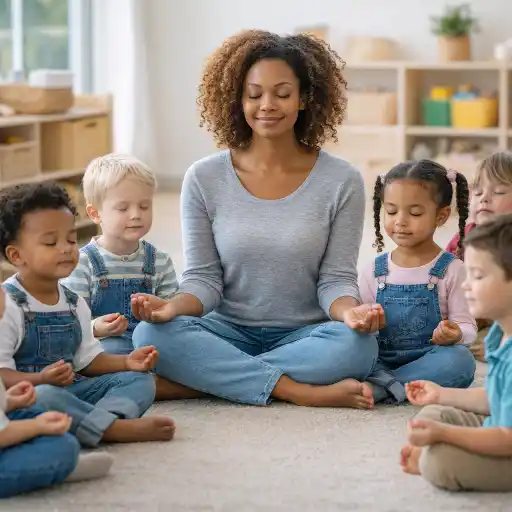
Common mistakes and fixes:
- ❌ Treating practices as punishment. ✅ Fix: Teach and rehearse when calm; make the calm corner voluntary.
- ❌ Making activities long or boring. ✅ Fix: Keep them under 3 minutes—short, repeated practice beats long sessions.
- ❌ Forcing participation. ✅ Fix: Offer as an invitation and model; allow choice and privacy.
- ❌ Using mixed messages across staff. ✅ Fix: Use one shared script (Connect → Calm → Coach) and short staff refreshers.
Why this approach is practical: short practices fit busy schedules, sensory/active options meet developmental needs, and consistent adult responses teach children predictable expectations. For ready-to-use printables and calm-down kits, see ChildCareEd resources like visual cue cards Buy Now $0.00 and the calm-down kit checklist at third‑party sites such as Montessori 4 Teachers Buy Now $0.00.
Conclusion and Practical Next Steps
Small, predictable, playful mindfulness and calming practices work best for preschoolers. Start with 1–2 tools, teach them when children are calm, model repeatedly, set up a simple calm-down area, and use a shared script for in-the-moment support. Track outcomes and involve families or specialists when safety or persistent patterns emerge. Use ChildCareEd lessons and printables to save planning time: ChildCareEd has many applied resources for classroom use. State requirements vary - check your state licensing agency.
FAQ (quick)
- Q: How long should a mindfulness practice be? A: 30 seconds to 3 minutes for preschoolers.
- Q: Can toddlers do mindfulness? A: Yes—use movement, bubbles, or breathing buddies rather than long silence.
- Q: What if a child refuses the calm corner? A: Offer one choice, stay nearby, and practice tools later during calm moments.
- Q: When to refer for extra support? A: If safety is a concern or there is no improvement after consistent teaching, engage families and mental health consultants.
You are doing essential work. Start with one short change—one breath exercise, one calm corner, one shared script—and build from there. Small, repeated practices create lasting skills.
Keep it short, sensory, and playful. Use repetition and visual cues so children remember steps. Here are classroom-ready options—practice them during calm moments and at transitions. Teach the tools when children are calm, then rehearse. Use a simple, consistent script like Connect → Calm → Coach so staff use the same language. Steps to implement: Why it matters: 1) Early self-regulation predicts school readiness, social skills, and long-term wellbeing. 2) Brief mindfulness and calming practices lower classroom stress and reduce disruptive moments. 3) Teaching skills early builds children’s vocabulary for feelings and gives them concrete tools to manage arousal.
- CDA Home Visitor Subject Area 2 Part 3 Birth to 5
- 45 Hour Preschool Methods and Materials
- From Tantrums to Triumphs: Equipping Preschoolers with Self-Regulation Skills
- Working Together: Teachers & Preschoolers
- CDA Bridge Bundle: Family Child Care without Portfolio Review
- CDA Bridge Bundle: Infant/Toddler without Portfolio Review
- CDA Bridge Bundle: Preschool without Portfolio Review
- Emergent Learning & Development
- Self-Regulation & Change: Helping Children Cope
- Texas Director Credential
- CDA Certification en Español: Recursos y Consejos para Educadores Bilingües
- 🔍 ¿Qué ves cuando observas a un niño aprender?
- Recursos en Español sobre el Sueño Seguro del Bebé
- Proporciones de Cuidado Infantil y Tamaños de Grupo por Edad en Nueva Jersey (Guía Rápida para Centros y Hogares)
- Proporciones de Cuidado Infantil y Tamaños de Grupo por Edad en Virginia (Guía Rápida para Centros y Hogares)
- Cómo Celebrar el Día Nacional del Kindergarten
- How can positive guidance help manage big feelings during indoor play in Oklahoma classrooms?
- How can preschool teachers use simple classroom management techniques that really work?
- How can I create calm classroom spaces that help children learn?
- What Positive Behavior Guidance Techniques Work in Child Care?
- How can child care providers support emotional regulation in young children?
- Celebrando la amistad en el cuidado infantil durante el Día de los Mejores Amigos
- Canciones, juegos y preguntas de círculo para niños
- What Positive Guidance Strategies Help Preschool Teachers Guide Behavior?
- How can child care leaders and providers use self-care, stress management, and work–life balance strategies to stay healthy and effective?
- How can preschool teachers teach mindfulness and calm-down skills so young children actually use them?
- How can directors create supportive workplace cultures and practical wellness strategies for educators?
- How Can We Teach Patience in a World of Instant Gratification?
- Can Slowing Down Actually Boost Learning in Early Childhood Settings?
- How Can Childcare Providers Practice Mindfulness During the Childcare Day?
