Celebrating Latin rhythms and culture in early childhood settings can be both joyful and deeply educational. When approached respectfully and intentionally, music, movement, language, art, storytelling, and family participation can help children explore authentic traditions while strengthening identity, social-emotional development, early literacy, and community belonging. This guide gives child care providers and directors practical, classroom-ready steps for planning meaningful experiences that center real family and community voices rather than stereotypes. Activities may include listening and moving to music from different Latin American cultures, exploring instruments, learning simple bilingual songs, creating art inspired by specific traditions, and inviting families to share music, stories, or celebrations that are meaningful to them. Consider partnering with community arts programs like Story Tapestries for arts-integration events and resources that bring storytellers and artists into early childhood settings.
To support these experiences, explore ChildCareEd’s self-paced online course Building Bridges for Dual Language Learners  Buy Now $16.00, which provides strategies for creating culturally responsive environments, supporting language acquisition, and partnering with multilingual families. Educators can also take Mind’s Medicine: Music in Early Childhood Buy Now $16.00 to learn how music supports young children’s development and how to create engaging, age-appropriate musical experiences. Together, these trainings can help programs use #Latin #culture and #music to strengthen dual-language learning, family relationships, cultural pride, and every child’s sense of belonging.
1) How do Latin rhythms and music support young children’s development?
- 1. 🎵 Introduce steady beat activities (clap, stomp, shaker) to develop temporal awareness.
- 2. 🥁 Use call-and-response songs to practice vocabulary and listening skills.
- 3. 💃 Blend movement with music to strengthen gross motor skills and cultural familiarity.
- 4. 📚 Pair songs with books and stories to build comprehension and cross-cultural literacy (see Scholastic).
Tip: keep activities short (5–10 minutes for toddlers; up to 20 for preschoolers), repeat favorites across days, and document progress with brief observational notes.
2) What inclusive, respectful activities can we design for the classroom?
- 🎨 Mini stations (rotate 3–5):
- Egg maracas or recycled tambourines (fine motor + sound exploration).
- Paper flowers & papel picado (scissor practice and patterning).
- Music & dance with movement cards — teach 3 simple steps.
- 📚 Story station with bilingual books (invite family members to read). See bilingual book lists and resources like 25 Picture Books in Spanish for suggestions.
- 🍎 Snack/food exploration: simple recipes (guacamole prep as a sensorimotor activity — see ChildCareEd resources) with allergy-aware alternatives.
Culture-specific ideas (e.g., Día de los Muertos ofrenda explanations) should include context: use age-appropriate language and sources such as Towson University’s primer on Día de los Muertos when relevant.
3) How can we authentically involve families and support home languages?
- 1. 🧾 Survey families about what they'd like to share and what times work best.
- 2. 📣 Offer translated invitations and signage; provide interpretation if needed.
- 3. 🤝 Invite small family demonstrations — songs, short dance steps, or a food story.
- 4. 📚 Send home book lists and activity ideas so families can continue learning (see ChildCareEd’s multicultural resources: Cultures in the Classroom).
Practical note: state requirements vary - check your state licensing agency for food, supervision, and visitor policies. Encouraging home-language use supports identity and later English literacy — evidence summarized in the multilingual access resources.
4) How do we run a safe, manageable celebration that meets learning goals?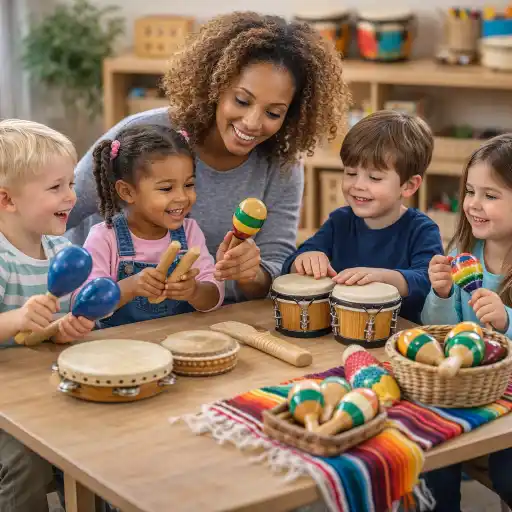
Good planning keeps the day calm and meaningful. Use a clear schedule, small-group stations, and staff/volunteer roles. ChildCareEd’s fiesta planning guidance recommends 3–6 short stations and pre-packed materials to reduce transitions and mess (Fiesta Activity Ideas).
- 🎯 Set clear learning objectives (1–2 per station): vocabulary, motor skills, counting beats, cooperative play.
- 🕒 Use timed rotations (15–20 minute blocks) and visual timers for children.
- 🍽️ Safety first: check allergies, label foods, cut choking-risk items; have alternatives available.
- 👥 Assign roles: station lead, safety monitor, snack helper, family liaison, documenter.
- 📝 Quick assessment: use a clipboard checklist — who followed steps, used new words, or cooperated?
Common mistakes & how to avoid them:
- Rushing too many activities — choose fewer, higher-quality stations.
- Ignoring family input — co-create the plan with family voices to avoid inaccuracies.
- Overcrowding — stagger groups or offer drop-in times.
5) How can we evaluate impact and continue culturally responsive practice?
Evaluate both child outcomes and program-level cultural responsiveness. Use short, observable indicators tied to your objectives and follow up with families. ChildCareEd suggests linking each activity to a skill and using simple observation notes for planning next steps (Fiesta Activity Ideas).
- 📋 Child-level: 1–2 bullet observations per child (e.g., used three new Spanish words; followed 2-step craft sequence).
- 🔍 Program-level: solicit family feedback, review participation equity, and inspect materials for authenticity.
- 📈 Professional growth: sign up for cultural coursework like Montessori Cultural Activities Buy Now $24.00 or local PD to deepen your staff’s cultural competence.
Next steps: document successes, share photos (with permission), thank family contributors, and plan follow-up mini-lessons that sustain the learning beyond a single event.
Conclusion
Culturally grounded celebrations centered on Latin rhythms and traditions offer rich, developmentally meaningful learning opportunities. Plan with families, prioritize authenticity, align activities to learning goals, and maintain safety and licensing compliance (state requirements vary - check your state licensing agency). Small, intentional events — repeated across the year — make the biggest difference in children’s sense of belonging and early learning. Consider integrating celebrations across the program year — for example, recognize February’s Black History Month with culturally responsive activities and staff training; see our Black History Month planning guide.
FAQ
- Q: How long should a classroom fiesta last? A: 30–60 minutes total with 15–20-minute station rotations for preschoolers.
- Q: How do we avoid cultural appropriation? A: Center family voices, use accurate resources (ChildCareEd packs), and avoid costumes/props that stereotype.
- Q: Can we include Día de los Muertos? A: Yes — present it as a family-remembrance tradition with age-appropriate language and invite families to share personal meaning (see Towson Univ. primer).
- Q: What about music licensing for songs? A: Use public-domain, teacher-created sequences, or family-performed pieces; avoid large-scale recorded-music performances without proper licensing for public events.
Family voice is essential. Invite caregivers to share songs, recipes, or stories — even 5–10 minute contributions enrich authenticity. Plan with families (not for them) following the steps in ChildCareEd’s guide to Creating Inclusive Events. Design activities that focus on authentic cultural elements — music, dance, art, food traditions, and family stories — while avoiding caricature. If you include civic symbols or national holidays in classroom activities, consider age-appropriate, culturally responsive lessons such as our Flag Day guide to the American flag's history and child-friendly classroom activities. Use trusted curricula and printable packs like ChildCareEd’s 7 Fiesta-Fueled Activities and the Montessori cultural activities course (Montessori Cultural Activities Buy Now $24.00). Music is a developmental multiplier: it builds memory, attention, coordination, language,e and social connection. Research and practical guides show that rhythmic activities — clapping patterns, maracas, simple songs — improve executive function and self-regulation in toddlers and preschoolers. Use the Montessori Music Fiesta Buy Now $0.00 for ready-made ideas and sequencing tips. The New York Times lessons on Latin genres (reggaetón, Cuban son, Tejano) also illustrate how music can teach history and identity.
- Family Voices Matter: Tools for Meaningful Collaboration
- Engaging Parents in the Montessori Toddler Classroom
- 24 Hour Texas Pre-Service
- CDA: Special Needs: Understanding the Whole Child
- Texas Director Credential
- Building Bridges for Dual Language Learners
- Access for All: Inclusion and the ADA
- Wellness in Action: Teaching Healthy Habits to Children
- Montessori Cultural Activities: Exploring the World Through Play and Learning
- Bridging Cultures: Family Communication & Collaboration
- CDA Certification en Español: Recursos y Consejos para Educadores Bilingües
- 🔍 ¿Qué ves cuando observas a un niño aprender?
- 💛🧩 ¿Cómo puedo hacer que mi enseñanza sea inclusiva para los niños con autismo?
- Recursos en Español sobre el Sueño Seguro del Bebé
- 10 Ejemplos de Cómo la Cultura Influye en el Desarrollo Infantil
- Actividades de Fiesta para Niños de Preescolar y Primaria
- Proporciones de Cuidado Infantil y Tamaños de Grupo por Edad en Maryland (Guía Rápida para Centros y Hogares)
- Proporciones de Cuidado Infantil y Tamaños de Grupo por Edad en Nueva Jersey (Guía Rápida para Centros y Hogares)
- Proporciones de Cuidado Infantil y Tamaños de Grupo por Edad en Virginia (Guía Rápida para Centros y Hogares)
- Lista para Guardería en Casa en Illinois: Cómo Iniciar una Guardería en el Hogar
- Apoyo en Preescolar para Retrasos del Habla: Estrategias Simples que Ayudan
- Celebrando la amistad en el cuidado infantil durante el Día de los Mejores Amigos
- Canciones, juegos y preguntas de círculo para niños
- Cómo simplificar la capacitación para sus empleados de daycare
- How can child care programs celebrate Latin rhythms and culture with young children?
- How Can Child Care Programs Celebrate Hispanic Heritage Month Meaningfully?
- How Can Preschools Celebrate Hispanic Heritage Month Meaningfully?
- What Are Age-Appropriate Ways to Honor Latino Cultures in the Classroom?
