Music and movement help children learn, calm down, and have fun. In North Dakota programs, adding songs, dance, and simple rhythm games can make your daily routine better for kids and staff. This article is for child care providers and directors who want practical ideas that meet children's needs. You will find easy tips, links to lesson plans and resources, training ideas, and ways to include every child. Remember: state requirements vary - check your state licensing agency.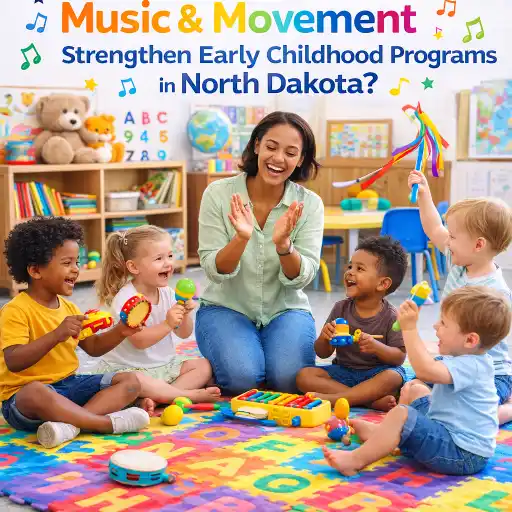
What benefits do music and movement bring to young children?
Music and movement support many parts of a child’s growth. Think about these important effects:
- 🧠 Cognitive skills: Moving and music help children focus, remember steps, and learn new words. Read more about the science behind movement in classrooms at ChildCareEd.
- 🤝 Social and emotional learning: Songs for turns and group dances help children take turns and calm strong feelings. ChildCareEd explains how music supports social skills in early learning settings.
- 💪 Physical development: Dancing, stomping, and body percussion build balance, coordination, and gross motor skills. Try body-percussion ideas shared by music teachers.
- 🎭 Language and creativity: Singing songs, call-and-response games, and rhythmic chants boost vocabulary and imagination. The CDC milestone ideas show how movement links to other skills (CDC milestones).
Why it matters: When children move and sing, learning becomes active and joyful. Regular music and movement moments improve classroom behavior, help with transitions, and strengthen friendships. Use the tags below to find quick tools for planning: #music #movement #NorthDakota #children #development.
How can we fit music and movement into the daily schedule and lesson plans?
Adding music and movement does not need lots of prep. Use short, regular activities and link them to your routine. Here are practical steps you can try right away:
- 🕒 Build in short blocks: 1–3 minute songs for transitions and 5–15 minute movement breaks. Use the Sample Daily Schedule (Birth to Five) Buy Now $0.00 from ChildCareEd for ideas on timing.
- 🎨 Plan 3 kinds of activities each week:
- Calm songs for circle time
- Active movement (dance parties or freeze dance)
- Music-making (instruments, scarves, or body percussion)
- 📚 Use ready plans: Try the "Color Dance Parade" lesson plan from ChildCareEd for mixed ages (Color Dance Parade Buy Now $0.00).
- 🎧 Lead fun dance breaks: Follow simple steps in How to Lead Dance Parties. Keep dance time short and repeat favorite moves.
Tips for schedules:
- 🙂 Start the day with a welcome song.
- 🚸 Use music to mark clean-up and lining up.
- 🌤️ Put movement before quiet time to help kids settle.
State rules matter: state requirements vary - check your state licensing agency for supervision and space rules.
What training, supports, and partnerships help staff lead music and movement well?
Staff confidence grows with short training, modeling, and practice. Here are ways to build teacher skill and program strength:
- 📘 Offer short trainings: Use ChildCareEd's free resources like Mind's Medicine: Music in Early Childhood and other ready guides to boost staff knowledge.
- 🎵 Music in early childhood: For staff who want to deepen their understanding of how music supports brain development, language, and social-emotional learning, ChildCareEd's Mind's Medicine: Music in Early Childhood
 Buy Now $16.00 is a 2-hour online course covering the science and practice of using music intentionally in early childhood classrooms — a direct complement to the daily schedule, lesson planning, and staff confidence-building steps outlined in this guide.
 - 👩🏫 Model in the classroom: Pair new or unsure teachers with a mentor. Research shows that in-class mentoring helps teachers use music more often.
- 🎓 Support staff training pathways: Encourage staff to take local courses or degrees such as the University of North Dakota's early childhood program (UND Early Childhood Education) to strengthen pedagogy.
- 🤝 Partner with community groups: Invite music students, local musicians, or Head Start teachers to co-teach music activities. Head Start materials often include music and movement ideas (North Dakota Head Start).
Professional development that works:
- 🔁 Short workshops + follow-up coaching beat one-time trainings alone. See professional development guidance at ECRP.
- ✅ Use adult learning principles: make training practical, linked to daily routines, and respectful of staff experience.
How do we include every child and avoid common mistakes?
Inclusion helps every child take part. Here are common mistakes and how to avoid them:
- ❌ Mistake: One-size-fits-all activities. ✅ Fix: Offer choices and simple adaptations.
- For children with movement limits, use hand percussion, scarves, or seated dance.
- For children with sensory needs, lower volume, use soft instruments, or give a quiet corner.
- 🧩 Inclusive learning environments: For staff who want to set up spaces that support every child's participation in music and movement, ChildCareEd's Environments That Inspire Independence and Exploration Buy Now $55.00 is a 6-hour online course covering how to design inclusive, stimulating spaces where children with varied abilities, sensory needs, and learning styles can engage freely — directly supporting the inclusion adaptations and sensory-friendly setup steps described throughout this article. For concrete, classroom-tested strategies to individualize lesson plans and adapt activities so each child can participate, see the guide Individualizing Lessons for Connecticut’s Children.
- ❌ Mistake: Too long or too loud sessions. ✅ Fix: Keep songs and dances short. Use the ChildCareEd guidance on movement benefits to plan length and intensity.
- ❌ Mistake: No cultural connection. ✅ Fix: Use songs from children’s homes and cultures. See ideas for global music and instruments. Also, integrate global education approaches to celebrate cultural diversity and build critical thinking for young learners by using songs, stories, and activities from multiple cultures: see our guide to global education in early childhood.
- ❌ Mistake: No follow-up for staff. ✅ Fix: Use coaching, peer observation, and simple checklists to support practice. Modeling and mentors increase teacher use of music.
Quick inclusion tips:
- 🎵 Use visuals and simple words for songs.
- 🥁 Offer different instruments and let children choose.
- 🧑🤝🧑 Let children lead short parts of a song or movement.
Conclusion — Practical next steps and checklist
Try these 6 steps this week to add music and movement to your program:
- 📅 Add one 5–10 minute movement break each day.
- 🎶 Choose 3 favorite songs to use for transitions.
- 👀 Pair a new teacher with a mentor for one music session.
- 📂 Save one lesson plan from ChildCareEd, such as Color Dance Parade Buy Now $0.00.
- 🔉 Check volume and length; adapt for sensory needs.
- 📝 Note: state requirements vary - check your state licensing agency.
FAQ (short):
- Q: How long should movement breaks be? A: 5–15 minutes is a good start.
- Q: Where to find quick lesson ideas? A: ChildCareEd free lesson plans and sample schedules.
- Q: How to include children with disabilities? A: Use instruments they can reach, seated options, and visual cues. For programs working with children who may need developmental supports, coordinate with local early intervention programs and review available training and referral resources at Early Intervention.
- Q: How often should staff train? A: Short, regular coaching beats rare, long workshops. See professional development ideas at ECRP.
You are already doing important work. Small, regular music and movement steps will make your classroom calmer, more joyful, and more learning-rich. Use the links in this article to find ready plans and training. Keep using your strengths and try one new song or movement activity this week — kids will thank you!
- 45 Hour Child Growth and Development
- 24 Hour Texas Pre-Service
- CDA Bridge Bundle: Family Child Care without Portfolio Review
- CDA Bridge Bundle: Infant/Toddler without Portfolio Review
- CDA Bridge Bundle: Preschool without Portfolio Review
- 45-Hour Infant and Toddler Curriculum
- Texas Director Credential
- Mind's Medicine: Music in Early Childhood
- CDA Certification en Español: Recursos y Consejos para Educadores Bilingües
- 👶 ¿Cuáles son las proporciones y grupos requeridos en Dakota del Norte? 🏫
- 🚌❄️ Field Trip Ideas in North Dakota for Childcare Providers
- How to Open A Home Daycare In North Dakota
- Recursos en Español sobre el Sueño Seguro del Bebé
- Free ECE Units Online in North Dakota: Start Here!
- 10 Ejemplos de Cómo la Cultura Influye en el Desarrollo Infantil
- Lista para Abrir una Guardería en Casa en Dakota del Norte: Cómo Empezar
- Cómo Trabajar en el Cuidado Infantil en Carolina del Norte: Requisitos y Pasos
- Capacitación Previa al Servicio para Proveedores de Cuidado Infantil en Dakota del Norte
- Las Mejores Ideas de Excursiones para Guarderías en Dakota del Norte
- North Dakota Early Childhood Workforce Registry: What Child Care Providers Need to Know
- How can North Dakota programs climb the Bright & Early ND steps before the July 2026 update?
- How Do Art Activities Support Cognitive Growth in North Dakota Preschoolers?
- How can music and movement strengthen early childhood programs in North Dakota?
- How Can North Dakota Child Care Providers Help Families Facing Economic Stress?
- How can North Dakota child care programs lay reading foundations the right way?
- How can North Dakota child care balance technology and play?
