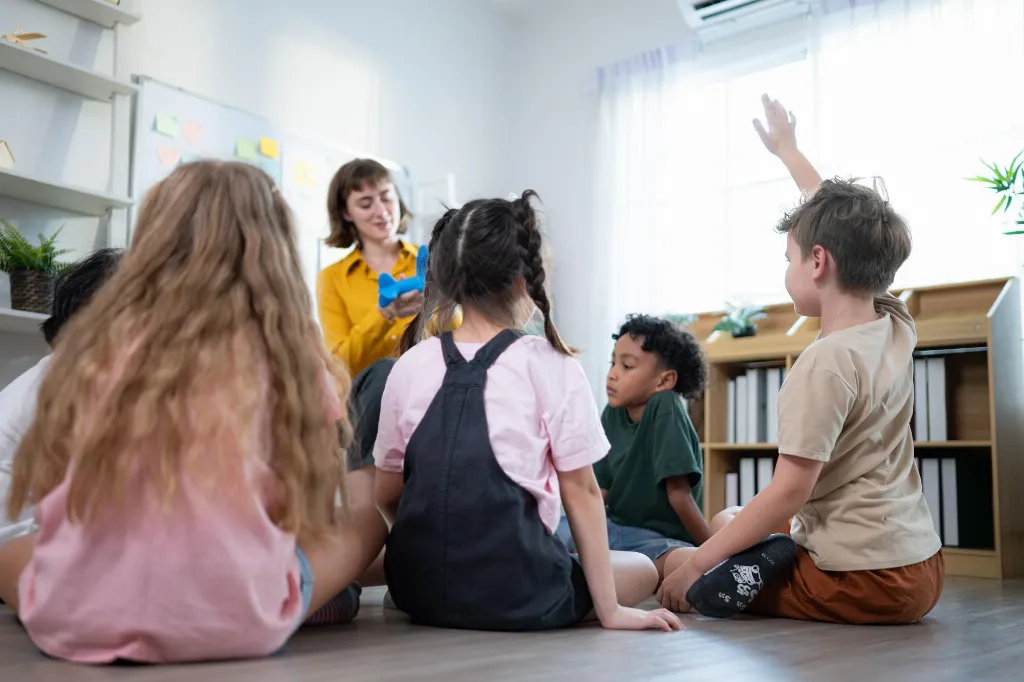
 Young children learn listening with short, playful steps. This article gives a simple, classroom-ready game called "One, Two, Eyes on You" and shows how to use it to teach #listening, body control, and group play.
Why does listening matter for preschoolers?
Listening shapes learning. When children listen they follow directions, join group activities, and learn new words. Short games and routines help children practice paying attention again and again. Early practice helps later learning in reading, math, and social skills.
- Children learn in small steps. Short cues and games match their attention span.
- Listening is a social skill. It helps children wait their turn and work together. The CSEFEL brief shows how peer skills build friendships and cooperation: CSEFEL What Works Brief #8.
- Movement and music boost listening. Use songs and freeze games to teach stop-and-go behavior. For ideas see Can simple indoor movement games teach listening and cooperation?.
Quick note for planning: pick one short cue (like "Eyes on me") and use it all day. Repetition and praise build habits. These routines help your #preschoolers feel safe and ready to learn.
What is the "One, Two, Eyes on You" game and how do I run it?
This game is a short stop-and-listen activity. It trains children to watch, wait, and respond to one signal. The game fits small spaces and can be done in 1–3 minute rounds. It pairs well with circle time and movement breaks. For more circle-time ideas see Circle Time Activities That Build Listening and Social Skills.
- Setup: Clear a small area and mark a line with tape. Limit group size to 4–8 children. (Safety tip: keep floor clear and dry.)
- Teach the cue: 1) Say the cue: "One, two, eyes on you." 2) Model: stop, look at teacher, hands still. 3) Practice once without music.
- Play rounds (use emojis to add fun):
- 🔊 🎵 Play a short song or clap rhythm while children move or dance.
- 🛑 When you say "One, two, eyes on you," children freeze and look at you.
- ✅ Praise quickly: "Great listening, Maya!"
- Repeat 3–5 times. Change the challenge slowly: softer music, quieter moves, or add a simple task after the freeze (walk to the line). You can also fold in brief math activities—counting steps, comparing sets, or matching colored cards—to practice early numeracy during the freeze; for practical, game-based ideas see Teaching Math to Young Children.
Make rules simple and use a single stop signal (clap, bell, or phrase). Keep rounds short so every child wins often. For more indoor movement games and scripts see ChildCareEd movement ideas. This game builds #movement and #cooperation while teaching clear #classroom signals.
How do I include every child and measure progress?
Inclusion matters. Some children need visuals, extra time, or quiet roles. Others might have hearing or processing differences. If you notice big trouble, consider screening and talk with families early. For signs and supports for auditory processing see Nemours: Auditory Processing Disorder. Also see ChildCareEd's listening and inclusion resources like Open Ears: Listening in Child Care  Buy Now $16.00.
- Adaptations:
- 🧩 Offer two ways to succeed: freeze or touch a picture card showing "listening."
- 🪪 Use a visual cue (picture, card, or colored light) along with the verbal cue.
- 🤝 Pair a child who needs help with a buddy for modeling and support.
- Measure progress in simple steps:
- Count how many children freeze correctly each round.
- Note who waits for the cue without prompts.
- Track attention span: can the class follow a 3-step direction after the game?
- Share wins with families: one sentence about what the child did well and one idea to try at home. Partnering with families helps practice and carries learning into daily life.
Use small data points and quick notes. If concerns remain, document examples and speak with the family. Remember: state requirements vary - check your state licensing agency.
What common mistakes should I avoid and how can staff and families help?
Common mistakes are easy to fix. Below are pitfalls and clear fixes to keep the game helpful and fun.
- ❌ Too hard, too fast — start simple. Fix: follow a 3-step teaching plan: show, practice, play.
- ❌ Many staff use different words — make one script. Fix: agree on one cue and one praise line (e.g., "One, two, eyes on you" and "Thank you for listening!"). See ChildCareEd tips on consistent phrases: How can we help preschool children become better listeners?.
- ❌ Long waits — give short turns. Fix: use small groups or stations so children stay active.
- How staff and families can help:
- 📣 Share the cue with families and send one simple home idea each week.
- 🧑🏫 Use 5-minute staff huddles to practice the cue and celebrate wins.
FAQ:
- Q: How long is one round? A: 1–3 minutes for preschoolers.
- Q: What if a child does not join? A: Offer a helper job (music keeper, bell holder) so they feel safe.
- Q: How many kids per game? A: 4–8 works well to reduce waiting.
- Q: Where can I learn more? A: Try Open Ears Buy Now $16.00 and ChildCareEd movement articles.
Short, joyful practice builds big skills. Try this 4-step plan tomorrow: 1) Prep (clear area, set cue), 2) Demo (2–3 minutes), 3) Play (10 minutes in small groups), 4) Cool-down (stretch and praise). You are helping children grow listening, social skills, and self-control—one small game at a time. #listening #preschoolers #movement #cooperation #classroom
- How to boost fine motor skills: Holiday Edition
- CDA Certification en Español: Recursos y Consejos para Educadores Bilingües
- Proporciones de Cuidado Infantil y Tamaños de Grupo por Edad en Maryland (Guía Rápida para Centros y Hogares)
- Proporciones de Cuidado Infantil y Tamaños de Grupo por Edad en Virginia (Guía Rápida para Centros y Hogares)
- Actividades de Otoño Fáciles para Preescolares esta Temporada
- Consejos de Supervisión Activa para Salones de Preescolar y el Juego al Aire Libre
- Capacitación Previa al Servicio para Proveedores de Cuidado Infantil en Dakota del Norte
- Las Mejores Ideas de Excursiones para Guarderías en Texas
- How can childcare teams lead safe, fun nature walks in Georgia parks and gardens?
- How can active listening improve care in early childhood settings?
- Celebrando la amistad en el cuidado infantil durante el Día de los Mejores Amigos
- Canciones, juegos y preguntas de círculo para niños
- La mejor manera de hacer seguimiento a la capacitación de su equipo de daycare How to Organize Staff Training for Your Child Care Center Cómo organizar la capacitación del personal para su centro de cuidado infantil
- Pool Noodle Sea Creatures: A Fun Ocean Craft for Preschoolers
- One, Two, Eyes on You: Classroom Attention Getter for Preschool
- One, Two, Eyes on You: A Fun Way to Build Listening Skills
- 1 2 3 Eyes on Me: What to Do When This Attention Getter Stops Working
- Attention Signals: Which Ones Work Best for Toddlers, Preschoolers, and School-Age Kids?
- How Can Child Care Providers Strengthen Young Children’s Listening Skills?
- Where Does My Voice Come Back? How Can Children Explore Outdoor Echoes?
