Talking with families about a child’s #behavior can feel hard. You want to be honest, keep children safe, and keep your partnership with #parents strong. This short guide gives simple steps you can use right away. It uses friendly words, clear scripts, and links to trusted resources so you and families can work together. You might find ideas from ChildCareEd helpful, for example Communicating with families: tough conversations with respect and How Do I Talk to Parents About Behavior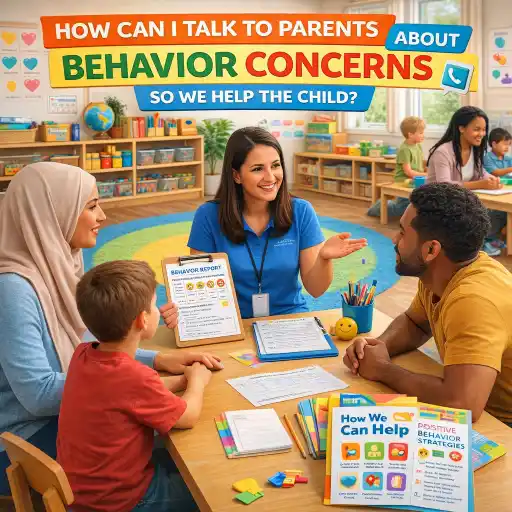 s Their Child Learned at Home?. Keep calm, be kind, and remember: small steps build #trust and better outcomes.
How should I prepare before I meet a parent?
Good preparation keeps the talk calm and helpful. Try this step-by-step plan:
- 😊 Gather facts first: note what happened, when, where, how often, and what you tried. Use objective notes rather than labels. See tips from How to Talk to Parents About Developmental Concerns for examples of clear notes.
- Write 1–2 simple examples you can read aloud. Short examples help parents picture the moment.
- Choose a private time and place. Avoid busy pick-up rows when possible — invite the parent to a quick conference.
- Review cultural context and language needs. If the family prefers another language, arrange an interpreter or translated notes ahead of time (see How can we communicate more effectively with parents?).
- Prepare a calm goal: decide one clear outcome (e.g., share observations, agree on 1–2 next steps, set a check-in date).
- Have resources ready: simple handouts, a milestone checklist (CDC's Watch Me! / Learn the Signs), or ChildCareEd handouts.
Why this matters: parents trust providers who come with facts and a plan. Careful prep keeps the conversation about helping the child, not blaming anyone. Also remember: state requirements vary - check your state licensing agency.
What words and steps should I use during the talk?
Use a short, repeatable flow so you stay calm and clear. Try this 6-step script:
- Lead with a strength: "I enjoy working with Maya — she loves books."
- Share the fact: "Today at circle time I noticed she left when asked to name two colors and named only one."
- Say why you’re sharing: "I’m sharing this because naming colors helps with preschool skills and we want to support her."
- Ask for their view: "What do you see at #home?" — then listen closely.
- Offer choices for next steps: 😊 "We can watch and try a checklist for 4 weeks," or "I can share simple games and a referral list."
- End with a plan and follow-up: "Let’s check back in two weeks — I’ll write a short note and we’ll pick one home game to try."
Useful language tips (from What to say when a parent is upset):
- Use "I noticed" and specific examples, not labels like "behind" or "problem."
- Avoid medical or blaming words — say "needs more time" or "could use extra practice."
- Use "we" and teamwork words: "We can practice this together."
Keeping words simple, calm, and actionable helps parents hear you and join in. This is #communication that builds #empathy and shared work.
What if a parent gets upset or defensive — how do I stay helpful?
Strong feelings are normal. Your job is to stay steady, respectful, and solution-focused. Use these steps:
- 🧑⚕️ Listen first: let the parent speak. Use short phrases: "I hear you" or "That sounds upsetting." (See What to say when a parent is upset.)
- Repeat back: "So you are worried because..." This shows you heard them.
- Return to facts: "Here’s what I observed and when." Keep it brief.
- Offer a pause or time to meet again if needed: "Would you like a few minutes? We can continue or set another time."
- Document the conversation: date, who attended, what was said, and the plan. Good notes protect everyone and make follow-up easy.
Common mistakes and how to avoid them:
- ❌ Only call families for problems — instead, share positives often so concerns land kinder.
- ❌ Use jargon — speak plain language and offer handouts or checklists.
- ❌ Talk in public — move to a private space or schedule a conference.
If a situation feels unsafe or illegal, loop in your director right away. For ideas on calming an angry parent, see strategies from Heart and Mind Teaching and ChildCareEd's guidance.
What next steps should we agree on with families?
Make the plan simple, shared, and time-limited. Children learn best when home and school use the same small steps. Use these numbered steps to build a team plan:
- 📋 Collect data: note times, triggers, and what helps. Use brief behavior logs or the CDC milestone checklists
- 🧭 Pick 2–3 prevention steps: change the environment, add choices, or reduce wait times.
- 🗣️ Teach one replacement skill: e.g., "Ask for a turn" or "Use words when upset." Practice at school and share the exact words with home.
- 🤝 Agree on adult scripts: the same adult words at home and school help the child learn faster.
- 📆 Set a short check-in: pick a date in 1–2 weeks for a quick update and 4–6 weeks to review progress.
- 🔗 Consider referrals if needed: if concerns persist, explain local early intervention or evaluation steps. ChildCareEd and CSEFEL resources explain positive behavior supports and referral paths (CSEFEL, Special Needs in Daycare: Behavior Support Buy Now $0.00).
Quick FAQ:
- Q: When should I tell a parent? A: As soon as you have patterns and facts, not just one incident.
- Q: Do I name other children? A: No — protect privacy and share only facts about the child in care.
- Q: Should I suggest an evaluation? A: Offer it as one option and give resources; don’t diagnose.
- Q: How often to follow up? A: Short check-ins (1–2 weeks) keep momentum; review formally in 4–6 weeks.
Conclusion
Talking about a child’s #behavior doesn’t have to be a crisis. Prepare with facts, use a calm script, listen with #empathy, and build a small plan the family can try. Use clear notes, protect privacy, and follow up. If you want training, ChildCareEd offers courses like Heart-to-Heart Communication  Buy Now $16.00 and practical guides like Hard Conversations with Parents. You are a trusted partner: your steady, kind communication makes a big difference for children and families. Keep practicing — each conversation builds stronger #communication and #trust.
- CDA Preschool Credential with Portfolio Review
- Professional Presence in Early Childhood
- Easy Steps to Resume and Interview Success
- Bienvenido! Welcoming All Families
- CDA Family Child Care Credential with Portfolio Review
- Heart-to-Heart Communication: Challenging Behaviors
- CDA Infant/Toddler Credential with Portfolio Review
- Texas Director Credential
- Let’s Talk: Effective Communication
- Having a Heart-to-Heart
- How can I tell families about developmental red flags without causing panic?
- Apoyo en Preescolar para Retrasos del Habla: Estrategias Simples que Ayudan
- Retraso del Habla en la Guardería: Cómo Pueden Ayudar los Proveedores
- How Can Child Care Providers Improve Parent Communication Skills?
- What Are Developmental Milestones and How Can We Track Them in Early Childhood?
- What Communication Skills Does Every Childcare Teacher Need?
- Understanding Developmental Milestones in Children
- What Signs of Developmental Delays Should Michigan Childcare Workers Watch For?
- What Should We Do When a Child in New York Daycare Arrives Exhausted Every Day?
- What Do Child Care Providers Need to Teach Families About New York’s Stop Online Predators Act and Kids’ Tech Use?
- What Kindergarten Readiness Skills Should My Program Build?
- How can Michigan providers handle difficult conversations with parents?
- How can child care providers handle tough conversations with parents effectively?
- How can child care providers share developmental information with families effectively?
- How can child care leaders manage complaints and difficult conversations effectively?
- How Can Child Care Providers Handle Difficult Conversations with Parents About Behavior?
- How Do You Talk to Parents About Developmental Concerns?
- How Should Child Care Providers Handle Difficult Conversations With Parents?
- When Home and Classroom Behavior Differ, What Questions Should Parents Ask?
