Children in our care sometimes feel worried or scared. When that happens, teachers and directors can help. This article gives clear steps you can use in your #classroom, with families, and with your team. You will find quick tools, ways to talk with parents, and when to ask for extra help. Remember: state requirements vary - check your state licensing agency.
Why this matters
How do I spot anxiety in young children?
1. Watch for changes. Anxiety often shows up as new behaviors. Look for:
- 😟 1) More clinginess at drop-off or refusal to join activities.
- 😴 2) Trouble sleeping, headaches, or tummy aches without clear illness.
- 😡 3) Irritability, sudden anger, or withdrawing from friends.
- 4) Repeated worries about safety, being lost, or bad things happening.
2. Use simple notes. Jot dates, what happened, and what calmed the child. Good notes help you spot patterns and make plans.
3. Ask families. A short question like, “Has anything changed at home?” builds trust and gives useful clues. For more on signs and classroom strategies, see Anxiety: Signs & Strategies and the CDC overview of child anxiety here.
What can we do right away to help a child feel calm?
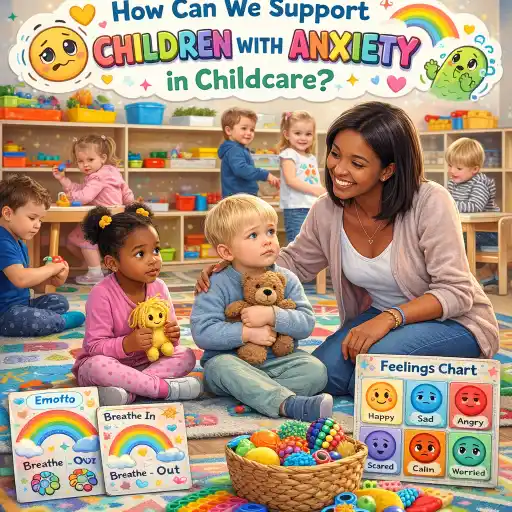
Use a short, steady plan every time. Try this 3-step order: Connect → Calm → Coach.
- 👋 Connect: Get down to the child’s level. Use one short sentence: “I’m here. You’re safe.”
- 😮💨 Calm: Offer one simple tool. Examples:
- • Balloon breaths (deep belly breaths).
- • A squeeze ball, weighted lap pad, or quiet picture book.
- • A calm corner with a soft rug and 1–3 tools (not a time-out).
- 💬 Coach: When the child is calmer, name the feeling and give one choice: “Want to sit here or breathe with me?”
Practice tools when children are calm so they remember them during upset times. ChildCareEd has ready-made ideas like Easy Relaxation Strategies for Young Children and calm-corner checklists (Relaxation Strategies Buy Now $0.00).
Common mistakes to avoid:
- 🚫 1) Using the calm space as punishment. Teach it as a choice instead.
- 🚫 2) Giving long lectures in the moment. Use one short sentence and one choice.
- 🚫 3) Only teaching tools during meltdowns. Practice daily when calm.
How do we work with families and the team for long-term support?
- 📘 Share observations. Use short notes and examples. Offer one positive and one worry when you meet.
- 👂 Use active listening. Reflect what families say: “It sounds like she sleeps less lately.” This builds trust. The CDC shares tips on active listening here.
- 🔁 Make a simple plan together. List 3 things you will try in the classroom and 3 things the family will try at home. Keep it short and practical.
- 🧑🏫 Train staff. Short team practice and role-play help everyone use the same calm words and routines. See ChildCareEd training examples at Online Childcare Trainings.
- 📎 Document and follow up. Note what worked and when. Share updates with the family weekly or biweekly.
Also, encourage small, steady routines at home and at your site. Routines help children feel safe and reduce #anxiety. Keep families informed and involved. For practical parent tips on drop-off and transitions, see Easing Drop-Off Anxiety. You can also share specific strategies for transitions at the start of a term—see Coping Strategies for Back-to-School Anxiety for practical ideas to ease separation and school-return worries.
When should we seek extra help and what are the next steps?
Know when the child needs more than classroom support. Consider referral if:
- 🔍 1) Worries stop play or school for many days.
- 🔍 2) Repeated long meltdowns or signs of panic (trouble breathing, fainting).
- 🔍 3) The child harms self or others, or talks about hurting themself.
Steps to refer safely:
- 📄 1) Gather simple notes: what, when, and what helps.
- 📞 2) Talk with the family. Share concerns kindly and offer options.
- 🔗 3) Suggest next contacts: the child’s pediatrician, mental health consultant, or community therapist. The CDC recommends starting with a primary care provider and shows treatment options here.
- 🧾 4) Ask permission to connect with the provider and offer to share your classroom notes.
Remember: trained therapists often use cognitive-behavioral strategies that work well for anxiety. School-based CBT is also effective for older children as shown by the Community Guide (targeted school-based CBT).
Conclusion and FAQ
Summary:
- 🔹 1) Watch for behavior changes and keep short notes.
- 🔹 2) Use Connect → Calm → Coach and practice calming tools daily.
- 🔹 3) Partner with families, document plans, and train staff.
- 🔹 4) Refer when worries block daily life or safety is at risk.
FAQ (short answers):
- Q: How long should a calm corner visit be? A: 2–5 minutes to reset; staff stay nearby.
- Q: What if a parent is worried but won’t seek help? A: Share observations, offer resources, and suggest the child’s pediatrician as a first step.
- Q: Do we need written consent to talk with a provider? A: Yes—get family permission before sharing records. Check your licensing rules: state requirements vary - check your state licensing agency.
- Q: Which trainings help staff most? A: Short, practical courses on calming strategies, active listening, and family communication. See ChildCareEd course options at Online Childcare Trainings.
You are not alone. Small steps each day help children feel safer and learn to manage worries. For more tools and printable calm-down activities see Calming Activities for Kids Buy Now $0.00 and Relaxation Strategies Buy Now $0.00. Keep supporting each other and celebrate every little win. #anxiety #children #caregivers #calm #communication
1) Anxiety can stop a child from learning and playing. 2) Early support helps children feel safe and grow strong. 3) Small, steady steps from caregivers make a big difference.Partnerships help children the most.- 45 Hour Child Growth and Development
- 45 Hour Preschool Methods and Materials
- Bienvenido! Welcoming All Families
- Birth to Five CDA Credential with Portfolio Review
- CDA Family Child Care Credential with Portfolio Review
- 45 Hour Infant and Toddler Methods and Materials
- 45 Hour School Age Methods and Materials
- CDA Bridge Bundle: Family Child Care
- Texas Director Credential
- Strong Good Hug, And A Kiss to Say Good Bye
- Coping Strategies for Back-to-School Anxiety
- Slaying Metaphorical Dragons of Fear and Self-Doubt in Childcare Educators
- CDA Certification en Español: Recursos y Consejos para Educadores Bilingües
- 💛🧩 ¿Cómo puedo hacer que mi enseñanza sea inclusiva para los niños con autismo?
- How can Washington, D.C. child care providers keep children safe during transitions, drop-off, and pick-up?
- How can we support children with anxiety in childcare?
- The First Weeks of Child Care: Building Trust with Children
- How Can North Dakota Childcare Providers Support Children Who Have Never Been in a Group Setting Before?
- How can we help toddlers with separation anxiety?
- How Can Child Care Programs Best Prepare Little Ones for the Kindergarten Transition?
- How can we ease separation anxiety when routines change?
- How can child care providers help toddlers manage separation anxiety?
- How can child care programs ease drop-off tears and manage separation anxiety?
- How Can Child Care Providers Support Families During Separation Anxiety?
- How Can Teachers Ease Separation Anxiety at Drop-Off?
- How Can Child Care Providers Support Shy or Anxious Children in Group Settings?
- How Can Child Care Providers De-Escalate Toddler Meltdowns and Separation Anxiety?
- How Can Child Care Providers Support Kindergarten Emotions on the First Day of School?
- What Are the Best Ways to Support Separation Anxiety at Daycare Drop-Off?
