Good #communication with families makes daily life smoother for teachers, directors, and children. This article gives practical, easy-to-use steps Michigan child care centers can start today. Read on for quick routines, ways to handle complaints and hard talks, record-keeping and staff training tips, and how to grow long-term #trust and #engagement with #parents in your program. Staff can strengthen these skills with Let’s Talk: Effective Communication  Buy Now $24.00, which focuses on effective communication and productive relationships with families, and the 9 Hour Communication Course Buy Now $99.00, which provides deeper training in communication practices for early childhood professionals. Programs can also use the purchasable Make Parent Communication Easy: All About My Preschooler Buy Now $1.49 resource to gather important information from families about children’s routines, needs, preferences, and care. State requirements vary - check your state licensing agency.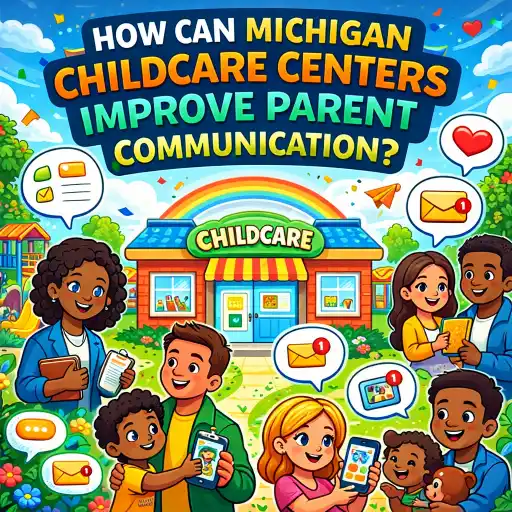
Why it matters:
- Children do better when home and care teams share the same goals; clear messages help with learning and behavior
- Regular, kind communication reduces surprises and lowers complaints (read tips at How can parent communication strategies reduce complaints?).
What quick routines can Michigan centers use every day to improve parent communication?
- 📝 Keep a 1-line daily note: mood, food, and one learning highlight. Short notes beat long ones.
- 📣 Greet and share: at drop-off, give a quick positive and one factual update (30–60 seconds). That small contact builds a relationship over time.
- 📱 Ask family preference: record if a parent prefers text, app, email, or paper, and stick to it. A single agreed channel avoids missed messages.
- 📷 Use photos with captions (with permission): a picture plus one sentence shows learning without long text. ChildCareEd suggests sharing learning stories for meaning (Beyond the Daily Report).
- 🔁 Weekly snapshot: one short newsletter with 3 bullets—what we learned, coming dates, one tip for home.
- 🤝 Offer quick options for family voice: a one-question weekly poll or a comment box helps families feel heard.
Why these work: they are predictable, short, and show both logistics and learning. Use consistent icons or checkboxes so non-English speakers can scan easily. For multilingual tips, see resources about multilingual access and family engagement at Indiana University.
How should we handle complaints, public posts, and hard conversations?
- 🧭 Pause and gather facts: review notes, ask staff, and document what you know before replying. This protects children and staff.
- 🙂 Public acknowledgement only: if a complaint appears online, post a brief, neutral reply thanking them and inviting a private call (example guidance in How can parent communication strategies reduce complaints?).
- 📞 Private follow-up using H.E.A.R.T.: Hear, Empathize, Apologize (if needed), Respond, Thank. This model helps families feel heard and respected.
- 🗂 Record the outcome: write the plan, next steps, and a follow-up date in your conference or incident log (see Family (or Parent) Conferencing resources).
- 🔁 Close the loop: follow up with the family on the agreed date and note progress.
Common mistakes to avoid:
- 🚫 Reacting defensively in public — instead, invite a private conversation.
- 🚫 Ignoring small concerns — small issues grow if left unaddressed.
- 🚫 Sharing confidential details — protect privacy and follow reporting rules.
For scripts, sample replies, and role-play ideas, see ChildCareEd’s complaint and response suggestions at How can parent communication strategies reduce complaints?.
How can documentation, staff training, and tools reduce misunderstandings long-term?
Good systems make communication fair and efficient. Try these 5 steps to build a stronger documentation and training routine.
- 📚 Train staff in short, practical sessions: focus on listening, empathy, and consistent language. ChildCareEd courses like Let’s Talk: Effective Communication Buy Now $24.00 or the 9 Hour Communication Course Buy Now $99.00 give ready-made lessons.
- 🧾 Use simple, standard forms: daily notes, incident logs, and a Parent-Teacher Conference Form help create clear records (resources at Family Conferencing resources).
- 🎯 Role-play tough talks in staff meetings so responses are practiced, calm, and consistent.
- ✅ Monthly trend reviews: list the top 3 family concerns and make one simple fix per month. Share wins with families to show you listened.
- 💾 Keep records secure and brief: document meetings, agreements, and follow-up dates so you can prove action if needed. Remember: state requirements vary - check your state licensing agency.
Documentation reduces repeated misunderstandings, helps with licensing questions, and protects your program. For templates like Glow & Grow or Family Communication Notes, see ChildCareEd resources.
How do we build strong family partnerships for lasting engagement?
Strong partnerships grow from respect, shared goals, and simple tools. Use the following 6 ideas to deepen relationships and keep families engaged long-term. For research-based strategies and to learn how CDA training can strengthen parent-teacher partnerships in early childhood, see Building Bridges: The Key to Strong Parent-Teacher Partnerships in Early Childhood.
- 🤝 Start every conference with a Glow & Grow: one real strength and one simple next step. See the free Glow and Grow guide.
- 📣 Invite family input: use pre-conference forms or quick surveys so parents set priorities (resources at Family Conferencing resources).
- 🌍 Honor culture and language: greet families in their home language when possible and share simple translated notes. Multilingual environments help engagement (see Multilingual Access).
- 🏫 Host short, focused events: a 30-minute family learning night or coffee meet-up builds community without big time demands.
- 📚 Share one useful resource a month: a parent handout or a short tip (try Parent Handout: Supporting Learning at Home Buy Now $0.00).
- 🔁 Celebrate progress: post 1–2 quick wins in your newsletter so families see you act on feedback.
Why this matters: When families feel respected and useful, they partner with you instead of pushing back. That lowers stress on staff and improves outcomes for children (see Family Engagement Strategies).
For a practical framework and actionable strategies to build lasting trust and deepen parent connections, see Building Trust: Strengthening Parent Connections in Early Childhood Education.
Summary
- Use short, consistent daily routines: 1-line notes, greeting routines, and weekly snapshots build #trust and reduce surprises.
- Respond to complaints with a calm public acknowledgement and private follow-up; document actions to close the loop.
- Train staff, use simple forms, practice role-play, and review trends monthly to prevent repeat problems.
- Build partnerships: Glow & Grow, multilingual greetings, short family events, and sharing practical resources keep families involved over time.
Next steps: try one small change this week (for example, add one learning sentence to your daily note). Need templates or training? Explore ChildCareEd courses and free resources linked above. And remember to confirm any record-keeping or complaint policy with your licensing office—state requirements vary - check your state licensing agency.
Small, steady habits matter. Use these 6 easy routines that fit busy days and build #trust fast. Complaints happen. A calm, consistent sequence keeps things small and prevents escalation. Use this 5-step plan when concerns arise.
- 45 Hour Child Growth and Development
- CDA Home Visitor Subject Area 3 Part 3 Birth to 5
- Easy Steps to Resume and Interview Success
- Legal & Ethical Essentials in Child Care
- Bienvenido! Welcoming All Families
- Birth to Five CDA Credential with Portfolio Review
- Texas Director Credential Renewal
- Texas Director Credential
- CDA Certification en Español: Recursos y Consejos para Educadores Bilingües
- Child Care News in Michigan: A 2025 Update for Families and Providers
- Curso de Comunicación de 9 Horas de Maryland
- Proporciones de Cuidado Infantil y Tamaños de Grupo por Edad en Maryland (Guía Rápida para Centros y Hogares)
- Proporciones de Cuidado Infantil y Tamaños de Grupo por Edad en Nueva Jersey (Guía Rápida para Centros y Hogares)
- How can Michigan childcare centers improve parent communication?
- What Does Michigan's Quality Rating System Really Measure and How Can We Improve?
- How can Michigan childcare programs raise their Great Start to Quality rating with online training?
- How can grants and vouchers in Michigan help child care providers?
- How can Michigan childcare providers build trust with families from day one?
- Why Are Michigan Employers Investing in Child Care — And What Does That Mean for Providers?
- How can family child care homes in Michigan participate in the PreK for All home-based pilot?
- Why Does Child Care Cost So Much in Michigan — and How Can Providers Explain Value to Families?
- How can Michigan child care programs use global events to teach diversity and inclusion?
- Cómo simplificar la capacitación para sus empleados de daycare
- How can Michigan child care programs ensure clean, safe drinking water for kids?
- How Could Employer-Sponsored Child Care Reshape Demand for Michigan Providers?
- How can I build family engagement in my Michigan program year-round?
- How can I create a daily schedule that meets Michigan's active learning expectations?
- How can I make the case for play-based learning in my Michigan program?
