Why do tough conversations #matter in child care?
Families want two things at the same time:
- To know the truth about what is happening
- To feel respected and supported, not blamed
When you handle hard talks well, you protect the child, support the family, and strengthen your partnership. That’s a big part of quality care—and it supports .
How can I prepare before I talk with a family?
A #respectful conversation starts before you meet.
Do this first: 
- Get the facts. Write down what you saw and when it happened.
- Use neutral words. Describe what happened, not what you think it “means.”
(Example: “He pushed twice during block #play,” not “He was being mean.”) - Pick a calm time and place. Avoid talking in front of other families.
- Plan your main message. One conversation = one focus. Keep it simple.
- Check for #language needs. If the family prefers another language, plan supports (interpreter, translated note, visuals).
Quick self-check:
Ask yourself: “Am I ready to be calm, curious, and kind—even if the #parent is upset?”
What should I say to start a tough conversation respectfully?
The first minute matters. Start with warmth and a shared goal.
Try these openers:
- “Thanks for meeting with me. I want to work together to support your child.”
- “I care about your child and want them to feel successful here.”
- “I’d like to share what I’m seeing, and also hear what you see at #home.”
Then use this simple pattern:
1) Share a strength (real and specific)
- “She is very curious and loves #books.”
2) Share the concern with facts
- “Today, during the cleanup, she threw toys three times.”
3) Share the impact
- “That can hurt someone, and it also stops learning.”
4) Invite partnership
- “What helps at home when she feels upset?”
This keeps the tone supportive, not blaming. It also fits #EarlyChildhoodEducation best practices.
How do I talk about behavior without blaming families?
Families can feel judged fast—especially when the topic is behavior. Focus on skills and support.
Use “I noticed…” statements
- “I noticed he had a hard time waiting for a turn.”
- “I noticed she cried when we switched activities.”
Avoid labels
Instead of: “He is aggressive.”
Say: “He hit during play when he wanted the toy.”
Use “we” language
- “How can we help him practice gentle hands?”
- “What can we do to make drop-off easier?”
Offer a simple plan
Families feel better when there is a next step:
- “We will stay close during #free-play.”
- “We will teach a replacement phrase: ‘Can I have a turn?’”
- “We will share updates twice a week.”
What if the parent is angry, defensive, or crying?
Strong feelings are normal. Your job is to stay steady and respectful.
If a parent is angry: 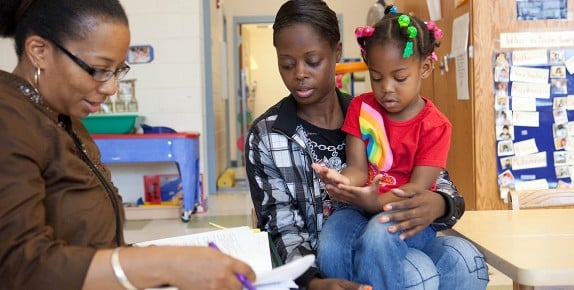
- Keep your voice low and slow.
- Say: “I can see this is really hard to hear.”
- Ask: “Would you like a short pause, or should we keep going?”
If a parent disagrees:
- Say: “Thank you for telling me. Let’s look at the patterns together.”
- Return to facts: times, places, what happened before/after.
- Ask curiosity questions:
- “Have you seen anything like this at home?”
- “Has anything changed lately ( #sleep, new baby, moving)?”
If a parent cries:
- Offer a tissue and a moment.
- Say: “You’re not alone. We’re here to support you.”
- Keep the focus on help, not blame.
Important: Don’t argue. Don’t “win.” The goal is a working relationship that helps the child.
How do I set boundaries while staying kind?
Respect includes clear boundaries.
Common boundary phrases:
- “I want to help, and I also need us to speak respectfully.”
- “I can’t discuss other children, but I can share what we are doing to keep everyone #safe.”
- “Let’s schedule a longer meeting so we can give this the time it deserves.”
If a parent wants a quick hallway talk, try:
- “I want to give you my full attention. Can we talk at pickup in a private space, or tomorrow morning?”
What should I document and follow up after the conversation?
Good follow-up builds trust and prevents confusion.
After the meeting:
- Write a short summary for your records:
- Date/time
- What you shared (facts)
- What the family shared
- Next steps you agreed on
- Share one clear follow-up message with the family:
- “Today we agreed to try ___ at school and ___ at home.”
- Set a check-in date:
- “Let’s check back in two weeks.”
What are quick “scripts” I can use for common tough topics?
Here are short, respectful phrases you can keep in your back pocket:
When a child hurts others
- “Today we saw hitting during play. We are teaching ‘gentle hands’ and staying close.”
- “Your child is learning this skill. We will keep practicing together.”
When a child may need extra support
- “I’m noticing some skills that seem harder right now, like following two-step directions.”
- “I’d like to talk about support we can try, and options for extra help if needed.”
When a family breaks a rule (late pickup, missing forms)
- “I know life is busy. We still need to follow this policy to keep the program running #safely.”
- “How can we make this easier going forward?”
Training and resources from ChildCareEd
If you want more tools for respectful communication, these ChildCareEd courses match this topic:
- Let’s Talk: Effective Communication
- Family (or Parent) Conferencing: Developing Trust ONLINE
- Building a Community of Families
Free ChildCareEd resource:
- Family Communication Note Buy Now $0.00 (easy, structured updates for home-school connection)
Related ChildCareEd article:
Stay connected
For more real-life scripts, tips, and training updates, follow ChildCareEd on social media through our Linktree (Instagram, Facebook, TikTok, and more).
- Lesson Planning for Preschoolers
- Family Connections: Creating Inclusive Relationships
- Family Voices Matter: Tools for Meaningful Collaboration
- Our School Age Family Tree: Children, Staff, & Parents
- It's All About the Timing
- Texas Director Credential
- 24 Hour Family Child Care Pre-Service Training ONLINE
- CDA: Stand With Respect and Professionalism
- A Guide to Effective Communication
- CDA Certification en Español: Recursos y Consejos para Educadores Bilingües
- 🪁¿Cómo puede el juego apoyar de manera poderosa a los niños con autismo?🧩
- 💛🧩 ¿Cómo puedo hacer que mi enseñanza sea inclusiva para los niños con autismo?
- 🏡🗣️ ¿Cómo hablo con los padres sobre los comportamientos que su hijo aprendió en casa?
- 🚌 ¿Qué Significan las Regulaciones de Transporte de Illinois para las Excursiones Infantiles? 🚦
- Cómo Abrir Una Quardería En Casa Sin Dinero?
- Proceso CDA: Entrenamiento, Portafolio, Examen y Visita de Verificació
- Cómo Crear Tu Portafolio CDA Paso a Paso
- How Can New California Daycare Providers Build Trust with Families?
- How Can Child Care Providers Improve Parent Communication Skills?
- How can Texas early childhood educators build respectful parent partnerships?
- How can early childhood programs in Texas build strong communication with families?
- How to Build Positive Relationships with Families in Child Care
- How Can Child Care Programs Build Strong Family Engagement?
- How can child care providers communicate effectively, manage hard conversations, and boost family involvement?
- How can child care providers handle tough conversations with parents effectively?
- How do we build trust with families from day one?
- How Can Child Care Providers Communicate Professionally During Difficult Situations?
- Proporciones para guarderías en casa bajo el Título 22: Cómo la mezcla de edades cambia su capacidad en California
