Introduction
Good communication with families helps children do better and makes your day easier. This article gives simple, practical steps that directors and child care providers can use right away. You will find ideas for quick daily notes, how to handle hard talks, ways to reduce #complaints, and training ideas to keep your team consistent. Use these steps to build #trust with #parents and stronger #partnerships.
Why it matters:
- Children learn better when home and school work together. See ideas in Communicating with Parents in the ChildCare Industry.
- Clear routine messages stop small worries from becoming big problems. For tips about reducing complaints, see How can parent communication strategies reduce complaints?.
Note: state requirements vary - check your state licensing agency.
1) How do we build trust with parents?
Trust grows from steady, kind actions. Try these 1–2 minute habits every day. Each step is easy and makes a big difference:
- 👋 Greet families warmly by name at drop-off or pick-up. A quick hello builds a small #trust deposit each day. See tips in How to Build Strong Relationships with Families.
- 📝 Send one short daily note with three facts: mood, meal, and a learning highlight (WIN: What we did, Improvement, Next step). For examples, visit Communicating with Parents.
- 📷 Share a photo or short example of learning (with permission). Pictures make progress clear without long text.
- 🤝 Ask and listen: invite parents to tell you what works at home. This shows you value their expertise and builds #partnerships.
Why this works:
- Small, regular touches create goodwill so hard conversations are easier later.
- Families who feel heard share important facts about sleep, health, or changes at home.
2) What daily routines and tools make communication simple and reliable?
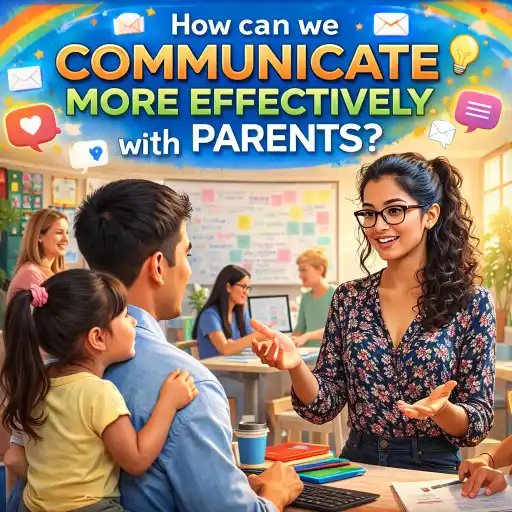
Pick a few methods and use them all the time. Parents are busy, so keep messages short and clear. Try this 4-part plan:
- 📱 Quick check-ins: 30–60 second greeting and one fact at drop-off or pick-up.
- ✉️ Daily notes: short paper or digital note with nap, food, mood, and a learning highlight. Use icons or checkboxes for families who prefer simple messages. See Communicating with Parents for ideas.
- 🗞️ Weekly newsletter: 3 bullets about classroom learning, a calendar reminder, and one home activity. ChildCareEd has a guide on writing clear newsletters: Communicating with Parents by Writing the Perfect Newsletter.
- 💬 Private channels: email or scheduled phone calls for sensitive topics. Set clear rules (example: reply within 24–48 hours on business days) so boundaries are fair to staff and families. For tips on managing complaints and public posts see How can parent communication strategies reduce complaints?.
Extra tips:
- Use simple words; avoid jargon. This helps families who speak another language.
- Ask each family how they prefer to get updates and follow their choice.
- Center messages on learning: families want to know what their child is learning and how to help at home (see Family Engagement Lab toolkit).
3) How do we handle complaints and hard conversations with respect?
Tough talks are easier when trust is already built. Use a calm script and follow a sequence. Here is a step-by-step plan you can use:
- 🧭 Prepare: gather facts, notes, and observations. Write down specific examples (times, places, what happened). Use objective tools like a conference form: Parent-Teacher Conference Form Buy Now $0.00.
- 🙂 Start with strengths: name one real thing the child does well.
- 🔍 Share facts (not labels): describe what you saw (e.g., “He pushed during block play twice today”).
- 🤝 Invite partnership: ask, “What do you see at home?” and “What would help?” This keeps the conversation team-focused. For scripts and more guidance see Communicating with families: tough conversations with respect and Hard Conversations with Parents.
- 🗂️ Follow up: write a short action note, set a check-in date, and stick to it. Document what you agreed on.
If a parent is upset:
- Stay calm, keep a quiet voice, and offer a pause if needed.
- Repeat what you heard (active listening) so the parent feels heard.
- Invite private follow-up rather than arguing in public. Remember: state requirements vary - check your state licensing agency.
4) How can documentation, training, and follow-up reduce problems long-term?
Good records and staff skills prevent confusion and protect everyone. Use these four steps:
- 📚 Train staff in communication basics: listening, empathy, and family partnerships. ChildCareEd courses like Let’s Talk: Effective Communication
 Buy Now $24.00 and the 9 Hour Communication Course Buy Now $99.00 offer practical skill-building.
 - 🧾 Keep simple, consistent forms: daily notes, incident logs, and a conference form. Consistent formats make answers faster and clearer. See Parent-Teacher Conference Form Buy Now $0.00.
- 🔁 Review trends monthly: list common concerns (pickup, naps, behavior) and fix root causes. Share wins with families so they see progress. This is part of reducing #complaints (see How can parent communication strategies reduce complaints?).
- 🧭 Use proven resources: the CDC’s Watch Me! training helps staff talk about development and use milestone checklists when needed.
Why documentation helps:
- It creates a clear record if a family asks questions later.
- It shows families you took action and follow through, which builds #trust and reduces repeat conflicts.
Conclusion
Clear, kind, and regular communication builds strong relationships with #families and helps children thrive. Start small: daily notes, quick greetings, and a calm script for hard talks. Train staff, use simple forms, and check trends so you fix the root problems. For more tools and templates, explore ChildCareEd articles and courses linked above.
Common mistakes — how to avoid them:
- 🚫 Only contacting parents for problems — instead, send positive notes often.
- 🚫 Using jargon or long notes — instead, use short, plain language and icons.
- 🚫 Reacting publicly to complaints — instead, acknowledge publicly and move to private follow-up (see How can parent communication strategies reduce complaints?).
FAQ
- Q: How fast should we respond to a parent message? A: Acknowledge within 24–48 hours on business days and offer a private follow-up.
- Q: What if a family speaks another language? A: Use short translated notes, pictures, or an interpreter for conferences (ask the family which works best).
- Q: Who should handle angry parents? A: A calm director or trained staff member with access to records should lead the talk.
- Q: Should we document every conversation? A: Record important meetings, agreements, and follow-ups in a simple log so you can track progress.
Want more? Visit ChildCareEd for courses, templates, and sample notes to help your team communicate with confidence.
- 45 Hour Child Growth and Development
- Our School Age Family Tree: Children, Staff, & Parents
- 45 Hour Infant and Toddler Methods and Materials
- Pediatric RSV First Aid & CPR/AED
- CDA Infant/Toddler: Parent Relationships
- Texas Director Credential Renewal
- Texas Director Credential
- Let’s Talk: Effective Communication
- Professional Integrity in Child Care
- The Power of International Sign Language in Early Childhood Education
- A Lifeline for Little Ones: Why First Aid and CPR Training is Essential for Teachers and Parents
- New Year, Fewer Tantrums: Tips for Building Strong Parent-Educator Partnerships in 2025
- Why Every Parent and Educator Should Learn Adult, Child, and Infant CPR
- What Parents and Educators Need to Know About Child Safety
- Inside the Child Care Resource Center: How to Maximize Support for Families and Educators
- 💛🧩 ¿Cómo puedo hacer que mi enseñanza sea inclusiva para los niños con autismo?
- Proporciones de Cuidado Infantil y Tamaños de Grupo por Edad en Nueva Jersey (Guía Rápida para Centros y Hogares)
- Proporciones de Cuidado Infantil y Tamaños de Grupo por Edad en Virginia (Guía Rápida para Centros y Hogares)
- Apoyo en Preescolar para Retrasos del Habla: Estrategias Simples que Ayudan
- Retraso del Habla en la Guardería: Cómo Pueden Ayudar los Proveedores
- How can Georgia early childhood educators build mutual respect with parents through daily communication?
- Celebrando la amistad en el cuidado infantil durante el Día de los Mejores Amigos
- Canciones, juegos y preguntas de círculo para niños
- How can child care staff communicate more effectively with families and each other?
- How can child care providers communicate effectively, manage hard conversations, and boost family involvement?
- How can child care providers handle tough conversations with parents effectively?
- How can child care providers share developmental information with families effectively?
- How should child care programs document infant and toddler development?
