Every day you greet families, share a moment, and shape trust. This short guide helps Georgia child care directors and teachers use simple daily routines to build mutual respect with parents. Daily #communication with families creates small wins: parents feel heard, staff feel supported, and children thrive. Remember: state requirements vary - check your state licensing agency. For additional approaches and practical examples for strengthening parent connections and building trust, see Building Trust: Strengthening Parent Connections in Early Childhood Education.
Why does daily communication matter for respect and learning?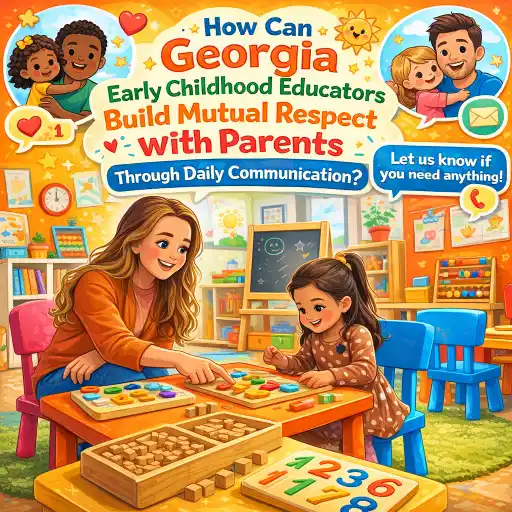
- Children do better when home and care match routines and expectations. Research and practice show family connections improve learning and social skills — see ideas in Family Engagement Strategies.
- Small, kind touches at drop-off and pick-up build #trust over time, so hard talks are easier later. For practical habits, refer to How can we communicate more effectively with parents?.
- Daily notes document routines and progress. Tools like the Preschool Daily Report Buy Now $0.00 or a Family Communication Note Buy Now $0.00 make communication concrete and fair.
Keep this short and regular: a 30–60 second greeting + one short daily note = steady relationship deposits. Use plain language, honor family preferences, and be consistent.
How can daily notes and check-ins build mutual respect?
- 👋 Greet by name at drop-off or pick-up.
- Say one specific strength: “I saw Sam help a friend today.”
- 📝 Send a short daily note (paper or app) with 3 facts: mood, meal, and a learning highlight. Use icons or checkboxes for quick reading. See sample forms at Preschool Daily Report Buy Now $0.00.
- 📷 Share one photo or quick example (with permissions) so parents see real learning moments. Photos reduce misunderstandings and celebrate progress.
- 🤝 Ask one question: “What went well at home?” This invites partnership and shows you value their view.
Tips:
- Use plain language and avoid jargon.
- Offer translation or visual supports when helpful.
- Match the family’s preferred channel (note, text, app, or quick chat).
Small, steady habits equal big #trust. Try a one-week staff challenge: everyone sends at least one positive note each day and compare results.
What should we say and how do we handle tough conversations?
- Start with a strength: “I enjoy watching Ava at circle time—she looks for books.”
- Share objective facts: “In the last two weeks, she hasn’t used two-word phrases during play.”
- Explain why you’re sharing: “I want us to support her language together.”
- Invite the parents’ view: “What are you seeing at home?”
- Offer options and next steps: monitoring, simple home activities, or a referral. Say, “We can try a 4-week plan and check back.”
Use structured frames like SBAR (Situation, Background, Assessment, Recommendation) to keep conversations clear and action-focused — see SBAR tool. Document the plan and set a follow-up date. If a parent is upset, pause, reflect their feelings, and suggest a private follow-up.
For staff training on these skills, consider ChildCareEd courses such as Family Conferencing: Developing Trust  Buy Now $24.00 and Let’s Talk: Effective Communication Buy Now $24.00.
Which tools and routines make communication reliable in Georgia programs?
Reliable systems reduce mistakes and show families you respect their time and concerns. Use these practical steps.
- 📱 Choose consistent channels:
- Daily quick chat + a written note (paper or app) works best. Apps like Brightwheel or HiMama can help—see the review at Top Teacher-Parent Apps.
- 🧾 Use simple forms: daily reports, incident logs, and a one-page family note. Find templates at Family Communication Note Buy Now $0.00 and Preschool Daily Report Buy Now $0.00.
- 📚 Train staff and set response expectations (example: acknowledge messages within 24–48 business hours). ChildCareEd’s 9 Hour Communication Course Buy Now $99.00 offers practical training modules.
- 🔁 Schedule regular family check-ins: 1–2 times a year, formal conferences, and monthly trend reviews for common issues.
Document everything: what you observed, what you told the family, and agreed next steps. Good documentation protects families and staff and helps programs meet Georgia licensing expectations—state requirements vary - check your state licensing agency.
How do we keep relationships strong and avoid common mistakes?
Long-term respect comes from consistency, humility, and celebration. Use these practical rules and common pitfalls to avoid.
- 🌟 Celebrate wins often: send positive notes, photos, or quick calls about effort and progress.
- 📆 Be predictable: consistent times for messages, conferences, and newsletters build reliability.
- 🤝 Use strengths-first language in every meeting to keep families engaged and safe.
- 🧠 Build staff skills: use the Pyramid Model and CSEFEL strategies to support social–emotional issues (see CSEFEL).
- 📈 Review trends monthly: track common questions and fix systems that cause repeated complaints.
Common mistakes — how to avoid them:
- 🚫 Contacting families only for problems. Fix: send positive notes daily.
- 🚫 Using jargon or long notes. Fix: use short facts and icons.
- 🚫 Public confrontations on social media. Fix: acknowledge publicly and move to private follow-up.
FAQ
- Q: How fast should we respond to a parent message? A: Acknowledge within 24–48 business hours and offer a time to follow up.
- Q: What if a family speaks another language? A: Use short translated notes, pictures, or an interpreter; ask families how they prefer communication.
- Q: Who should handle angry parents? A: A calm supervisor or trained staff member with access to records should lead the conversation.
- Q: Should we document every conversation? A: Record key meetings and agreements; keep brief logs for daily notes.
Conclusion
Building mutual respect with parents in Georgia is daily work: short greetings, honest notes, clear documentation, and regular training. Use simple tools (daily notes, apps, family forms), practice strengths-first language, and plan for follow-up. Invest small time each day and you’ll save time and stress later. For templates and training, explore ChildCareEd resources cited above. Keep building those #communication deposits with families, honor their expertise, and watch children thrive through strong partnerships.
Why it matters: Hard talks are easier when trust is already built. Use a calm script and objective observations. The CDC’s Watch Me! module and ChildCareEd guidance on developmental conversations offer strong scripts and milestone tools. Daily routines are the backbone of respectful partnerships. Use this 4-step plan every day to make sure families feel valued and informed.
- 45 Hour Child Growth and Development
- Bridging Intent and Response: Communication
- Our School Age Family Tree: Children, Staff, & Parents
- Collaboration for the Win
- Texas Director Credential
- History, Policy, and Practice in ECE
- Every Moment Matters: Schedules and Transitions
- Families, Communities, and Classrooms: Working Together for Children
- Bridging Cultures: Family Communication & Collaboration
- Having a Heart-to-Heart
- New Year, Fewer Tantrums: Tips for Building Strong Parent-Educator Partnerships in 2025
- CDA Certification en Español: Recursos y Consejos para Educadores Bilingües
- Inside the Child Care Resource Center: How to Maximize Support for Families and Educators
- 👶 ¿Cuáles son las proporciones y grupos requeridos en Dakota del Norte? 🏫
- Cómo Abrir Una Quardería En Casa Sin Dinero?
- Curso de Comunicación de 9 Horas de Maryland
- Retraso del Habla en la Guardería: Cómo Pueden Ayudar los Proveedores
- Cómo Trabajar en el Cuidado Infantil en Carolina del Norte: Requisitos y Pasos
- How can we help Georgia families feel heard, valued, and included in child care?
- How can Georgia early childhood educators build mutual respect with parents through daily communication?
- How Can Childcare Providers Strengthen Connections Between Home and Childcare?
- How Can Child Care Providers Prevent the Isolation of Children with Disabilities?
- What Are Simple Ways to Partner With Families All Year?
- How Can Child Care Providers Build Strong Partnerships with First-Time Daycare Parents?
- How Can Child Care Providers Repair Trust After a Difficult Parent Conference?
