Children’s mental health is about how kids feel, think, and get along with others. As a child care provider or director, you help shape their days. This article gives clear, practical steps you can use in your program every day. We include simple ways to notice when a child needs more help, how to work with families, and ways to support your staff. You will see links to trusted resources and trainings so you can take action now. Find courses like Mental Health in Early Childhood  Buy Now $24.00 and A Thoughtful Approach to Children's Mental Health Buy Now $24.00 for more learning. Remember: state requirements vary - check your state licensing agency.
Why does supporting children's mental health matter?
2. Early support prevents problems from getting bigger. The CDC explains that early care settings can protect and improve long-term health. Screening and early help can change a child’s path for the better.
3. Your program is part of the child’s world. Children spend many hours in care. Child care staff can spot small changes in behavior that families or doctors might miss. Tools like the CECMHC screening guide and CDC developmental screening show why early identification matters.
4. Supporting mental health reduces expulsions and helps classrooms run more calmly. The Pyramid Model and CSEFEL resources describe ways to build social skills and lower challenging behaviors; see CSEFEL.
5. Quick wins matter: predictable routines, warm adults, and small teaching moments add up to big gains for young #children.
What practical daily steps can we use in our program?
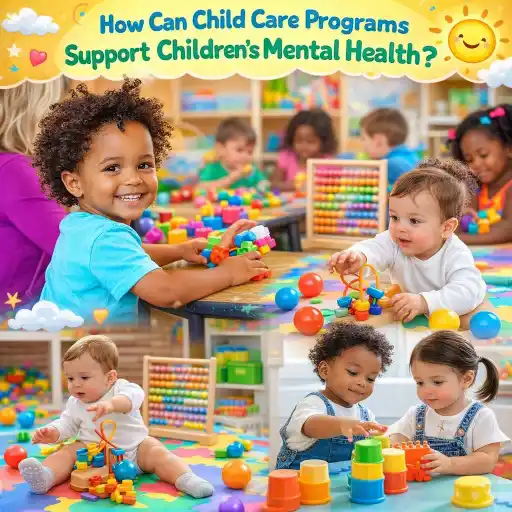
1. Build a calm, predictable day.
- 🟢 Use the same routine for arrival, meals, naps, and leaving. Visual schedules help children know what comes next.
- 🔵 Give warnings before changes ("5 minutes until clean-up"). Practice transitions; CSEFEL has ideas for smoother moves between activities: Helping Children Make Transitions.
2. Teach feelings and coping skills.
- 🙂 Use books, puppets, and feeling boards. Try activities from ChildCareEd's mental health overview.
- 😌 Create a quiet calming spot with soft items and sensory tools. Short breathing exercises help big feelings settle.
3. Encourage social skills with play.
- 🎲 Set up play activities that teach sharing, asking for help, and using words for feelings.
- 🎯 Celebrate small wins and effort to build confidence.
4. Use team routines for support.
- 📋 Hold brief staff check-ins to share observations and plan simple strategies for children who need extra help.
- 📚 Offer staff training like Early Emotional Wellness Buy Now $16.00 to build skills.
These steps are low-cost and work across ages. They help children feel safe, reduce stress for staff, and improve behavior. Use #caregivers and #children naturally in your daily talk so everyone uses the same words about feelings.
How do we screen, get help, and work with families?
2. Use formal tools when needed. The CECMHC guide lists social-emotional screeners. The CDC recommends screening at key ages and explains monitoring vs screening.
3. Talk with families with care.
- 💬 Start with strengths: tell parents what the child does well.
- 🧾 Share specific observations and ask about what happens at home.
- 🤝 Offer resources and next steps, such as referral to early intervention or a mental health consultant like an Infant/Early Childhood Mental Health Consultant; see the Illinois example: I/ECMHC.
4. Know the referral path.
- 📞 Refer families to health care providers or local early intervention when screening suggests a concern.
- 🔎 Find local mental health consultants who can coach your team on classroom strategies and family talks.
5. Follow privacy and rules. Keep notes factual and share only with parents and authorized staff. And remember: state requirements vary - check your state licensing agency about screening and referral rules.
How can programs support staff and avoid common mistakes?
1. Train and coach your team.
- 📘 Offer regular training like A Thoughtful Approach to Children's Mental Health Buy Now $24.00 or trauma training such as Implementing Trauma-Informed Care. Simple courses boost confidence and skills.
- 🧑⚕️ Use mental health consultants (I/ECMHC) to coach staff and prevent burn-out; consult the Illinois I/ECMHC model for ideas.
2. Support staff wellness.
- 💆 Build short breaks into the day and encourage peer support meetings.
- 📅 Keep realistic schedules to reduce stress. Programs that build reflective practice reduce emotional exhaustion.
3. Common mistakes and how to avoid them:
- ⚠️ Relying only on one day of behavior—watch for patterns over time.
- ❌ Using punishment instead of teaching—use the Pyramid Model and positive behavior supports from Pyramid Model.
- 🚫 Not involving families—always partner with parents and share strengths first.
4. Build policies that guide staff. Create simple written steps for observation, family contact, referral, and follow-up. Provide staff with easy-to-use screening checklists and local resource lists.
5. Embrace a trauma-informed lens. Trauma-aware programs focus on safety, trust, and empowerment. The National Technical Assistance Center has tools for creating trauma-informed organizations. When teams use these approaches, classrooms become kinder, calmer places for every child.
Summary
1. Small daily steps help a lot: routines, naming feelings, calm spaces, and play teach children how to cope and connect.
2. Screen early and work with families. Use trusted tools like those from CECMHC and CDC.
3. Train staff and use consultants. Courses on ChildCareEd and models like the Pyramid Model and trauma-informed care give your team practical tools. See ChildCareEd resources for ideas.
4. Keep it simple, kind, and consistent. Your program can be the place where children learn to feel safe, calm, and ready to grow. Use #screening, #trauma, and #caregivers language so your whole team and families speak the same words about feelings.
FAQ (quick):
- Q: Who should start screening? A: Programs with trained staff and family agreement—start with observation and then use a screening tool. See CECMHC.
- Q: What if a family resists? A: Share strengths first, listen, and offer options. Be respectful and patient.
- Q: How do we pay for training? A: Many free resources exist; check state supports and low-cost online classes at ChildCareEd.
- Q: When to call for help? A: If behaviors last weeks, hurt others, or slow learning, involve a consultant or health provider.
- 45 Hour Child Growth and Development
- Bienvenido! Welcoming All Families
- CDA Family Child Care Credential with Portfolio Review
- 45 Hour Infant and Toddler Methods and Materials
- Pediatric RSV First Aid & CPR/AED
- 45 Hour School Age Methods and Materials
- Texas Director Credential Renewal
- Texas Director Credential
- Nurturing Young Minds: The Role of Early Childhood Educators in Supporting Children's Mental Health
- Managing Behaviors in the Early Childhood Education Classroom
- Not Just a Bad Day: 10 Subtle Signs Your Kid Might Be Battling Depression and AFSP walks near you
- CDA Certification en Español: Recursos y Consejos para Educadores Bilingües
- Mental Health Awareness in Childcare Education
- How can child care programs promote mental health in early childhood?
- The Top Rewards of Working in Early Childhood Education
- How Can Early Education Programs Support Children's Mental Health?
- How Can Child Care Programs Support Children’s Mental Health?
- How Can New York Childcare Educators Support Children After Trauma?
- How Do Minnesota Winters Affect Young Children's Mental Health?
- After DC Early EdX 2026: Why Do Early Educator Mental Health and Advocacy Matter More Than Ever?
- What Does Michigan's Overdose Decline Mean for Trauma-Informed Child Care?
- How can Florida providers connect early learning, health, and family support in 2026?
- How Can Early Childhood Programs Support Mental Health?
- How can North Dakota child care programs prepare children for school using social-emotional skills?
- How can child care programs support immigrant and multilingual families?
- How Can Providers Support Families Who Rely on Head Start?
- What Would the Proposed Head Start Changes Mean for Children and Families?
- How Can Child Care Providers Support Children’s Mental Wellness?
