Starting a child care program in Washington can feel big and exciting. This guide helps new providers and directors learn what to do first. You will find simple steps, helpful links, and practical tips. Keep these five words in mind as you read: #Washington #daycare #licensing #families #quality.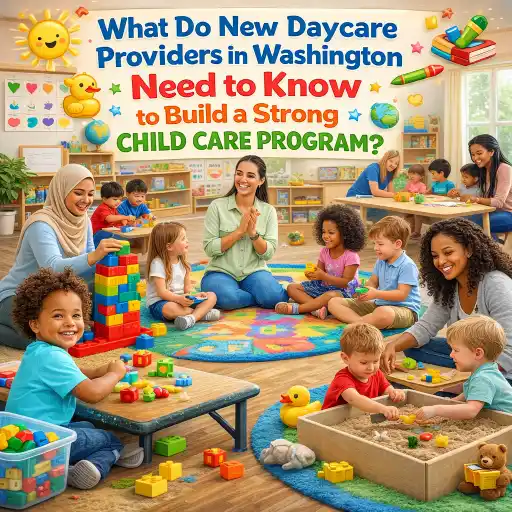
1) What licenses, rules, and state steps do I need first?
1. Contact the state agency. In Washington, the Department of Children, Youth, and Families (DCYF) oversees child care rules. See official rules and the Early Achievers quality program as part of Early Childhood Education in Washington and the law at RCW 43.216.
2. Learn licensing types and limits:
- Family child care home vs. child care center. Each type has different rules on how many children you can care for. See examples at How to Start a Home Child Care Program.
- Background checks and fingerprinting are required for staff and owners under state rules. Check DCYF details in RCW 43.216.
3. Training and orientation. Many states require orientation and pre-service training before opening. In other states, you may need specific hours of training or certificates; find training on ChildCareEd.
Why this matters: A correct license keeps children safe and your business legal. Also, state requirements vary - check your state licensing agency. If you skip steps, you risk fines or closure.
2) How do I make my program safe, healthy, and high-quality?
1. Use clear quality ideas. Follow core program standards like relationships, curriculum, teaching, health, and environment. The NAEYC program standards help explain these ideas (see NAEYC Program Standards).
For practical, classroom-tested strategies to intentionally build and sustain high-quality practices in routines, curriculum, and staff development, see the High Quality is Intentional training.
2. Health and safety steps to take now:
- 🧰 Make your space safe: cover outlets, block stairs, and secure cords.
- 🍽️ Plan healthy meals and snacks. To learn more about food programs, see CACFP info like Food Program - CACFP.
- 🩺 Keep first aid and CPR current for staff.
Establish clear toileting and diapering policies and routines; for practical potty training tips to support transitions from diapers to toilets, see potty training guidance.
3. Promote learning with a good environment:
- Set simple learning areas (reading, blocks, art).
- Use child-size furniture and safe, clean toys.
- Plan routines so children know what comes next.
4. Track child growth and health. Use milestone tools and talk with families. The CDC’s Watch Me! training explains how to share milestones and concerns.
Why this matters: Safe, healthy programs help children learn, and families trust you. A focus on quality also helps with state ratings like Early Achievers in Washington (see Early Childhood Education in Washington).
3) How should I hire, train, and support staff (and myself)?
1. Plan staff roles and training needs. Write job duties and clear expectations. Use training to meet state rules and improve care. ChildCareEd has many courses such as business planning, family child care pre-service training, and CDA training. See Business Planning: Family Child Care  Buy Now $16.00 and the CDA Family Child Care Credential Buy Now $400.00.
2. Required trainings and supports:
- ✅ Initial pre-service training (often 24 hours for family homes).
- ✅ First aid, CPR, and medication training.
- ✅ Ongoing professional development each year.
3. Practical hiring tips:
- 🧾 Check references and background checks—required by law.
- 📚 Offer clear orientation and mentoring for new staff.
- 💬 Hold short weekly check-ins to support teamwork.
4. Common mistakes and how to avoid them:
- Not documenting staff training. Fix: keep a simple folder or online file with certificates.
- Hiring without clear duties. Fix: write a one-page job list and share it.
- Skipping staff support. Fix: Schedule regular meetings and offer training time.
Why this matters: Trained and supported staff keep children safe and help your program earn higher quality ratings. Good staff systems also reduce burnout and turnover.
4) How do I connect with families and the local community?
1. Build trust with families every day. Use short updates at drop-off and pick-up. Try the WIN method: What we did, Improvement, Next step. For more communication ideas, see Communicating with Parents.
2. Use these family partnership steps:
- 📸 Share one positive photo or note each week (with permission).
- 🗣️ Ask families about routines, languages, and culture.
- ✍️ Create a simple parent handbook with hours, fees, and sick policies.
3. Work with community supports:
- Apply to food reimbursement programs like CACFP to help cover meals (CACFP).
- Learn about subsidies and child care help in Washington through DCYF and Working Connections (see RCW 43.216).
- Partner with local health and development programs. Use CDC milestone tools from Watch Me! to talk about development with families.
4. Why family partnerships matter: Strong family ties help children feel safe. Families who trust you will share information that helps with routines, feeding, and learning.
Conclusion
1. Start with the right steps: contact DCYF, learn licensing types, and get required background checks and training. See Washington resources and ChildCareEd training links above.
2. Build safety and quality in your space. Follow health, meal, and learning guides like NAEYC and CACFP.
3. Hire and support staff with clear roles, training, and mentoring. Keep records of training and licenses.
4. Partner with families and community programs. Good communication and community help your program succeed.
Short FAQ:
- Q: How long until I get licensed? A: It varies by type and location. Contact DCYF for timelines and remember: state requirements vary - check your state licensing agency.
- Q: Where can I get training? A: Many trainings are on ChildCareEd.
- Q: Can I get help with meals? A: Yes. Look into CACFP (Food Program - CACFP).
- Q: How do I check quality? A: Use Early Achievers and NAEYC standards as guides (see Early Childhood Education in Washington and NAEYC).
You are not alone. Take one step at a time, use good resources, and reach out to other providers in your community. For many practical courses and tools, visit ChildCareEd and your state DCYF office.
- Business Planning: Family Child Care
- Pediatric RSV First Aid & CPR/AED
- CDA Bridge Bundle: Family Child Care without Portfolio Review
- CDA Bridge Bundle: Infant/Toddler without Portfolio Review
- CDA Bridge Bundle: Preschool without Portfolio Review
- CDA: Communication: Keep It Simple
- Texas Director Credential Renewal
- Texas Director Credential
- ChildCareEd: Empowering Early Childhood Educators with Quality Training
- Capacitación en Salud y Seguridad Preventiva en Línea para Proveedores de Cuidado Infantil
- Proporciones de Cuidado Infantil y Tamaños de Grupo por Edad en Maryland (Guía Rápida para Centros y Hogares)
- Lista para Guardería en Casa en Texas: Cómo Iniciar una Guardería en el Hogar
- Capacitación Previa al Servicio para Proveedores de Cuidado Infantil en Dakota del Norte
- How do I start a daycare in Washington, D.C. as a new provider?
- What Do New Daycare Providers in Washington Need to Know to Build a Strong Child Care Program?
- How Can New D.C. Daycare Providers Support Children and Families in a Busy City?
- How can Washington early childhood educators support outdoor play, safety, and learning in daycare?
- How can Washington, D.C. child care providers keep children safe during transitions, drop-off, and pick-up?
- How can Washington classrooms be more inclusive using nature, play, and community?
- How do I open a day care in Washington with confidence?
- Should Washington Child Care Centers Rethink Parking Lots, Barriers, and Building-Side Safety?
- Daycare Temperature Regulations in Washington: What Providers Should Know
- Washington Daycare Center Standards: What Providers Need to Know
- Washington Home Daycare Standards: What Providers Need to Know
- Washington Child Care Ratios and Group Sizes by Age: Daycare Center Guide
- Washington Child Care Ratios and Group Sizes by Age: Home Daycare Guide
- How to Become a Childcare Worker in Washington: Requirements and Steps
