Every day you care for young children, and you want them to be safe if the ground shakes. This guide gives simple, practical steps that California #early childhood teachers and directors can use during earthquake drills and in daily routines. Put plans on the wall, practice often, and keep supplies ready. Remember: state requirements vary - check your state licensing agency. Use small steps to build big safety habits for your #children and classroom.
Why it matters
1) Earthquakes happen quickly and without warning. Teaching and practicing the right steps helps children stay calm and protected. 2) Regular routines and clear roles help staff move fast and reduce mistakes. 3) Families trust centers that are prepared. For help building a plan, start with ChildCareEd's guidance on emergency preparedness and sample plans like the Sample Childcare Emergency Action Plan Buy Now $0.00.
How do we teach children to Drop, Cover, and Hold On during drills?
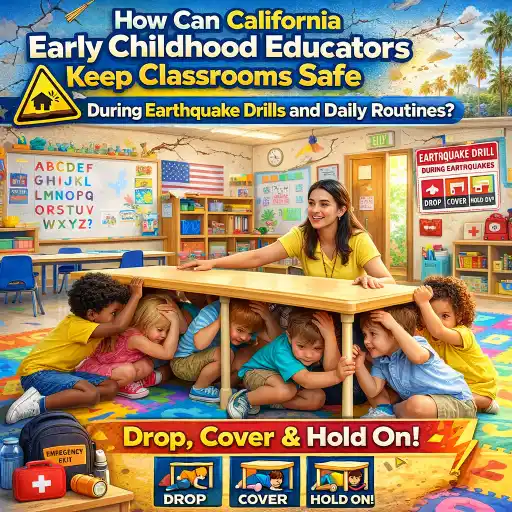
Teaching Drop, Cover, and Hold On helps children know what to do immediately when shaking starts. Keep steps short and practice in small bits.
- Explain in 1-2 sentences. Say: “We will Drop down, Cover under a table or by a wall, and Hold On until the shaking stops.” Use calm words and show the moves.
- Practice often and briefly. Do quick drills so kids remember. Use ChildCareEd tips from How can my classroom be ready for an emergency? for age-appropriate practice.
- Use games to teach:
- 😊 Game: "Shield the Teddy" — children place a stuffed animal under their arm and practice covering it.
- 🕒 Time it: Try to stay under cover for 20–30 seconds at first, then increase as they learn.
- Include infants and children with special needs in plans: know who will carry them and where medical supplies are kept. See FEMA IS-36 for planning ideas.
- After drills, talk briefly. Praise children for participating. Tell families what you practiced and link to resources like the Red Cross Drop, Cover, Hold On guide at Red Cross Earthquake Safety.
Practice builds muscle memory. Keep drills calm and short so children see them as safe practice, not scary events. Use clear cues like "Drop-Cover-Hold" so substitutes and visitors know the routine. This helps everyone act quickly during a real #earthquake and keeps focus on #safety.
What daily classroom routines reduce earthquake hazards?
- Secure furniture and heavy items:
- 🔧 Anchor bookcases and shelves to the wall.
- 📌 Use museum putty or straps on small items that could fall.
- Put safe spots on the floor: identify sturdy tables or inside walls where children will go. Post these spots with a simple picture so children remember.
- Keep pathways clear: make sure exits and hallways are free of toys and boxes every day.
- Store breakables and supplies up high but secured; store heavy supplies low so they won’t fall onto children.
- Practice routines at different times (naptime, outside, arrival):
- 😊 Try a quiet drill during rest time so staff know how to move sleeping children safely.
- 🚪 Practice an evacuation at pickup time to check gates and sign-out procedures.
- Use national safety standards for ideas from Caring for Our Children.
Routine checks, a simple plan, and staff roles reduce panic. Make a short daily safety checklist and review it in staff meetings. These habits protect your #children and give families confidence in your #California program.
What should be in classroom Go-Bags and how do we maintain them?
- Must-have items (check every 3–6 months):
- 📋 Attendance list, emergency contacts, printed medical info for each child.
- 🩹 First aid kit, gloves, CPR barrier, and spare masks.
- 🥤 Water (small bottles) and non-perishable snacks; formula and diapers for infants.
- 🔦 Flashlight, batteries, whistle, and a small radio or phone charger.
- 🧸 Comfort items: a few books or small toys to calm children.
- Special items: spare hearing-aid batteries, insulin info, EpiPens with consents. Keep medication labels and doctor orders together. ChildCareEd offers a handy Go-Bag checklist.
- Maintenance routine:
- 😊 Check bags quarterly: swap expired food, update contacts, replace batteries.
- 📌 Practice grabbing the Go-Bag during drills so the assigned person knows where it is.
- Record keeping: keep one copy of each child’s emergency form in the Go-Bag and one in the office. For more planning help, see FEMA's childcare course IS-36 and ChildCareEd resources like the activity book Buy Now $0.00.
For guidance on updating your first-aid kit and adding season-specific supplies (for example, winter items or holiday coverage), see Frosty’s First Aid Kit: Emergency Preparedness Tips for Educators During the Holidays.
Having checked, practiced bags reduces stress and lets you care for children until help or parents arrive. Remember to tell families what you keep in the Go-Bag so they know their child’s needs are covered.
How do we communicate with families and run safe reunification after an earthquake?
Clear communication is key. Plan how to tell families about drills, real events, and where to pick up children after a drill or emergency.
- Before an event:
- 📄 Share a one-page plan at enrollment and post it in the lobby. Include primary and backup reunification sites.
- 📱 Ask families for an out-of-area contact and multiple ways to reach them. Keep a printed list in the Go-Bag.
- During an event:
- Keep children safe first. Once secure, send a short update: where you are and how they will pick up their child.
- Use multiple channels (text, phone tree, app) and keep messages brief.
- Reunification steps:
- 🔐 Verify identity: only release children to adults on the emergency form and ask for photo ID.
- 📝 Log release: record time, name of adult picking up, and who checked ID.
- After the event: give families a short report of what happened, how children were cared for, and any next steps. For detailed reunification guidance, see ChildCareEd's article on classroom readiness and CDC tips at CDC Childcare Preparedness.
Practice reunification during some drills so staff and parents know the routine. Clear rules and a calm staff make reunification smooth and safe.
Conclusion: What common mistakes should we avoid and where can we learn more?
Common mistakes to avoid:
- Relying only on phones for contact — power may be out. Keep printed lists.
- Not practicing with actual Go-Bags or at different times of day.
- Forgetting children with special needs in plans — include med info and who carries them.
- Using scary language during drills — keep wording simple and reassuring.
Where to learn more and train:
- ChildCareEd courses like Emergency and Disaster Preparedness
 Buy Now
 $55.00$45.00 and Responding to Emergencies Buy Now $16.00. For a concise overview of why staff-level emergency and disaster preparedness training matters and what courses should cover, see the Ready for Anything: Every Childcare Provider Needs Emergency and Disaster Preparedness Training. - FEMA childcare training IS-36 and Red Cross earthquake guidance at Red Cross
FAQs (short):
- Q: How often should we run earthquake drills? A: Practice short drills at least twice a year and more often for young children; follow local licensing rules.
- Q: Who carries the Go-Bag? A: Assign a person and practice it during drills so they know where it is.
- Q: What if a parent is not listed on the emergency form? A: Do not release the child until identity is verified; follow your reunification rules.
- Q: How do we include infants? A: Plan who carries them, prepare strollers/wheeled cribs, and keep formulas/diapers in the Go-Bag.
Keep practicing. Small daily habits and clear drills make your #classroom safer for every child. For templates and more tools, see ChildCareEd resources like the Disaster Preparedness Activity Book Buy Now $0.00 and sample emergency plans. Stay calm, stay prepared, and keep your #drills regular to protect #children in #California.
Small everyday actions make your room much safer. Use a checklist and walk the space with staff regularly.A Go-Bag is a ready backpack with supplies you can grab in minutes. Keep a main Go-Bag by the nearest exit and smaller bags for other rooms.
- Behind the Scenes: Baby Routines ONLINE
- 45 Hour Child Growth and Development
- 45 Hour Preschool Methods and Materials
- Mastering Supervision: Keeping Children Safe in All Settings
- 45 Hour Infant and Toddler Methods and Materials
- Pediatric RSV First Aid & CPR/AED
- Texas Director Credential
- Every Moment Matters: Schedules and Transitions
- CDA Certification en Español: Recursos y Consejos para Educadores Bilingües
- 🌪️Fire Drills, Flashlights & Fast Thinking: Why Emergency Preparedness Is a Must
- 😤💬 ¿Qué Le Digo a un Niño que Acaba de Morder a Otro?
- Cuáles Son las Señales de Alerta en el Desarrollo Infantil que Todo Educador Debe Conocer?
- Recursos en Español sobre el Sueño Seguro del Bebé
- 10 Ejemplos de Cómo la Cultura Influye en el Desarrollo Infantil
- Capacitación en Salud y Seguridad Preventiva en Línea para Proveedores de Cuidado Infantil
- Proporciones de Cuidado Infantil y Tamaños de Grupo por Edad en Virginia (Guía Rápida para Centros y Hogares)
- Consejos de Supervisión Activa para Salones de Preescolar y el Juego al Aire Libre
- Retraso del Habla en la Guardería: Cómo Pueden Ayudar los Proveedores
- Cómo Trabajar en el Cuidado Infantil en Carolina del Norte: Requisitos y Pasos
- Cómo Trabajar en el Cuidado Infantil en California: Requisitos y Pasos
- Cómo Ser Maestra de Preescolar en Dakota del Norte
- Cómo Ser Maestra de Preescolar en California
- How Can California Early Childhood Educators Keep Classrooms Safe During Earthquake Drills and Daily Routines?
- How can California child care providers create safer classrooms for infants, toddlers, and preschoolers?
- How do I open a day care in California and stay licensed?
- Canciones, juegos y preguntas de círculo para niños
- Cómo simplificar la capacitación para sus empleados de daycare
- How can California child care providers prepare for wildfire smoke, power outages, and closed classrooms?
