You work hard every day to make sure each child feels safe, seen, and ready to learn. This short guide is for Michigan child care providers and directors who want simple, practical steps to use #culturallyresponsive teaching with young children. You will find classroom ideas, ways to work with families, and quick ways to start now. Remember: state requirements vary - check your state licensing agency.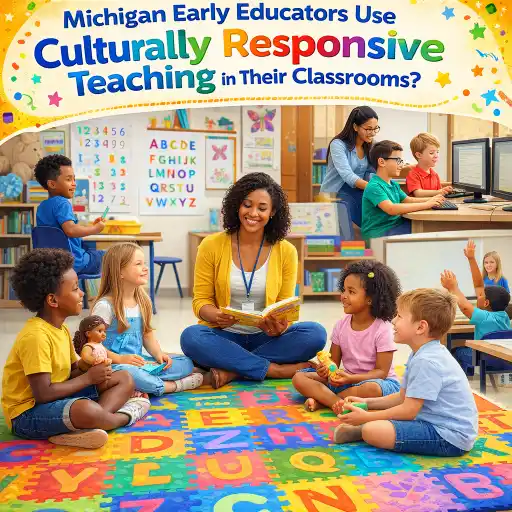
What does culturally responsive teaching look like in a Michigan early childhood classroom?
- 👋 Visible welcome: Labels, posters, and a welcome sign in common home languages help children feel seen. Try simple labels (door / puerta) and favorite greetings from families.
- 📚 Diverse books and toys: Use books, dolls, and images that show many skin tones, family types, and abilities. ChildCareEd has lists of multicultural activities and books at Celebrate Every Family.
- 🧩 Teaching linked to home: Build lessons from children’s stories, songs, and meals at home. This helps learning stay meaningful.
- 🔁 Routines that include culture: Routines with visuals help all children, including Dual Language Learners. See recommendations in Responsive & Respectful Environments.
These steps support children’s #belonging and help teachers meet program goals while honoring family identity.
How can Michigan educators partner with families and community resources?
- 📸 Start small: Invite families to send a photo or a word from home. Put photos on a family wall (with permission).
- 📝 Ask purposefully: Use a short form like “What should we know to support your child?” Keep it optional and simple.
- 🤝 Offer many ways to connect: Phone calls, notes, translated messages, or digital photos. Use interpreters when needed. See the free guide on working with diverse language families at Training Guide for Families from Diverse Language and Cultural Backgrounds.
- 🏫 Tap local resources: Michigan resources like the Michigan Literacy Progress Profile (MLPP) or local ISD supports can help with screening and family literacy work.
- 🤝 Family language and culture partnerships: For staff working with multilingual families, ChildCareEd's Training Guide for Families from Diverse Language and Cultural Backgrounds
 Buy Now $24.00 is a 3-hour online course that builds communication skills and strategies for partnering respectfully with families whose home language or culture differs from the classroom — a natural complement to the family engagement steps in this guide.
Partnering means honoring family strengths, asking with curiosity, and co-creating goals for the child. Teachers who work with families build trust and stronger learning outcomes.
Why does culturally responsive teaching matter for children and programs?
- 📈 Learning gains: Children engage more when lessons are meaningful and tied to home.
- ❤️ Social-emotional benefits: Feeling accepted lowers stress and boosts confidence to try new things.
- 🔄 Better family–school continuity: When home routines are recognized, behavior guidance and transitions are smoother.
For program quality and equity goals, culturally responsive practices are not optional. They strengthen relationships, reduce bias, and support readiness. Remember: state requirements vary - check your state licensing agency.
How do Michigan educators begin or deepen culturally responsive practices today?
Start with small, doable steps you can keep doing. Training helps, but you can also change materials and routines right away. ChildCareEd course suggestions include Diversity, Equity & Inclusion and practical courses on supporting diverse learners at Recognize, Respond, Respect.
- 🧰 Quick classroom fixes:
- Swap in 3–5 new books that reflect your children’s families.
- Add picture labels and a small family photo shelf.
- 📆 Routine changes:
- Teach a greeting in a home language each week.
- Use visuals for daily routines so all children can follow along.
- 🎓 Professional growth:
- Take short courses and use free resources listed in ChildCareEd, free resources like Building Bridges for Dual Language Learners.
- Reflect monthly: ask, “Do materials reflect our children? Do families feel heard?”
- Supporting diverse learners: ChildCareEd's Recognize, Respond, Respect: Supporting Diverse Learners Buy Now $55.00 is a 6-hour online course that gives educators practical tools to create inclusive, culturally responsive classrooms — covering how to recognize bias, respond to individual needs, and build environments where every child feels seen and valued.
Common mistakes and how to avoid them
- ❌ Mistake: A single “culture day.” ✅ Do instead: Include culture every day through books, routines, and family voices. Consider planning respectful, family-led acknowledgments of community holidays — for example, include resources and activity ideas for celebrating Juneteenth with young children, with families' guidance and permission.
- ❌ Mistake: Asking one child to represent a whole culture. ✅ Do instead: Use books, photos, and family permissioned shares.
- ❌ Mistake: Using food activities without checking allergies or beliefs. ✅ Do instead: Offer pretend food, photos, or sensory alternatives.
FAQ
- Q: I don’t speak families’ home languages. What can I do?
A: Learn a few key words, use visuals, invite families to share words, and use interpreters if possible. See tips in ChildCareEd’s practical guide. - Q: How do I start when I have limited time?
A: Add one new book and one label each month. Small changes add up fast. - Q: Where can I learn more?
A: ChildCareEd courses and free resources listed above are a good start. Also, look for local Michigan ISD supports and the MLPP tools (MLPP).
Conclusion
Culturally responsive teaching in Michigan early childhood programs helps children learn, builds trust with families, and supports quality care. Start small: change a few materials, ask families one short question, and reflect often. Use the practical ChildCareEd resources linked above to guide your next steps. Your everyday choices show children they belong. Keep going — you are making a difference for every child in your #Michigan classroom.
Strong family partnerships are central. Families are experts about their child’s culture, routines, and language. Use respectful questions and flexible choices so families can share on their terms. ChildCareEd offers practical family partnership ideas in How Do I Support Diverse Families. When children see their lives and languages reflected in the classroom, they learn better and feel safer. Research and professional guidance show that children’s identity and belonging are tied to development and school readiness. The NAEYC resource Teaching Young Children to Resist Bias explains how early work against bias helps kids grow respectful attitudes. Michigan-focused study findings also show that teacher preparation matters; see work on Michigan teacher candidates in Examining Culturally Responsive Teaching Practices in Michigan. Culturally responsive teaching means using children’s home lives, languages, and traditions to help learning. It is not a one-time event. It is daily choices that show respect and create belonging. For ideas and definitions, see the ChildCareEd overview on Culturally Responsive Teaching and the classroom ideas in Culturally Responsive Teaching in Early Childhood Classrooms.
- 45 Hour Child Growth and Development
- 45 Hour Preschool Methods and Materials
- Bienvenido! Welcoming All Families
- 45 Hour Infant and Toddler Methods and Materials
- 45 Hour School Age Methods and Materials
- Equity in Action with Head Start
- Texas Director Credential
- Supporting Breastfeeding Practices In Child Care
- Childcare Training
- How Can Childcare Educators Thrive in the Big Apple?
- CDA Certification en Español: Recursos y Consejos para Educadores Bilingües
- 10 Ejemplos de Cómo la Cultura Influye en el Desarrollo Infantil
- How can Michigan early educators use culturally responsive teaching in their classrooms?
- How can Michigan early childhood educators include children with Down syndrome?
- How can I support English Language Learners in Michigan childcare classrooms?
- How can Michigan providers teach community and citizenship for the 250th anniversary?
- What Does Michigan's Well-Being Data Mean for Child Care Providers?
- What Is the Difference Between Early Childhood Education and Child Development?
- Diversity and Inclusion in Childcare: What Does It Look Like in Everyday Practice?
- Types of Curriculum in Early Childhood Education: Which Approach Fits Your Classroom Best?
- Training for Preschool Teachers: What Should You Take After You Meet the Minimum Requirements?
- What Leadership Skills Help Child Care Providers Build Stronger Programs?
- How Can Early Childhood Educators Navigate the Emotional Side of Classroom Observation?
- Why Is Social-Emotional Learning at the Heart of 2026 Classrooms?
- What Makes a Preschool Curriculum Meaningful, Inclusive, and Effective?
- How Can Child Care Programs Build an Effective Social-Emotional Curriculum?
- How Can Technology Support Dual-Language Learners in Early Childhood Classrooms?
