Starting a new daycare is exciting and a little scary. You want families to feel welcome and sure their child is safe. This guide gives simple, practical steps for California early childhood educators and directors to build strong partnerships with parents from day one. Remember: state requirements vary - check your state licensing agency.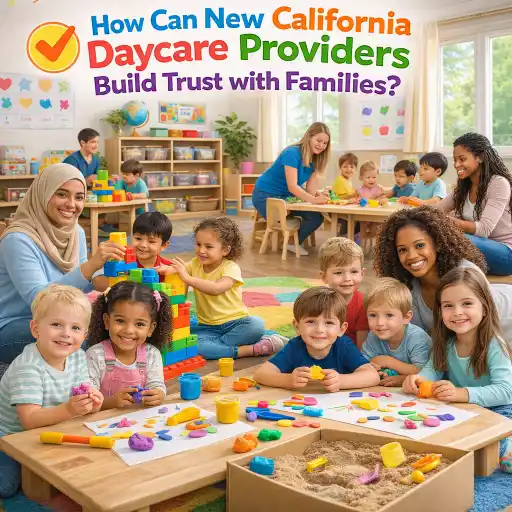
Why it matters:
1. When you build trust, children settle faster and learn more. Good relationships reduce drop-off tears and make classrooms calmer.
2. Families who trust you share important information about routines and health. That helps you keep children safe and supported.
3. Strong partnerships mean problems are easier to solve together. Small, daily positives add up to big #trust.
1) How do I make a great first impression in week one?
First impressions set the tone. Try a short plan you and your team can use every day:
- 👋 Greet families by name and use their preferred name for the child. This shows respect and belonging. See tips from How can we build trusting relationships with families?.
- 📄 Give a one-page welcome sheet with hours, contact info, and how you share updates. Offer translations when needed. For family engagement ideas, check How can we build trust with families in the first week?.
- 📸 Create a small family-photo wall so parents see their child’s space is cared for. This builds connection fast.
- 🤝 Offer a 5–10 minute orientation and ask 1–2 questions about home routines (sleep, food, comforts).
- 🚪Use a short goodbye ritual (wave, special phrase) so drop-off is predictable for the child and parent.
These small steps make many tiny #trust deposits. For California-specific licensing steps for family child care, review the California Family Child Care Home License Buy Now $0.00.
2) What clear communication routines help build lasting trust?
Good communication is simple, frequent, and two-way. Try these practical routines:📱 Quick check-ins at drop-off or pick-up: say one positive and one short fact about the day.
- ✉️ Daily notes: mood, nap, snack, and a short highlight. If time is tight, use a 3-bullet template. See Using Daily Reports to Build Trust with Families.
- 📷 Photos or short videos (with permission) for big moments. Keep privacy in mind.
- 🗓️ Weekly summary: 3 bullets about learning and one idea families can try at home.
- 🗣️ Ask families how they prefer updates and follow their choice. Two-way communication builds #communication and #engagement.
Also train staff to use the same language and routines. Courses like Community and Family Engagement in Childcare  Buy Now $24.00 and Family (or Parent) Conferencing: Developing Trust Buy Now $24.00 offer scripts and practice tips.
3) How do I handle tough conversations while keeping the relationship strong?
Tough talks are part of the job. Use a calm plan so families feel respected and ready to partner:
- 💬 Prepare: write facts, pick a private time, and plan one main point. Use neutral words and avoid labels. See guidance in Communicating with families: tough conversations with respect.
- 🔁 Start with a strength, share a brief fact, explain the impact, and ask for the family’s ideas. Example script: “Maria loves blocks. Today she pushed twice during block play. That can hurt others. What helps at home when she feels upset?”
- 🤝 Offer a simple plan and a check-in date. Write a short summary for records and share next steps with the family.
- 🧑🤝🧑 If strong feelings appear, stay calm, offer a pause, and re-set the conversation later if needed.
- 📚 Document and follow up. A short, respectful record helps keep everyone on the same page.
Training on respectful conferencing and scripts can help staff feel confident. See practical scripts and courses on ChildCareEd.
4) What common mistakes do new providers make and how can we avoid them?
Learn from common pitfalls so you can prevent them:
- 🚫 Mistake 1: Waiting until a problem appears to reach out. Fix: make daily positive contacts from day one. Small, regular deposits build #trust.
- 🚫 Mistake 2: Sharing only logistics (meals, naps). Fix: add learning stories and strengths. See Beyond the Daily Report.
- 🚫 Mistake 3: Using one method for every family. Fix: ask preferences and adapt (paper, app, call).
- 🚫 Mistake 4: Blaming language in hard talks. Fix: use facts, start with strengths, and invite partnership.
- 🚫 Mistake 5: Ignoring culture and language. Fix: display diverse materials, offer translated notes, and use interpreters when needed. See How Do I Support Diverse Families.
Also use tools like the Family Engagement Practices Checklist Buy Now $0.00 to plan and track your outreach.
Conclusion: What quick steps can I start today?
- 👋 Greet families by name and give a one-page welcome sheet.
- ✉️ Send a short daily note (3 bullets) and a weekly learning summary.
- 🤝 Use a strengths-first script for tough talks and set a follow-up date.
- 📚 Train staff on communication routines and cultural sensitivity (see courses on ChildCareEd).
- 📌 Check California rules for family child care licensing at California Family Child Care Home License Buy Now $0.00. State requirements vary - check your state licensing agency.
FAQ
- Q: How often should we check in with families?
A: Daily quick notes at pickup plus a weekly summary is a good start. Adjust to family needs. - Q: What if a family speaks another language?
A: Offer translated notes, visuals, or an interpreter. Small translated phrases and photos help too. See Cultural Sensitivity in Communication. - Q: When should a supervisor join a tough talk?
A: Invite a supervisor when the family requests it, or if the issue needs more resources or authority. - Q: How long should orientation be on day one?
A: Keep it 5–10 minutes. Offer a longer meeting later if needed.
For more step-by-step training, explore ChildCareEd courses like Community and Family Engagement in Childcare Buy Now $24.00, Families, Communities, and Classrooms Buy Now $55.00, and Family Conferencing: Developing Trust Buy Now $24.00. You are not alone—small, consistent steps help you and your #families grow strong partnerships built on #trust, clear #communication, and meaningful #engagement in #California. If you're assembling a CDA portfolio, document these family partnerships with concrete examples and reflective notes; see our guidance on how to document partnerships in your CDA portfolio for practical examples and reflection prompts: how to document partnerships in your CDA portfolio.
- 45 Hour Child Growth and Development
- 45 Hour Preschool Methods and Materials
- Family Connections: Creating Inclusive Relationships
- Bienvenido! Welcoming All Families
- Pediatric RSV First Aid & CPR/AED
- CDA Bridge Bundle: Family Child Care without Portfolio Review
- Potty Training Made Simple
- Texas Director Credential
- Gold Stars Aren’t Just for Kids: Why Childcare Certifications Are the Secret Sauce to Success
- 👶 ¿Cuáles son las proporciones y grupos requeridos en Dakota del Norte? 🏫
- Que es Título 22 en California?
- ¿Cómo solicito la licencia para una guardería en California?
- Regulaciones de Licenciamiento de Cuidado Infantil en California para Centros y Hogares de Cuidado Infantil Familiar
- Proporciones de Cuidado Infantil y Tamaños de Grupo por Edad en Maryland (Guía Rápida para Centros y Hogares)
- Proporciones de Cuidado Infantil y Tamaños de Grupo por Edad en Virginia (Guía Rápida para Centros y Hogares)
- Lista para Abrir una Guardería en Casa en Dakota del Norte: Cómo Empezar
- Lista para Guardería en Casa en California: Cómo Iniciar una Guardería en el Hogar
- Cómo Trabajar en el Cuidado Infantil en California: Requisitos y Pasos
- Daycare Center Requirements in California
- How Can New California Daycare Providers Build Trust with Families?
- What should new daycare providers in California know before opening their first child care program?
- Daycare Jobs in California: How Old Do You Have to Be?
- Starting an In-Home Daycare in California: Requirements and Tips
- How Many Kids Can You Watch Without a License in California?
- California Home Daycare Standards: What Providers Need to Know
- California Child Care Ratios and Group Sizes by Age: Home Daycare Guide
- How to Open a Daycare in California: Small Home, Large Home, or Child Care Center?
- Title 22 Home Daycare Ratios: How Age Mix Changes Your California Capacity
