Welcome. This short guide is for California early childhood directors and providers who want practical, everyday ways to support children with #specialneeds so they can join classroom life and learn to communicate. You will find simple steps, tools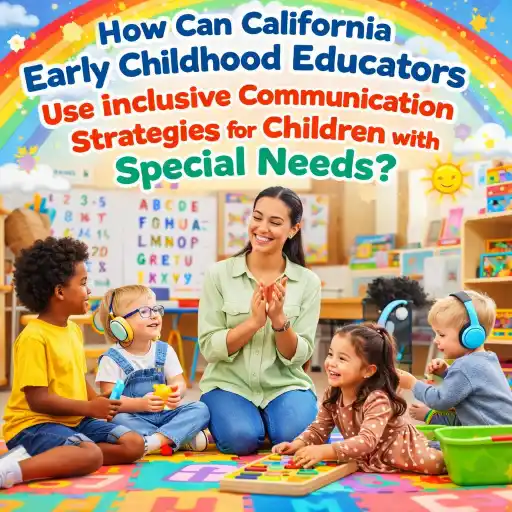 , and ways to team with families and specialists. Remember: state requirements vary - check your state licensing agency.
Why does inclusive communication matter for my program?
1) Inclusive communication helps every child feel safe and seen. When a child can ask for help or join play, behavior and learning improve. Research and policy support inclusion; see resources like CSEFEL and practice guides from ChildCareEd.
2) It builds stronger relationships with families and improves program quality. Tools like individual plans (IEP/IFSP) and everyday routines help children show what they know. California leaders also offer guidance on inclusion and early learning, for example, First 5 California.
3) Practical win: small changes (visuals, consistent routines, simple AAC) let children participate more. Training helps—ChildCareEd offers courses like 9 Hour Communication  Buy Now $99.00 and Language Development Buy Now $16.00.
How can I make communication more inclusive in my California classroom?
2. Offer multiple ways to communicate (speech, sign, pictures, devices). Many children benefit from augmentative and alternative communication (AAC). Practical AAC tips and modeling strategies are explained in the Adaptation Station.
3. Teach and model communication. Staff should point to pictures or press device buttons while speaking. This modeling helps children learn the new system, just like adults model spoken language.
4. Use Universal Design for Learning ideas: provide choices, simplify language, and offer extra processing time. The ChildCareEd special needs training highlights adapting materials and the environment.
5. Train your team. Regular staff training and practice help everyone use the same supports. ChildCareEd trainings and local county resources (for example, Sacramento and Contra Costa county guides) are helpful starting points (SCOE, Contra Costa COE).
What simple tools and routines work best for children with special needs?
Use a mix of low-tech and no-tech tools that are easy to use every day. Here are 6 practical items and how to use them:
- 📘 Visual schedules and pictures — place near play and circle times so children can see what will happen next. (See ChildCareEd guidance Buy Now $0.00.)
- 🔈 Single-message switches (BIGmack) — great for young children to make choices or request help. Learn examples in AAC guides like the Augmentative and Alternative Communication module.
- 🖼️ PECS (picture exchange) — a simple, concrete way for a child to give a picture to request an item. Read the PECS overview at Indiana University.
- ✋ Sign and gestures — easy to teach and useful for infants/toddlers; include a few consistent signs in routines. ChildCareEd’s Language Development Buy Now $16.00 course covers sign use. Programs interested in a standardized approach can also explore how international sign language can support cross-cultural, inclusive communication in early childhood settings.
- 📚 Communication books and single-message devices — low-tech books with photos or drawings for daily activities; pair with modeling (see Adaptation Station).
- 🎯 Structured small-group routines — teach short social phrases and practice them with peers. CSEFEL and What Works briefs recommend role play and rehearsal.
Tip: keep tools visible and accessible. Make labels with words and pictures. Try one tool at a time and celebrate small wins.
How can I work with families and specialists to support communication?
1) Build respectful partnerships. Start by listening. Ask families how the child communicates at home and what helps. Share observations in simple, positive language. ChildCareEd stresses family partnerships in its inclusive care resources (Inclusive Care Strategies).
2) Coordinate with therapists and the school district. If a child has an IEP or IFSP, follow the plan and invite service providers to share strategies that work in the classroom. The CSEFEL materials and the DRDP guide explain good collaboration steps and assessments.
3) Create simple consistency across settings. Agree on one or two signs, pictures, or device messages to use both at home and in the classroom. Joint plans help children generalize skills.
4) Schedule regular, short check-ins. Try 10–15 minute chats after pickup or a weekly note that shares progress and next steps.
5) Document progress. Use brief data notes like: date, what support was used, and the child’s response. This helps teams adjust, support, and show growth over time. For assessment ideas, see the DRDP guidance (DRAccess).
What common mistakes should I avoid, and how do I measure progress?
Common mistakes and how to avoid them:
- 🚫 Rushing to a device without modeling — always model the communication tool yourself first. The Adaptation Station explains modeling and the prompt hierarchy.
- 🚫 Too many choices at once — start with 2–3 clear options and add when the child is ready.
- 🚫 Hand-over-hand prompting too soon — it can create dependence. Use graded cues and wait time as suggested in AAC materials.
- 🚫 Not involving peers — teach peers to respond and invite interaction; see CSEFEL peer strategies.
How to measure progress (simple steps):
- Record baseline: note how a child currently asks for help or an item (gestures, words, behaviors).
- Choose 2–3 short goals (e.g., use a picture to request 3 times in a day).
- Collect quick data: count successful attempts during routines for 1 week.
- Adjust supports and celebrate small gains with family and staff.
For formal assessment and scoring guidance, see the DRDP materials and ChildCareEd courses on assessment and development.
Summary
1) Small, consistent changes make a big difference. 2) Use visuals and simple AAC, model often, and give children time to respond. 3) Team with families and specialists and document progress. 4) Train staff and use available California resources and trainings (for example, 45-hour Growth & Development, 9-hour Communication Buy Now $99.00).
Helpful links: ChildCareEd inclusion and training pages: Mastering Inclusive Education, Inclusive Care Strategies, plus AAC & PECS resources: Adaptation Station, PECS, and CSEFEL.
FAQ
- Q: Where can I get quick training?
A: ChildCareEd offers short online courses on communication and language development (9 Hour Buy Now $99.00, Language Development Buy Now $16.00). - Q: Will AAC stop spoken language?
A: No. AAC supports communication and often helps speech develop; see the PECS overview (PECS). - Q: How do we pay for devices?
A: Start with low-cost tools (pictures, BIGmack). For higher-cost devices, work with families, therapists, and local agencies to explore funding. - Q: How long until I see change?
A: Some children respond quickly; others need weeks or months. Track small wins and adjust supports.
Thanks for reading. You are not alone—reach out to county supports, ChildCareEd, and peer networks in California for help as you make communication more #inclusive for every #child in your care.
- CDA Home Visitor Subject Area 3 Part 3 Birth to 5
- Bienvenido! Welcoming All Families
- Equity in Action with Head Start
- Pediatric RSV First Aid & CPR/AED
- CDA Bridge Bundle: Family Child Care without Portfolio Review
- CDA Bridge Bundle: Infant/Toddler without Portfolio Review
- CDA Bridge Bundle: Preschool without Portfolio Review
- Texas Director Credential
- Culture, Communication, and Collaboration in Assessment
- Myth: Preschool's Just About Playing with the Kids
- Child Development Training
- The Power of International Sign Language in Early Childhood Education
- Shining a Light on Autism Awareness Month
- From Challenges to Triumphs: Strategies for Childcare Educators in New York
- CDA Certification en Español: Recursos y Consejos para Educadores Bilingües
- 💛🧩 ¿Cómo puedo hacer que mi enseñanza sea inclusiva para los niños con autismo?
- How Can Texas Early Childhood Educators Build Strong Communication with Children with Special Needs?
- How can California early childhood educators use inclusive communication strategies for children with special needs?
- How can we support California children with special needs using play, pictures, and positive language?
- How can Nevada early childhood educators communicate to support children with special needs?
- How can we celebrate diversity and inclusion in California early childhood classrooms?
- How can early educators in California start strong and become teachers?
- Starting an Inclusive Daycare for Children with Speech Delays
- How can Michigan child care programs effectively support children with hearing or vision impairments?
- Including Every Child: What Child Care Providers Should Know About the ADA
- Early Intervention Strategies: What Can Teachers Do While a Child Is Waiting for Services?
- Special Needs Training for Early Childhood Educators: Which Course Should You Take?
- How Can Child Care Providers Look Beyond Support Needs to See a Child’s Interests and Strengths?
