Making friends is one of the biggest gifts we give children. As child care providers you can guide small steps that add up to strong #friendship, better #empathy, more #sharing, joyful #play, and confident #preschoolers. Below are practical, easy-to-use ideas you can try tomorrow. When you use short scripts, repeatable routines, and gentle coaching, children learn the words and actions to connect with peers.
Why does making friends matter and how do I explain it simply?
Why it matters:
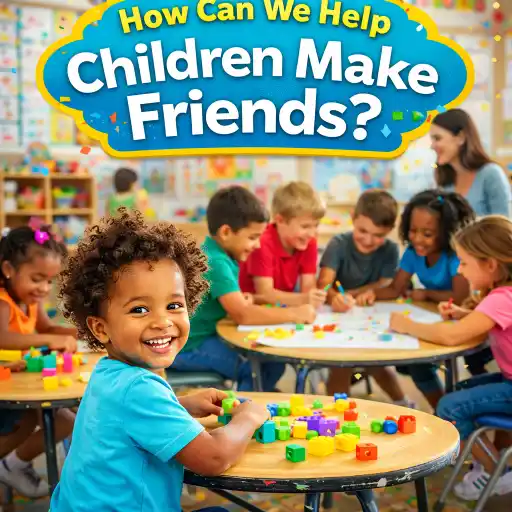
- Friendships help children feel safe and calm. They learn to take turns, ask for help, and comfort each other. For more on why social skills matter, see Supporting Social Relationships Among Young Children.
- Friend skills support learning. Children who feel included can focus better during group time and follow classroom routines. ChildCareEd shows how social skills link to learning in Social skills in action.
- Friendships teach lifelong skills like problem-solving and kindness. The New York Times and other sources highlight how friendships start early and grow over time.
Simple way to say it to families: "We teach children short words and tiny actions so they can make and keep friends." State requirements vary - check your state licensing agency.
How can I teach real friendship skills children can use?
Keep lessons short and repeatable. Use scripts, role-play, and guided play. Research-backed strategies like prompting and acknowledgment work well (see CSEFEL prompting & acknowledgment).
- 😊 Teach 1–2 short scripts and practice them often.
- Examples: "Can I play?" or "Your turn next, please." Practice with puppets or partners. See How can preschool teachers teach friendship skills.
- 🧩 Use guided play to coach skills in the moment.
- Set a clear goal (share blocks, build one town) and step in with short prompts. ChildCareEd describes guided play methods in How to Foster Friendship Skills Through Guided Play.
- ⏳ Add visuals and timers for turn-taking.
- Visuals help children who are still learning language. For tools and lesson ideas, check the free "Let's Be Friends!" lesson plan Buy Now $0.00.
Keep prompts brief and praise specific: "You asked, 'Can I play?' and Mia said yes — great asking!" Use prompting and immediate acknowledgment to build the habit (see CSEFEL What Works Brief #8).
What daily routines and activities help friendships grow?
Routines give many low-pressure chances to practice. Try these simple, frequent moves:
- 😊 Morning greetings and partner jobs.
- Let children choose a greeting and give a short job (snack helper, line leader). Jobs build belonging and teach cooperation. See ideas in How can preschoolers learn to share, take turns, and make friends?.
- 📚 Read-and-reflect moments.
- Pause during a story and ask: "How does this character feel? What could a friend do?" This builds #emp empathy and language; ChildCareEd has story prompts in Social skills in action.
- 🧩 Short guided-play centers (5–15 minutes).
- Use cooperative tasks like building a shared track or role-play stores. Guided play helps children try scripts while you coach (see Guided Play).
Repeat these routines every day. Small, steady practice builds habits faster than one long lesson.
How do I support shy or struggling children so they can make friends?
Some children need extra steps and small supports. Use priming, peer buddies, visuals, and small-group practice. ChildCareEd explains many helpful strategies in Helping Shy or Quiet Children Find Their Voice.
- 🔎 Prime before free play.
- Tell the child who to ask and give a short script to use. Practice the script once or twice with you first. This raises success when the moment comes.
- 🤝 Set up a peer buddy or "Friendship Foreman."
- A friendly peer can invite the child into play and model simple language.
- 🧭 Use small groups and visual supports.
- Offer choice boards, feeling charts, and timers. Smaller groups feel safer and give more chances to speak.
If a child keeps struggling, collect simple notes (when, where, who) and partner with the family. Share one short script families can practice at home. State requirements vary - check your state licensing agency.
Conclusion — quick checklist, common mistakes, and FAQ
Quick daily checklist (1-minute scan):
- Model one short script every day ("Can I play?").
- Plan one 5–10 minute guided play practice.
- Use a timer or picture for turns.
- Praise a specific friendly action right away.
- Partner with families and share one script to practice at home.
Common mistakes and how to avoid them:
- 🚫 Forcing sharing — instead teach offers, trades, and timers.
- 🚫 Long lectures during a conflict — instead use short scripts and teach calm repairs later.
- 🚫 Skipping small wins — notice tiny kind acts and name them so they grow.
FAQ (short):
- Q: How fast will I see change? A: Small wins in weeks; steady habit change in months with daily practice.
- Q: What if a child is excluded often? A: Teach inclusion scripts, prime peers, and set up buddy roles (see Social skills in action).
- Q: Can children with delays learn these skills? A: Yes—use visuals, repetition, and small steps. See CSEFEL resources (prompting & acknowledgment).
You are doing meaningful work. Small scripts, kind coaching, and steady routines help children grow real #friendship skills. For more classroom-ready tools, visit ChildCareEd resources like Let's Be Friends! Buy Now $0.00 and related articles linked above. For ready-made ideas you can use to run a short Friendship Day celebration that reinforces scripts and cooperative play, see Will You Be My Friend? Celebrating National Friendship Day in Early Childhood Classrooms.
- 45 Hour Child Growth and Development
- CDA Preschool Credential with Portfolio Review
- Easy Steps to Resume and Interview Success
- 1,2,3, Eyes on Me: Classroom Safety
- Birth to Five CDA Credential with Portfolio Review
- CDA Bridge Bundle: Preschool
- CDA Bridge Bundle: Preschool without Portfolio Review
- Texas Director Credential
- Professional Integrity in Child Care
- What is Shavuot, Eid al Adha & Juneteenth
- Not Just a Bad Day: 10 Subtle Signs Your Kid Might Be Battling Depression and AFSP walks near you
- National Grouch Day: Turning Grouches into Giggles, Teaching Kids about Handling Negative Emotions
- When the Sunshine Fades: How to Spot Depression in the Happiest-Looking Kids
- Deck the Halls with Emotional Wellness: Family Traditions That Foster Connection
- Mental Health for Tiny Elves: Supporting Kids Through Winter Blues
- How Emotions Help Children Build Social Connections
- How Can We Help Children Make Friends?
- How can we adapt activities for diverse learners?
- Best Friends Day: Helping Children Learn Kindness and Friendship
- Celebrating Friendship in Child Care on Best Friends Day
- Celebrando la amistad en el cuidado infantil durante el Día de los Mejores Amigos
- How can we support social-emotional learning in early childhood?
- Why Does Self-Regulation Matter More Than ABCs for Minnesota Kindergarten Readiness?
- How can child care providers help children build friendship skills?
- How Can Child Care Providers Support a Child Who Struggles to Make Friends?
- How Can Writing and Art Activities Help Children Name What They Appreciate?
- What Screen-Free After-School Choices Engage Children Who Prefer Devices?
- How Can Screen-Free After-School Choices Engage Children Who Prefer Devices?
- How Can Educators Support Fair Membership When Children Invent a Club?
