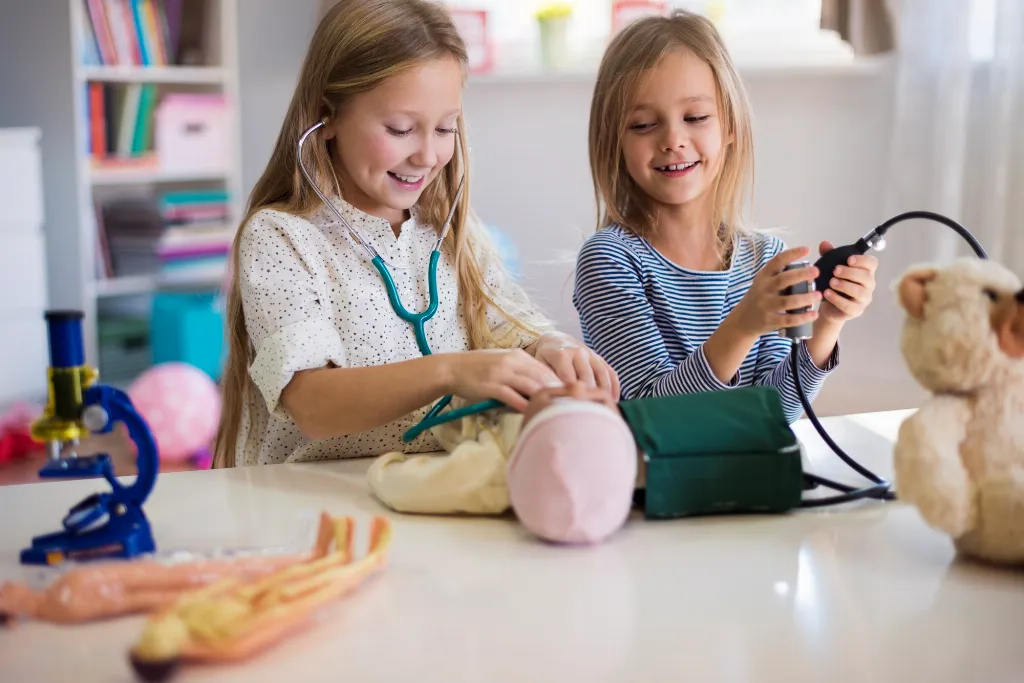
 Teaching young children easy first aid helps them feel calm and able to help. This short guide shows child care providers and directors simple, safe ways to teach preschoolers what to do for minor bumps and how to get help in an emergency. Use play, short practice, and clear steps so kids learn without fear.
Remember: state requirements vary - check your state licensing agency.
Why should we teach preschoolers basic first aid?
- Children who know simple steps stay calmer during accidents.
- Learning first aid builds #confidence and #empathy when kids help friends or toys.
- Teaching now creates safety habits that last.
Teaching first aid for little ones is not about doing medical care. It is about three easy ideas: check, call, care. These ideas help children know what to do if someone is hurt: look, tell an adult or 911, and comfort the injured person. ChildCareEd offers clear activity ideas like Mini Medics: Teaching Preschoolers Basic First Aid and lesson plans in Teaching First Aid Basics to Kids Through Activities.
Why this helps teachers and centers:
- Families trust programs that teach safety.
- Staff who practice lessons feel more prepared.
- Short, repeated practice helps children remember.
How can I teach simple first aid safely and with play?
- Plan a short lesson (10–20 minutes).
- Introduce 3 steps: Check, Call, Care. Use a poster or song.
- Set up a role-play corner with stuffed animals and a toy first aid kit. See role-play ideas from First Aid Role Play Scenarios.
- Practice calling for help with pretend phones. Use guidance from KidsHealth: Teaching Your Child How to Use 911.
- Teach gentle wound care: wash hands, cover a scrape. Use age-appropriate steps from KidsHealth: What to Do About Cuts.
Helpful tips for safety and rules:
- 🧑⚕️ Make sure staff are trained in pediatric first aid and CPR. ChildCareEd lists courses like Pediatric Blended First Aid & CPR and in-person classes Pediatric In-Person First Aid & CPR. For a seasonal, family-friendly CPR refresher and outreach ideas that help programs engage families while maintaining certification standards, see Spooktacular CPR Safety: No Trick and All Treat for Childcare Providers and Teachers.
- 🧴 Use only soft props and non-sharp materials.
- 📣 Tell families what you will teach and ask permission if needed.
What should preschoolers learn and how do we make it stick?
- Check: Look for danger and stay safe. Teach children to tell an adult right away.
- Call: Practice saying address and phone number and calling for help. Use role-play like the Brownie First Aid Badge Activity and KidsHealth tips.
- Care: Show comfort (hold a toy, speak calmly) and basic wound care like covering a scrape after an adult cleans it.
Ways to help memory:
- 🎵 Use a short song or rhyme for "Check, Call, Care."
- 🧸 Role-play with stuffed animals and swap roles so every child practices.
- 📋 Do teach-back: ask a child to show one step back to you.
- 🔁 Repeat short drills every 2–4 weeks and after long breaks.
Link these lessons to center readiness. ChildCareEd’s activity guides and emergency planning resources help build classroom routines (for example, see Stay Ready: First Aid and Emergency Procedures and the Health and Safety Training Resources Buy Now $0.00).
How do we avoid common mistakes and answer common questions?
Common mistakes to avoid:
❌ Skipping family notification. Always tell families what you teach and why.
❌ Using adult-only techniques or real sharp tools in class. Keep props child-friendly.
❌ Thinking one lesson is enough. Repeat often.
Quick FAQ for busy providers:
- Q: At what age can kids learn first aid?
A: Preschoolers can learn to tell an adult, practice calling 911, and comfort a friend. Older children can do more hands-on role play. - Q: Who should lead lessons?
A: Trained staff or a guest instructor. Make sure at least one staff has pediatric first aid/CPR certification. - Q: How often should we practice?
A: Short sessions every 2–4 weeks help memory. Tie drills to seasons and routines. - Q: What if a child asks about severe injuries?
A: Use simple, honest answers and focus on what adults will do to help. Avoid scary details.
When to call 911: teach clear, simple signs (very heavy bleeding, trouble breathing, unconscious). Use resources like the CDC safety recommendations and MedlinePlus on wounds and injuries for staff guidance.
Conclusion
Teaching preschoolers simple first aid is doable, low-cost, and valuable. Use short, playful lessons, safe props, and repeat practices. Keep staff trained, follow your licensing rules, and share progress with families. Small steps—like practicing telling an adult, calling 911 in role play, or covering a scrape on a stuffed toy—build big habits in safety.
Visit ChildCareEd for printable activities and staff courses such as Teaching First Aid Basics to Kids Through Activities and certification listings. Teaching first aid helps keep your #preschoolers and your program safer every day.
- Adult/Child/Infant CPR AED and Adult First Aid Blended
- Adult Only CPR AED and Adult First Aid Blended
- Pediatric Blended First Aid & CPR/AED Adult, Child, Infant
- Pediatric RSV First Aid & CPR/AED
- Pediatric In-Person First Aid & CPR/AED Adult, Child, Infant
- Adult First Aid Only - Blended
- Texas Director Credential
- CDA Certification en Español: Recursos y Consejos para Educadores Bilingües
- ¿Cómo puedo usar escenarios de juego de roles de primeros auxilios en mi aula?
- ¿Cuáles son las mejores actividades de primeros auxilios para adultos?
- ¿Cómo pueden los equipos de cuidado infantil practicar habilidades rápidas de primeros auxilios en situaciones reales?
- ¿Cómo puedo enseñar habilidades de primeros auxilios con escenarios de juego de roles?
- Lista para Abrir una Guardería en Casa en Dakota del Norte: Cómo Empezar
- Actividades de Otoño Fáciles para Preescolares esta Temporada
- Teaching Preschoolers Simple First Aid Skills
- First Aid for Young Children: What Kids Can Learn
- Celebrando la amistad en el cuidado infantil durante el Día de los Mejores Amigos
- First Aid Lessons for Kids: Simple Skills They Can Learn
- Superhero Activities for Preschoolers: Play, Create, and Learn
- How Can Simple Cooking Activities Teach Skills in North Dakota Child Care Programs?
- Can Superhero Day Capes and Pretend Play Teach Children to Help Others?
- Can a Superhero Week Help Preschoolers Learn to Name and Manage Emotions?
- How can preschool teachers teach mindfulness and calm-down skills so young children actually use them?
- How Much Structured Learning Do Preschoolers Really Need?
- Why Doesn’t Knowing a Safety Rule Mean a Preschooler Can Follow It?
