Introduction
As child care leaders and teachers, we want families to feel welcome, heard, and safe. Building strong relationships with #families helps everyone: children learn more, parents relax, and staff can work as a team. Start small and plan each day with respect, clear routines, and warm moments. For more ideas and step-by-step tips, see How to Build Strong Relationships with Families in Early Childhood Education and How can we build trust with families in the first week?. Remember: state requirements vary - check your state licensing agency.
Why does building trust with families matter?
Why it matters:
1. Children feel safe faster when adults and families work together. This means fewer tears and more learning.
2. Families share important facts about home life when they trust you. That helps you plan better for each child.
3. Strong relationships stop small problems from growing into big ones. When parents and staff agree on goals, kids get consistent support.
Research and practice show that trust and family engagement improve child outcomes. For background and ideas about family partnerships, check Family Engagement Strategies in Early Childhood Education. Also, the Pyramid Model and CSEFEL explain how small daily “deposits” of kindness build big trust — see resources like CSEFEL: Building Relationships. Building trust matters because it makes your classroom calmer and learning stronger.
How can we make a strong first week with families?
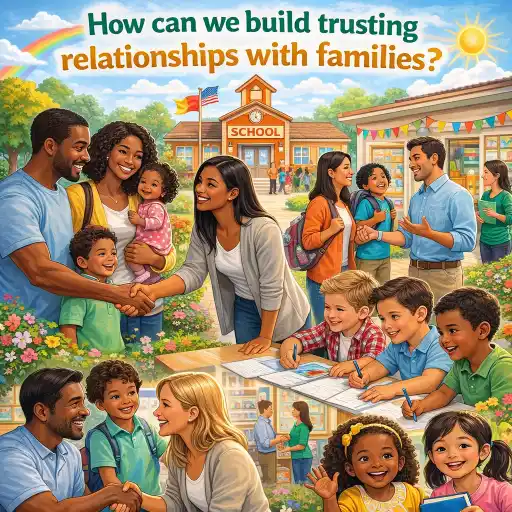
The first week sets the tone. Try this short plan you can use every year.
- 👋 Greet families by name. A warm hello says, "You belong here."
- 📄 Give a simple welcome sheet with: daily times, who to call, and how you share updates. Keep language short and offer translations if you can. See How can we build trust with families in the first week? for sample notes.
- 📸 Share a photo or a place for family pictures so parents see their child’s space.
- 🤝 Offer a 5–10 minute orientation. Ask one or two questions about routines at home.
- 🚪Create a short goodbye ritual so drop-off is predictable and kind.
Do these things every day and you will make many small #trust deposits. Staff training helps everyone use the same routines. For course ideas on family engagement, see Community and Family Engagement in Childcare  Buy Now $24.00.
What communication strategies build lasting partnerships?
Clear, kind communication builds #communication and #engagement. Use more than one way to reach families. Try these steps:
- 📱 Quick check-ins at drop-off/pick-up. Say one positive thing about the child and one short fact about the day.
- ✉️ Daily or end-of-day note: mood, nap, and a highlight. If you can’t write for every child, post a daily board with main activities.
- 📷 Use photos or short videos (with permission) to show learning moments.
- 🗓️ Send a weekly summary with 3 bullets about what children learned and one home activity.
- 🗣️ Ask families how they prefer updates and follow their choice.
Go beyond logistics. Share the learning behind activities so families see value in your plans. ChildCareEd’s article Beyond the Daily Report has fresh ideas for doing just that. Use tech to support connection, not replace face-to-face time.
How do we handle tough conversations while keeping trust?
Tough talks can feel hard. Use a steady plan so families feel respected. Try this four-step script:
- 💬 Start with a strength: "She loves books and tries new words."
- 🔍 Share the facts: "Today during play she pushed two times."
- 🎯 Explain the impact: "That can hurt others and stops play."
- 🤝 Invite partnership: "What helps at home? What would you like us to try?"
Stay calm if a parent becomes upset. Offer a pause, restate facts, and set a follow-up check-in. Document the plan and a check-in date. For scripts and deeper training, see Communicating with families: tough conversations with respect and the course Family (or Parent) Conferencing: Developing Trust Buy Now $24.00.
Common mistakes and how to avoid them
- 🚫 Waiting until a problem appears. Fix: Make relationship deposits from day one.
- 🚫 Only sending logistics (food, naps). Fix: Share learning stories and strengths.
- 🚫 Using one communication method for everyone. Fix: Ask family preferences and adapt.
- 🚫 Blaming language in hard talks. Fix: Use neutral facts, strengths-first, and invite partnership.
Conclusion and quick FAQ
Strong family partnerships take steady care, clear messages, and kindness. When families trust you, children get more help and classrooms run smoother. For training and tools you can offer to your team, explore ChildCareEd courses like Building a Community of Families Buy Now $16.00 and Community and Family Engagement in Childcare Buy Now $24.00.
FAQ
- Q: How long should an orientation be? A: Keep it 5–10 minutes the first day. Offer a longer meeting later if needed.
- Q: What if a family speaks another language? A: Use short translated notes, pictures, or an interpreter. Ask what works best.
- Q: How often should we check in? A: Daily quick notes plus a weekly summary is a good start. Adjust by family need.
- Q: When should a supervisor join a tough talk? A: Invite a supervisor if the family asks, or if the topic is complex and needs more resources.
Use these steps to build trust, deepen #partnership, and make families true teammates in each child’s learning journey.
- Family Connections: Creating Inclusive Relationships
- Bienvenido! Welcoming All Families
- TEAM: Together Everyone Achieves More
- Bridging Intent and Response: Communication
- Our School Age Family Tree: Children, Staff, & Parents
- Connections That Count: Building Relationships in Child Care
- Texas Director Credential
- Families, Communities, and Classrooms: Working Together for Children
- Let’s Talk: Effective Communication
- Supporting Families and Caregivers in Language and Literacy
- Inside the Child Care Resource Center: How to Maximize Support for Families and Educators
- 👶 ¿Cuáles son las proporciones y grupos requeridos en Dakota del Norte? 🏫
- Curso de Comunicación de 9 Horas de Maryland
- How Can New California Daycare Providers Build Trust with Families?
- The First Weeks of Child Care: Building Trust with Children
- How can Texas early childhood educators build respectful parent partnerships?
- How can we build trust with families?
- How Can I Build Professional Relationships With Families?
- How can we build professional relationships with families?
- How can we build trust with parents and guardians?
- Why Does Child Care Cost So Much in Michigan — and How Can Providers Explain Value to Families?
- Connections That Last: Helping Georgia Early Educators Build Stronger Classrooms Through Community and Collaboration
- How to Build Positive Relationships with Families in Child Care
- How do we build trust with families from day one?
- How Can Child Care Programs Best Support Children and Families Experiencing Homelessness?
- How Can Child Care Providers Build Trusting Relationships with Families?
- Why Might a Child Laugh After Making a Mistake—and How Can Providers Help?
