Introduction
Building trust in week one helps children feel safe and parents feel sure you care. This short time sets the tone for the whole year. Child care leaders and teachers can take clear steps to make the first days calm, warm, and useful. When families see kindness and clear plans, they join your team. Use small actions every day to grow big trust. Remember: state requirements vary - check your state licensing agency.
Why does trust matter in the first week?
Trust matters because:
- Children settle faster when adults are calm and consistent. This helps learning and friendships.
- Parents feel less worried and more likely to share important information about their child.
- Strong early trust makes it easier to solve problems later.
Research and practice show that investing time in relationships prevents many behavioral issues later. For example, the idea of making relationship “deposits” (lots of small positive moments) comes from work on social-emotional foundations like CSEFEL. When families feel respected and heard, teachers can partner with them to support each child’s growth (see Partnering with Families).
Why it matters: Building trust in week one saves time later. It helps children enjoy school, reduces conflict, and makes families feel included. A good start builds a strong team around each child. Use small wins every day to show you care. #families #trust
How do we welcome families on day one?
Welcoming families well means planning and simple routines. Try these steps:
- 👋 Greet each family by name. A warm hello shows respect and starts trust. The article How to Build Strong Relationships with Families in Child Care has tips on greetings and first impressions.
- 📸 Share a quick “family wall” or photo area so parents see their child’s place in the room and feel connected.
- 📝 Give a short welcome sheet with: schedules, who to call, and how you will share updates. Keep language simple and offer translations if needed.
- 🤝 Offer a brief orientation meeting (5–10 minutes) so parents can ask questions and share routines from home.
- 🚪Make goodbye routines predictable: a hug, a phrase, or a quick wave. Short, loving goodbyes help kids move into care more easily.
Also create a calm drop-off spot and post the daily schedule where parents can read it. If your program allows visitors, an open-door policy helps families feel welcome. For many practical ideas for welcome activities and family involvement, see Partnering with Families and Building Strong Relationships with Parents. #communication #engagement
What should we communicate during the first week and how?
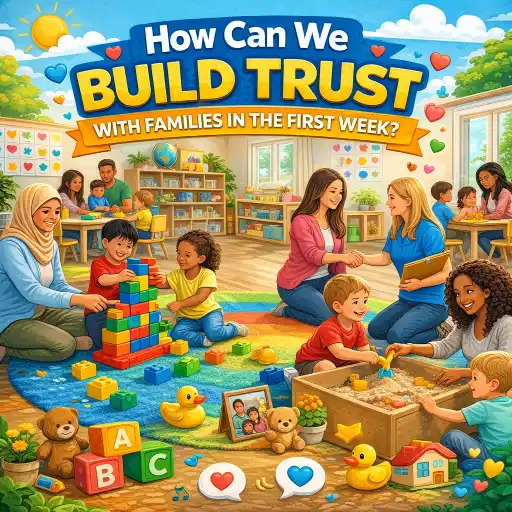
Communication in week one should be clear, kind, and short. Parents want to know their child is safe and learning. Use multiple ways to share information:
- 📱 Quick in-person check-ins at drop-off/pick-up (30–60 seconds). Say one positive and one simple fact about the day.
- ✉️ Daily or end-of-day notes: a short line about mood, nap, and a highlight. If you can’t write long notes for every child, post a brief daily board with the main activities (see ideas in Daily Communication With Families).
- 📷 Photos or a one-sentence update via an app or email for families who want extras. Always follow privacy rules.
- 🗓️ A short weekly summary: 3 bullets on what children learned and one way families can try it at home.
- 📞 Private phone or meeting for concerns: prepare facts, start with a strength, and offer solutions together. For scripts and training, see Communicating with Parents in the ChildCare Industry.
Keep language simple and invite families to respond. Ask, “What works best for you to get updates?” and respect their choice. If families speak another language, use short sentences, pictures, or an interpreter when needed. Good communication builds #trust fast.
How do we handle tough drop-offs and build long-term relationships?
Tough drop-offs are normal. Use calm routines and teamwork to make them easier:
- 🧸 Offer a brief goodbye ritual and allow a comfort item from home. Consistency matters.
- ⏱️ Keep goodbyes short and predictable. Long delays can raise anxiety for the child and parent.
- 👀 Use a “connect before you correct” approach: start with warmth, then help the child join the group.
- 🗣️ Share quick, positive news later in the day (a photo or note) so parents know the child settled.
- 🤝 Partner with families: ask what helps at home and share what helps at school. Try a short meeting in the first week to set shared goals.
Train staff to notice signs of anxiety and to make small relationship deposits every day, as described by CSEFEL. If behavior is hard to change, build more positive interactions before using corrections. For more on easing drop-off anxiety, see Easing Drop-Off Anxiety and practical tips from KidsHealth. #dropoff
Conclusion: Quick first-week checklist
Use this short checklist to guide your first week:
- Greet each family by name and share a welcome sheet.
- Post or hand out a simple daily schedule for parents to see.
- Share one positive note about each child every day.
- Keep goodbye routines short, loving, and consistent.
- Offer a quick weekly summary and ask families how they prefer updates.
Common mistakes to avoid:
- Waiting to build trust until a problem appears. Start on day one.
- Giving only negative feedback. Balance concerns with positives.
- Assuming one communication method fits all. Ask families what works best.
For more training and tools, consider ChildCareEd courses like Family (or Parent) Conferencing: Developing Trust  Buy Now $24.00 and Building a Community of Families Buy Now $16.00. Strong first-week steps create lasting trust that helps children thrive. #engagement
FAQ
- How long should drop-off visits be? Short and predictable. A few minutes that follow the same routine work best.
- What if a parent wants long daily meetings? Offer a weekly meeting slot for longer talks and use quick daily check-ins at drop-off for brief updates.
- How do we include families who work nights? Use email or an app and offer one flexible meeting time per week.
- When should we involve a supervisor? If a family is upset or a situation is complex, invite your director to join the conversation.
- Behind the Scenes: Baby Routines ONLINE
- 45 Hour Child Growth and Development
- Professional Presence in Early Childhood
- 45 Hours Director-Administration ONLINE
- 45 Hour Preschool Methods and Materials
- 45 Hour Infant and Toddler Methods and Materials
- 45 Hour School Age Methods and Materials
- Texas Director Credential
- 45 hour Growth and Development Birth-age 12 ONLINE
- CDA Certification en Español: Recursos y Consejos para Educadores Bilingües
- 👶 ¿Cuáles son las proporciones y grupos requeridos en Dakota del Norte? 🏫
- How can parents and child care providers make drop-off and pick-up less stressful?
- How can we build trust with families in the first week?
- How can we build trusting relationships with families?
- Curso de Comunicación de 9 Horas de Maryland
- 10 Ejemplos de Cómo la Cultura Influye en el Desarrollo Infantil
- ¿Cómo solicito la licencia para una guardería en California?
- Proporciones de Cuidado Infantil y Tamaños de Grupo por Edad en Nueva Jersey (Guía Rápida para Centros y Hogares)
- How can I talk to parents about behavior concerns so we help the child?
- Lista para Abrir una Guardería en Casa en Dakota del Norte: Cómo Empezar
- Lista para Guardería en Casa en Illinois: Cómo Iniciar una Guardería en el Hogar
- How can we build trust with families?
- How can North Dakota childcare providers build trust with skeptical parents?
- How can we build trust with families?
- How can Michigan childcare providers build trust with families from day one?
- How Can DC Early Educators Turn Pay Equity Debate into Provider Pride, Family Trust, and Strong Advocacy?
- Connections That Last: Helping Georgia Early Educators Build Stronger Classrooms Through Community and Collaboration
- How can I strengthen family partnerships without lengthy meetings?
- How do we build trust with families from day one?
