Positive guidance is how we teach children the social and emotional skills they need to get along, try new things, and feel safe. In this short guide you will find clear steps you can use tomorrow, simple lists, and links to trusted resources from ChildCareEd and the Pyramid Model resources. This article uses five key ideas: #children #guidance #classroom #behavior #families. State requirements vary - check your state licensing agency.
What is positive guidance and why does it matter?
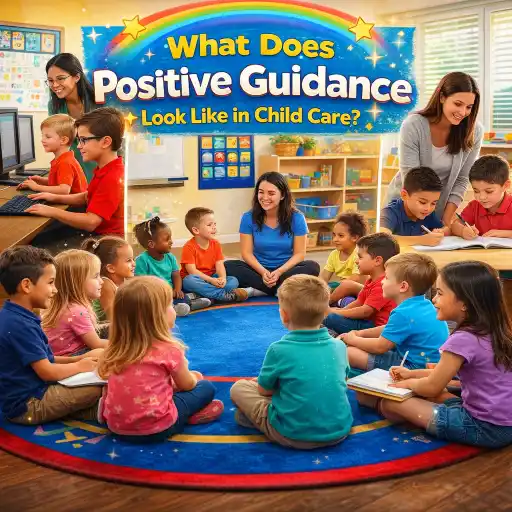
Positive guidance means teaching what to do instead of only saying “no.” It focuses on warm relationships, clear limits, and practice. When adults use positive guidance, children learn skills like sharing, calming down, and asking for help. This makes the day calmer for everyone and helps children learn more.
Why it matters:
- 😊 Children who feel safe learn better and take more risks to try new skills. See ideas from ChildCareEd.
- 📉 Staff stress goes down when routines and responses are simple and shared across the team — a big win for retention and quality.
- 🤝 Families stay more involved when they hear the same words and see the same steps at home and in the program.
Positive guidance is part relationship and part planning. Research and practice from the CSEFEL team show that strong teacher-child relationships make teaching behavior easier. Positive guidance is not permissive — adults still set limits. Instead, limits are taught with respect, short language, and chances to practice.
How can I set up the room and routines to prevent problems?
- 🎯 Create a predictable day: post a simple picture schedule at child height and give warnings ("2 minutes until clean-up"). See the practical checklist at ChildCareEd Buy Now $0.00.
- 🧩 Make clear centers: blocks, art, quiet reading — label with photos so children know where to go.
- ⏱️ Balance activities: mix active and calm times and offer short movement breaks to help self-regulation.
- 📏 Limit crowding: fewer kids per area lowers conflict and gives more chances to practice sharing and taking turns.
- 🔁 Teach a small rule list: 3–5 rules with pictures, practiced often and spoken in short phrases.
Why these steps work: routines let children predict what comes next and use skills instead of acting out. The Pyramid Model resources explain how universal supports (good routines, strong relationships) reduce most problems and make targeted support easier when needed (Pyramid Model).
What do I say and do in the moment to keep everyone safe and teach?
- 🧘 Stay calm and get near: lower your voice and be at the child's level.
- 🗣️ Name the feeling: "You’re mad" or "You look upset." Short labels help children learn emotion words.
- ⛔ State the limit: "Hands are for helping. Hitting hurts." Keep limits simple and direct.
- 🔁 Teach one replacement skill: offer a choice or a calm step (three deep breaths, ask for help, or "my turn please").
Use ABC thinking (Antecedent-Behavior-Consequence) to notice patterns — what led up to the moment and what happened after. If a child repeats a behavior, the team can use simple observation notes to build a short plan. For severe or persistent behavior, use Positive Behavior Support (PBS) steps and consult specialists; PBS gives a clear process to teach new skills and change the environment (CSEFEL).
Common mistakes and how to avoid them:
- ⚠️ Long lectures during meltdowns — instead, say one short phrase and teach later.
- ⚠️ Public shame — avoid labels like "bad"; focus on the action ("Hitting is not safe").
- ⚠️ Inconsistent responses — pick a simple plan and use it every time so children learn predictably.
How do I team with families and staff — and what questions do people ask most?
Children learn fastest when home and program use similar words and steps. Try a short family-team routine that is quick and respectful.
- 🤝 Start with a strength: tell the family one thing the child does well ("Marco loves blocks").
- 📊 Share one short observation: time, place, and what happened — keep it factual.
- 🧾 Offer a small plan and ask for family ideas: "We’ll give a 2-minute warning and teach 'my turn.' What works at home?"
- 🔍 Track progress with simple notes and meet to tweak steps weekly or monthly.
When to get extra help: if behavior is intense, long-lasting, or affects learning, bring in mental health or special education consultants. The Pyramid Model and PBS resources explain team steps and functional assessment here.
FAQ (quick answers)
- Q: How long before I see change? A: Small wins can appear in days; lasting change takes weeks of consistent steps.
- Q: Is Time-In better than Time-Out? A: For young children, staying connected and teaching calming steps (Time-In) usually works better than isolation.
- Q: How many rules should we teach? A: Keep it to 3–5 simple rules with pictures and practice them often.
- Q: What if staff disagree? A: Hold a short team meeting, pick 1–2 scripts everyone will use, and coach with kindness.
- Q: Where can I learn more? A: ChildCareEd courses like Staying Positive
 Buy Now $24.00 and Viewing Guidance in a Positive Light Buy Now $24.00 are practical options.
Conclusion: Positive guidance is practical and respectful. Start with one small change this week (post a picture schedule, teach one replacement skill, or practice the 4-step calm response). Small, steady steps help you, the staff, and the children feel safer and more confident. For ready tools and checklists, visit ChildCareEd. Remember: state requirements vary - check your state licensing agency.
Most behavior improves when the space and schedule fit children's needs. Use small, clear changes to prevent many issues before they start.When behavior happens, keep it short, calm, and clear. Use this 4-step response each time. It keeps safety first and turns the moment into a teachable one.- CDA Home Visitor Subject Area 3 Part 3 Birth to 5
- Power of Art: Bldg Self-Esteem & Positive Behavior for ALL Abilities
- Pediatric RSV First Aid & CPR/AED
- CDA Bridge Bundle: Family Child Care without Portfolio Review
- CDA Bridge Bundle: Infant/Toddler without Portfolio Review
- CDA Bridge Bundle: Preschool without Portfolio Review
- Texas Director Credential
- Brighter Futures: Social Emotional Development
- Going Head-to-Head with Challenging Behavior
- ¿Cuál es la Diferencia Entre la Crianza Respetuosa y la Crianza Permisiva?
- Ejemplos de Crianza Respetuosa vs. Crianza Permisiva
- What Does Positive Guidance Look Like in Child Care?
- How Can Positive Guidance Help Toddlers?
- How can we guide behavior without punishment?
- What Does Gentle Parenting Sound Like? Examples of What to Say in Common Situations
- Why Do Classroom Management Strategies Fail With 3-Year-Olds—and What Works Instead?
- Time-In or Time-Out? 7 Real Classroom Scenarios and What to Try
- Child Keeps Hitting Other Kids? Look for These 7 Patterns Before Reacting
- ABA Classroom: Prompts, Reinforcement, and Routines Explained Simply
- Why Is My Preschool Classroom So Chaotic? 7 Classroom Management Fixes to Try
- When Learning Feels Hard: Positive Discipline Strategies for Children Who Struggle
- What Does Compassion Look Like in Child Care? 10 Everyday Moments That Matter
- How Can Child Care Providers Use Positive Discipline to Teach, Connect, and Guide Young Children?
- When Praise Stops Working, How Can Child Care Providers Offer Feedback That Builds Motivation?
- When a Child Refuses to Follow Directions, What Should Teachers Do?
- What Is Positive Reinforcement in Early Childhood Education?
- How Should Child Care Providers Respond When Preschoolers Lie?
- How Can Preschoolers Learn to Make Safer Classroom Decisions?
