Outdoor learning is a simple, powerful way to help young children move, explore, and learn. This article is for child care providers and directors who want clear ideas they can use tomorrow. You will find why outdoor time matters, how to plan activities for every season, how to keep children safe, and how to link play to curriculum goals. Remember: state requirements vary - check your state licensing agency.
Why does outdoor learning matter for early childhood programs?
Why it matters:
1. Outdoor time helps bodies and brains. Children run, climb, and use their muscles. This builds #gross-motor strength and fitness. See the benefits in The Importance of Outdoor Play. Programs can also use National Preschool Fitness Day on January 27 as a prompt to plan playful, age-appropriate movement activities.
2. Nature helps attention and calm. Short, regular outdoor blocks can lower stress and help kids return to class ready to learn. Research and training resources support this idea — try Benefits of Outdoor Classrooms and broader research summaries like the Canadian scoping review.
3. Outdoor play builds social skills. Children cooperate, share tools, and solve problems in real time. ChildCareEd points out social and emotional gains in its articles and trainings, such as Creating the Natural Outdoor Classroom  Buy Now $16.00.
4. Outdoor learning supports many school-ready skills: counting, measuring, science observation, and language. Loose parts, gardens, and nature journaling make abstract ideas real. For practical examples, see What Are Creative Ways to Use Nature as Your Classroom?.
Top takeaway: Outdoor learning is not a break from teaching — it is a strong way to teach. Use it to support #children, #learning, #play, and #safety in your program.
How can we use outdoor learning every season?
1. Plan for simple, repeatable blocks:
- 🔁 1) Short daily blocks (15–30 minutes for toddlers; 30–60 minutes for preschoolers).
- 🔁 2) Rotate 2–3 learning stations so materials stay fresh.
2. Seasonal activity ideas (easy to adapt):
- 🌱 Spring: planting seeds, mud kitchens, scavenger hunts. See Outdoor Spring Play.
- 💧 Summer: water play, shade stations, measuring evaporation. Follow safety guidance like the CDC summer tips and keep sunscreen rules clear.
- 🍂 Fall: leaf sorting, counting seeds, sensory walks. Fall is great for sensory learning — read Nature's Classroom.
- ❄️ Winter: ice experiments, short observation walks, cozy story spots. Adapt with warm clothes and short outdoor windows.
3. Tools that make year-round play easy:
- 📎 Keep a grab-and-go kit: clipboards, wipes, magnifiers, spare clothes, and a small first-aid kit.
- 📸 Use photos for documentation and family updates.
- 🧰 Store durable loose parts outside and rotate delicate items seasonally.
4. Tip: Plan simple learning targets for each block (e.g., count leaves, observe changes, use a new word). For many ready-to-use ideas, see How Can Child Care Programs Use Outdoor Learning Ideas for All Seasons?.
How do we keep children safe, comfortable, and in compliance?
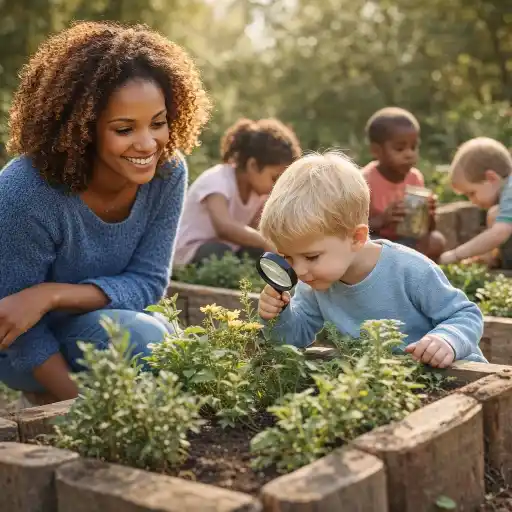
1. Daily checks and planning:
- 👀 Do a quick hazard scan each morning (glass, sharp objects, standing water).
- 🌤️ Check weather, UV, and air quality. Use local tools and CDC guidance: CDC Outdoor Play and Safety.
- 🧥 Encourage layers and clearly labeled spare clothes. Remind families: state requirements vary - check your state licensing agency.
2. Supervision and routines:
- 👁️ Use active supervision: staff should move, scan, and be positioned for clear sight lines.
- 🧭 Set boundaries and practice signals (one whistle = listen; two = return).
- 🩹 Keep first-aid and sunscreen/insect-repellent permissions on file.
3. Water and heat safety:
- 💧 For water play, maintain close supervision; follow pool and splash-pad rules from the CDC.
- 🔥 On hot days, shorten active play, increase shade and water breaks, and plan cooler times of day for running games.
4. Standards and space: Follow national guidance like Caring for Our Children and playground space recommendations. See Outdoor Play Areas for standards and sizing.
How do we make outdoor play meet curriculum goals and avoid common mistakes?
1. Connect simple targets to blocks:
- 🔢 Math: count seeds, sort leaves by size, measure plant growth.
- 🔬 Science: test ice melting, observe insects, collect weather data.
- ✍️ Language: nature journals, storytelling, new vocabulary words tied to discoveries.
2. Use loose parts for open learning. Stones, sticks, buckets, and fabric invite building, sorting, and story-making. Growing Green and ChildCareEd both recommend loose parts and child-led play as best practice (Growing Green, ChildCareEd ideas).
3. Common mistakes and fixes:
- ❌ Too many toys out at once. ✅ Fix: Offer 2–3 focused choices and rotate weekly.
- ❌ No weather plan. ✅ Fix: Use a traffic-light plan (go outside / shorten time / stay indoors).
- ❌ Skipping staff training. ✅ Fix: Use short team sessions or ChildCareEd courses like CDA: Creating the Outdoor Classroom Buy Now $16.00.
4. Measure success simply:
- ✅ Track three signs weekly: more active play, new vocabulary, calmer transitions.
- 📷 Keep one photo per week and short notes to share with families.
FAQ (short):
- Q: How long should outdoor time be? A: 15–30 minutes for toddlers; 30–60 minutes for preschoolers. Adjust by weather and staffing.
- Q: What if space is small? A: Use vertical gardening, bins, and rotate stations.
- Q: How do we handle staff nervous about risks? A: Start small, practice rules, and train with short modules like Creating the Natural Outdoor Classroom Buy Now $16.00.
- Q: Who decides safety rules? A: Program leadership using local licensing and national guidance (CFOC, CDC). state requirements vary - check your state licensing agency.
Final thought: Start with one small step—add a 15-minute outdoor block, a single garden pot, or a nature scavenger hunt. Keep it simple, document outcomes, and celebrate small wins. Outdoor learning supports children, staff, and families as a joyful, practical part of your daily program. Prioritize resources from ChildCareEd and trusted partners like the CDC and your state DNR for local tips.
- 1,2,3, Eyes on Me: Classroom Safety
- CDA Bridge Bundle: Family Child Care without Portfolio Review
- CDA: Creating the Outdoor Classroom
- CDA Bridge Bundle: Infant/Toddler without Portfolio Review
- CDA Bridge Bundle: Preschool without Portfolio Review
- Play with Purpose: Supporting Children with Autism
- Creating Environments that Nurture Growth and Community
- Texas Director Credential
- Wellness in Action: Teaching Healthy Habits to Children
- Family Child Care: Building, Premises, and Outdoor Safety
- CDA Certification en Español: Recursos y Consejos para Educadores Bilingües
- 🔍 ¿Qué ves cuando observas a un niño aprender?
- List of Non-Poisonous Plants for Children: Safe Choices for Kids and Classrooms
- Outdoor Learning in California: Nature Play Ideas That Work Year-Round
- How Does Outdoor Play Help Toddlers and Preschoolers?
- How can we use prairie animals and nature activities with young children in Oklahoma?
- How can Washington early childhood educators support outdoor play, safety, and learning in daycare?
- Learning Through Creative Daycare Activities
- How can we use nature-based learning through Minnesota's outdoor seasons?
- How can New York early childhood programs use garden-based learning?
- What are play-based learning approaches?
- Celebrando la amistad en el cuidado infantil durante el Día de los Mejores Amigos
- Canciones, juegos y preguntas de círculo para niños
- How can we turn playtime into learning time in North Dakota child care?
- Why Should Early Childhood Programs Prioritize Outdoor Play?
- How can I build a nature-based curriculum for my New York program?
- How can I start a small garden project with New York preschoolers?
- How Does Play Support Children’s Physical, Cognitive, and Social Growth?
- Why Does Old‑School Play (Blocks, Mud, Cardboard) Still Win?
