Can preschoolers become real stewards of the planet? Teaching young children to care for the #environment is practical, developmentally appropriate, and deeply rewarding — and it starts with simple routines and well-designed outdoor experiences. If you want step-by-step ideas for turning your yard or limited outdoor space into a learning lab, consider Creating the Natural Outdoor Classroom  Buy Now $16.00 and the complementary CDA: Creating the Outdoor Classroom Buy Now $16.00 from ChildCareEd — both give practical guidance to gain training hours and shape richer daily practice.
What are age-appropriate goals when teaching environmental care?
Start by defining realistic, observable goals for toddlers and preschoolers: notice, nurture, and act. At early ages, goals should focus on curiosity and routines rather than abstract policy. Examples:
- Notice: children name plants, animals, or weather features during a nature walk (vocabulary and observation).
- Nurture: children help water plants, feed compost bins, or tend a container garden (responsibility, fine motor skills).
- Act: small stewardship tasks such as picking up litter, sorting recyclables, or planting seeds (agency and community awareness).
Why these matter: they connect cognitive skills (observation, sorting) and social-emotional growth (empathy, patience). Align goals with daily routines so environmental learning is integrated — snack time can include talking about where food comes from; transition songs can celebrate the seasons. For practical design tips and examples of nature-rich spaces, see the stepwise guidance as part of Creating the Natural Outdoor Classroom Buy Now $16.00. Remember: state requirements vary - check your state licensing agency when you add gardening, water play, or field trips to your plan.
How can outdoor experiences become a classroom for stewardship?
Outdoor time is your strongest tool: nature provides multi-sensory, sustained contexts for learning. Turn the outdoors into an intentional curriculum by planning routines, invitation-based provocations, and safe exploration zones. Practical steps:
- Map and zone the outdoor area: quiet observation spot, digging/gardening zone, loose-parts play area, and a nature table for finds.
- Use short, repeated invitations: a weekly nature walk, a daily plant-care helper, or a compost-check moment after snack.
- Embed documentation: photograph growth, record simple observations on a chart, and display children’s drawings on a nature board.
Research supports this approach: regular outdoor learning links to gains in attention, physical health, and even literacy when used as an authentic context for language and story (see recent studies on outdoor learning benefits). Practically, choose one routine to start (e.g., daily plant watering) and build from there — small, consistent practices develop habit and stewardship. For activity ideas and layout suggestions, consult resources such as Creating the Natural Outdoor Classroom Buy Now $16.00 and Creating Environments that Nurture Growth and Community Buy Now $55.00.
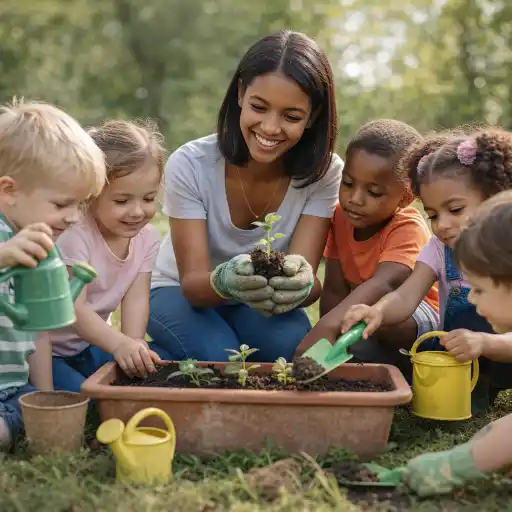
What hands-on activities effectively teach sustainability and care?
Hands-on, repeated experiences are essential. Below are developmentally targeted activities tied to clear learning outcomes and adaptable for small spaces.
- 🔎 Nature scavenger hunts (observation, vocabulary): give picture cards or simple checklists; encourage descriptive language and counting.
- Gardening in containers (life cycles, responsibility): plant fast-growing seeds (radish, lettuce) so children observe change within weeks.
- Composting basics (science & math): small worm or bokashi bins illustrate decomposition and offer measurement moments (volume, weight).
- Recycling sort station (categorization): practice sorting paper, plastic, and metal; link to art projects using reusable materials.
- Story-based stewardship (literacy + empathy): read nature books and invite children to act out ways to protect animals and water.
Tips for success: make roles visible (plant helper, compost monitor), use simple charts to track tasks, and scaffold questioning (What do you notice? What will happen if we don’t water?). Connect activities to core learning goals (fine motor, counting, vocabulary) so environmental lessons also satisfy program outcomes and training requirements. For science-focused activities that work with infants and toddlers, consider Building Early Science Foundations Buy Now $16.00. For guidance on designing outdoor, inquiry-based science experiences and longer-term studies that connect directly to stewardship goals, see Science is All Around You.
How do I integrate sustainability into daily routines and avoid common pitfalls?
Integration means embedding environmental care in everyday practices so it feels natural rather than extra. Strategies:
- Start small: one planter, one compost bucket, one weekly nature walk.
- Embed language: add nature words to transition songs, label plants with picture-word tags, and narrate actions ("We’re watering the basil; water helps plants grow").
- Model and reflect: staff model gentle handling of living things and lead brief reflections after activities (What did we learn?).
Common mistakes and how to avoid them:
- Overplanning: avoid complex projects without staff buy-in — keep activities short and repetitive.
- Too many materials at once: rotate loose parts weekly to maintain focus.
- Neglecting safety checks: do daily hazard scans and have clear supervision practices. state requirements vary - check your state licensing agency.
To build staff confidence and program coherence, invest in short trainings that connect environmental goals to classroom management and inclusion — for example, The Best Promotion is Play Buy Now $35.00 can help you keep play-centered goals while adding environmental content. Also, document outcomes: a quick weekly note on behavior, vocabulary growth, or plant progress helps you see impact.
What questions do providers commonly ask (FAQ)?
Q: How long should an outdoor lesson be? A: For toddlers/preschoolers, 15–30 minutes of focused activity plus free exploration; scatter short micro-lessons through the day.
- Q: What if space is tiny or no yard? A: Use balcony planters, window boxes, portable sensory bins with soil, and take short neighborhood walks. Vertical planters and hanging pots work well indoors/outdoors.
- Q: How do we include children with special needs? A: Offer adaptations: larger-handled tools, visual supports, buddy roles, multi-sensory invitations, and quieter observation spots.
- Q: Are there safety or health rules to follow? A: Yes — use daily hazard checks, sun/insect protection with parental permission, secure water play, and keep CPR/first aid current.
- Q: How do we engage families? A: Send home garden snapshots, invite family planting days, and share simple home activities (seed-starter kits, nature scavenger lists).
By intentionally planning short, meaningful experiences you help children develop lifelong stewardship habits. For practical templates, hands-on lesson ideas, and to earn training hours, explore CDA: Creating the Outdoor Classroom Buy Now $16.00 and Creating Environments that Nurture Growth and Community Buy Now $55.00.
Conclusion
Teaching young children to care for the planet is both feasible and impactful. Keep goals simple (notice, nurture, act), anchor learning in regular outdoor routines, choose hands-on activities that link to developmental outcomes, and avoid common pitfalls by starting small and documenting progress. Use training and course resources to strengthen staff practice and to align activities with program standards — for example, Creating the Natural Outdoor Classroom Buy Now $16.00 offers practical layouts and activity templates. When children practice care in safe, scaffolded ways, they develop empathy, observational skills, and a sense of agency that will grow over time. Your next step: pick one simple routine (plant, compost, or scavenger walk), try it twice a week, and watch stewardship habits emerge. #children #environment #nature #outdoor #sustainability
- 45 Hour Child Growth and Development
- 45 Hours Director-Administration ONLINE
- 45 Hour Preschool Methods and Materials
- 45 Hour School Age Methods and Materials
- CDA Bridge Bundle: Preschool without Portfolio Review
- 45-Hour Preschool Curriculum
- Emergent Learning & Development
- Texas Director Credential
- Wellness in Action: Teaching Healthy Habits to Children
- Today Is Earth Day!
- Exploring the World: Fun and Educational Social Studies Activities for Preschoolers
- Managing Behaviors in the Early Childhood Education Classroom
- Building Social Foundations
- CDA Certification en Español: Recursos y Consejos para Educadores Bilingües
- 15 Earth Day Activities for Kids That Teach Sustainability
- 🔍 ¿Qué ves cuando observas a un niño aprender?
- How can child care programs promote mental health in early childhood?
- Proporciones de Cuidado Infantil y Tamaños de Grupo por Edad en Nueva Jersey (Guía Rápida para Centros y Hogares)
- Proporciones de Cuidado Infantil y Tamaños de Grupo por Edad en Virginia (Guía Rápida para Centros y Hogares)
- How Can Positive Guidance Build Respectful Classroom Routines in Texas Child Care Programs?
- How can we build strong teacher-child relationships?
- Canciones, juegos y preguntas de círculo para niños
- How should child care providers respond to biting, hitting, and aggressive behavior?
- How Can We Teach Young Children to Care for the Environment?
- Child Keeps Hitting Other Kids? Look for These 7 Patterns Before Reacting
- What Are 10 Proactive Classroom Management Techniques for Early Educators?
- How Can Child Care Providers Help Young Children Follow Directions?
- What Are Effective Ways to Teach Children to Care for Classroom Materials?
