Many New York childcare centers and family homes sit between sidewalks, buses, and tall buildings. Still, children can learn to love the #nature all around them. This article helps directors and providers turn small spaces into powerful learning places. Why it matters: nature time improves mood, focus, and learning for young #children and builds lifelong curiosity. Small, steady steps work best.
How do we start bringing nature into tiny New York spaces?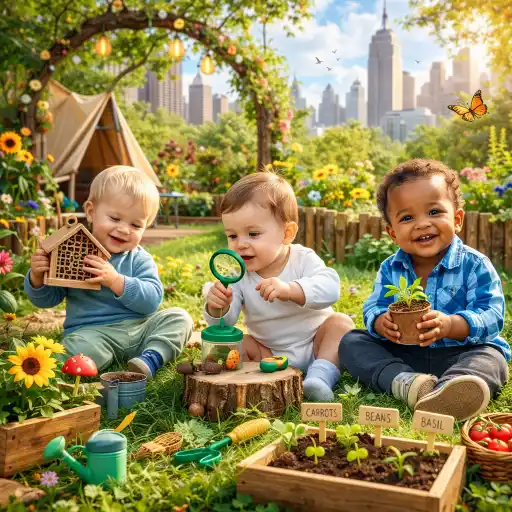
You do not need a big yard. Start with 1–2 simple changes and build from there. Try these easy steps:
For practical examples and the benefits of well-designed outdoor classrooms that can inspire layouts and routines even in tight urban sites, see The Great Texan Outdoor Classroom.
- 📦 Make a tiny garden kit:
- Use pots, window boxes, or a few raised beds on a rooftop or in a fire-escape-safe area. See practical tips in How can New York early childhood programs use garden-based learning?.
- Pick fast-growing, child-friendly plants: herbs, lettuce, or sunflowers so children see quick results.
- 🪵 Create a nature corner inside:
- Put a small nature table with stones, leaves, shells, and magnifiers.
- Rotate items weekly to keep interest.
- 🌿 Use vertical and portable ideas:
- Hang planters, use stacking pots, or mobile planter carts for patios and sidewalks. ChildCareEd has small-space ideas in Outdoor play ideas for small spaces.
- 🔁 Plan one routine:
- Example: 10 minutes of plant care each morning. Consistency helps children form habits.
- 🌿 Natural outdoor classroom: to build confidence in planning and facilitating nature-based learning in small urban spaces, ChildCareEd's Creating the Natural Outdoor Classroom
 Buy Now $16.00 is a 2-hour online course covering how to design engaging, safe outdoor environments and routines that connect young children to nature — a direct match for the nature corner, garden kit, and daily routine steps outlined in this guide.
State requirements vary - check your state licensing agency before planting on shared property. Start small, celebrate small wins, and invite families to help.
What daily routines and activities help children fall in love with the outdoors?
Daily routines make nature feel normal and safe. Use short, repeated moments so young children can notice change and grow curiosity. Try a mix of simple activities that fit your space and schedule:
- 📚 Morning story + nature word of the day: bring one book outside or read near a window. Use the word in songs and play. Find ideas in Little Explorers.
- 🔎 Micro walks and scavenger hunts:
- Short walks in the block or courtyard. Give picture lists for toddlers and word lists for preschoolers.
- 🌱 Planting and observation:
- Plant seeds in clear cups to watch roots. Count leaves for math and draw weekly journals for literacy and science.
- 🎨 Nature art and sensory play:
- Leaf rubbings, rock painting, or scent jars build vocabulary and calm skills.
- 🥗 Tiny chef moments:
- Use herbs from your #garden for simple taste-tests and food lessons. Link to nutrition and safety guidance as needed.
Rotate activities, document with photos, and link play to learning goals. ChildCareEd shows many hands-on ideas in What Are Creative Ways to Use Nature as Your Classroom?.
How do we keep children safe, healthy, and included while exploring the city?
Safety helps families and staff trust outdoor learning. Use clear rules, training, and simple tools. Follow these steps:
- 👀 Supervision and sight lines:
- Keep small groups. Use low ratios and assign staff roles for activities and transitions.
- 🧴 Sun, bug, and weather protection:
- Use hats, shade, sunscreen with parent permission, and insect repellent rules. See CDC tips in Outdoor Play and Safety for Children in ECE.
- 🩹 First-aid and health checks:
- Keep a small outdoor kit: wipes, Band-Aids, water, spare clothes, and allergy plans. Train staff in CPR and first aid.
- 🩺 Health, safety, and wellness: To make sure you are fully prepared for the health and safety demands of outdoor learning in a city setting, ChildCareEd's Healthy Starts: Safety, Nutrition, and Wellness in Child Care Buy Now $55.00 is a 6-hour online course covering safe environment practices, hygiene routines, sun and weather protection, and wellness basics — directly supporting the supervision, first-aid, and inclusion steps described in the safety section of this article.
- ♿ Accessibility and inclusion:
- Adapt activities for mobility, sensory needs, and language differences. Use touch, sight, and sound options so every child belongs.
- 📋 Licensing and rules:
- Follow local rules on space and supervision. ChildCareEd summarizes outdoor space guidance in Outdoor Play Areas, and remember: state requirements vary - check your state licensing agency.
With planning and short predictable routines, outdoor time becomes safe, joyful, and educational for all children.
How can programs find funding, partners, and make nature stick for the long run?
Growing a nature program takes community and small planning steps. Use the following plan to build support and money for your ideas:
- ✉️ Plan and document:
- Create a simple one-page goal: who, what, when, and budget. Take photos and collect child work to show impact.
- 🤝 Find partners:
- Reach out to local parks, botanical gardens, and extension services. In New York, places like Alley Pond teach early childhood programs and partner with centers (Alley Pond Early Childhood Programs).
- 💸 Look for grants:
- Search for EPA environmental education grants and local green grants for schools. See national grant listings at the EPA grant descriptions.
- ChildCareEd articles also point to small local funding possibilities in their garden program guides.
- 📣 Use families and volunteers:
- Invite parent helpers, local teens, or community groups for planting days and maintenance.
- 🔁 Keep it simple and sustainable:
- Start with one raised bed or a few pots, then add seasons and activities. Document outcomes to keep partners and funders excited.
Small steady steps and good documentation make it easy to grow. Use ChildCareEd’s garden-based learning tips for grants and program design: Garden-Based Learning.
Conclusion
1) Start with one small change: a pot, a nature table, or a 10-minute walk. 2) Use short routines and repeat them daily so children build caring habits. 3) Keep safety and inclusion first. 4) Find partners and take photos to win small grants. Your #outdoor steps help children form a real love of #nature and of #play in the city.
Common mistakes — and how to avoid them
- ❌ Too many projects at once — start with one pot or one table.
- ❌ No watering plan — create a simple schedule with staff and children.
- ❌ Forgetting documentation — take weekly photos and short child quotes for families and funders.
FAQ
- Q: Do we need permission to plant outside the center? A: Yes. Check building rules, outdoor space owners, and state licensing. State requirements vary - check your state licensing agency.
- Q: How do we include infants? A: Use sensory bins, safe plant touch, and outdoor naps when allowed by policy.
- Q: What if staff worry about bugs or dirt? A: Start with covered sensory bins, teach safe handwashing, and use parent consent for tasting or repellent.
- Q: Where do I find lesson ideas? A: ChildCareEd has many easy activity guides like Outdoor Spring Play and Creative Ways to Use Nature.
- Creating the Natural Outdoor Classroom
- Birth to Five CDA Credential with Portfolio Review
- Pediatric RSV First Aid & CPR/AED
- CDA Bridge Bundle: Family Child Care without Portfolio Review
- CDA Bridge Bundle: Infant/Toddler without Portfolio Review
- CDA Bridge Bundle: Preschool without Portfolio Review
- Sensitive Periods in Montessori: Guiding Natural Learning
- Creating Environments that Nurture Growth and Community
- Texas Director Credential
- Access for All: Inclusion and the ADA
- Today Is Earth Day!
- How Can Childcare Educators Thrive in the Big Apple?
- Childcare Educators in NYC: Surviving the Holiday Season in the Concrete Jungle
- CDA Certification en Español: Recursos y Consejos para Educadores Bilingües
- Recursos en Español sobre el Sueño Seguro del Bebé
- 10 Ejemplos de Cómo la Cultura Influye en el Desarrollo Infantil
- Proporciones de Cuidado Infantil y Tamaños de Grupo por Edad en Nueva Jersey (Guía Rápida para Centros y Hogares)
- Lista para Abrir una Guardería en Casa en Dakota del Norte: Cómo Empezar
- Lista para Guardería en Casa en Illinois: Cómo Iniciar una Guardería en el Hogar
- Cómo Trabajar en el Cuidado Infantil en Carolina del Norte: Requisitos y Pasos
- How can New York early childhood programs use garden-based learning?
- How can New York childcare programs help children in the concrete jungle fall in love with nature?
- Fall Sensory Activities for Toddlers and Preschoolers
- Celebrando la amistad en el cuidado infantil durante el Día de los Mejores Amigos
- How can I build a nature-based curriculum for my New York program?
- How can seasonal activities (spring, summer, fall, winter) combine fun with clear educational goals?
- How can childcare programs create high-quality outdoor classrooms and nature-based care?
- Too Wiggly to Sit? Fall Movement Activities Toddlers Will Love
- Go on a Fall Hunt! Outdoor Learning Challenges for Preschoolers
- How Can a Jungle Maze Turn Play into Problem-Solving for Young Learners?
