Nature-based learning helps children move, think, and feel calm. This short guide is for child care providers and directors in New York who want step-by-step ideas to build a practical outdoor curriculum. It explains why this work matters, how to begin, how to keep children safe, and where to find funding and training. Remember: state requirements vary - check your state licensing agency.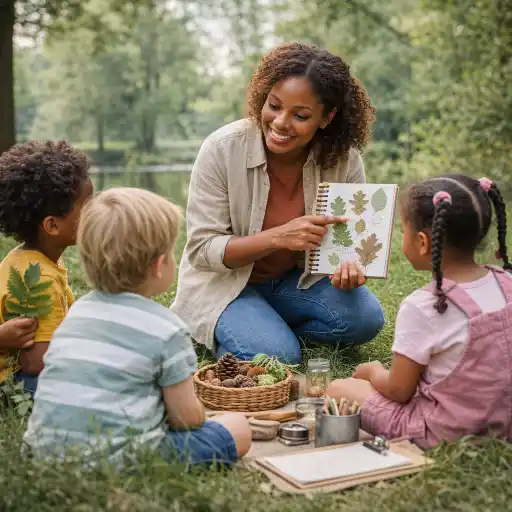
Why does a nature-based curriculum matter?
- Outdoor learning supports whole-child growth: it builds motor skills, language, and self-regulation. See the benefits summarized in ChildCareEd’s overview of Benefits of Outdoor Classrooms.
- Nature lowers stress and boosts attention — helpful for both staff and kids. ChildCareEd explains these ideas in How can outdoor learning help young children grow and learn?
- It turns everyday moments into learning: counting seeds, describing leaves, measuring plant growth — real science and #math in the #outdoors.
Keep these five words in mind for planning: #nature #outdoors #garden #children #safety
How do I start a nature-based curriculum in my New York program?
- 🔎 Plan (3 simple choices):
- 1) Pick one outdoor block per day (15–30 minutes to begin).
- 2) Choose one focus: sensory table, planting, or nature walk.
- 3) Set one learning goal (e.g., count leaves, learn 3 new words).
- 🧰 Gather easy materials: buckets, magnifiers, clipboards, loose parts (sticks, pinecones). Rotate items weekly so children stay curious.
- 📚 Train staff: try ChildCareEd’s course Creating the Natural Outdoor Classroom for design and safety tips.
- 🌿 Creating the natural outdoor classroom: For staff who want to build confidence in designing and managing nature-based learning experiences across all four seasons, ChildCareEd's Creating the Natural Outdoor Classroom
 Buy Now $16.00 is a 2-hour online course covering how to design safe, engaging outdoor environments and routines that connect young children to their local environment — a direct match for the grab-and-go kit, rotating stations, seasonal activity planning, and staff training steps outlined in this guide.
 - 🤝 Engage families: share photos, invite them to seed planting days, and collect permission for tasting or sunscreen use.
- 📋 Map to curriculum: link activities to goals (science: observe plants; language: new words; social: sharing tools). ChildCareEd offers ideas in What Are Creative Ways to Use Nature as Your Classroom?.
What activities and routines work year-round in New York?
- Spring: 🌱 Plant seeds, start a mud kitchen, watch bugs. Use simple planting cups so children can see roots and measure growth.
- Summer: 💧 Water play, shade storytime, and measuring evaporation experiments. Follow sun and heat rules—shorter active times in the hottest hours.
- Fall: 🍁 Leaf sorting, seed counts, and sensory walks. Fall gives great material for art and #science lessons — see ChildCareEd’s fall ideas in Nature’s Classroom: Why Fall Is the Best Season.
- Winter: ❄️ Ice experiments, short observations, and cozy outdoor story corners. Keep sessions brief and plan warm clothes and a warm-up routine indoors. During the holiday season inspect new toys and shared play materials for choking hazards, loose batteries, or other safety risks; see our Holiday Safety Tips - Toys Check for a simple toy-check checklist.
Tips to make it easy:
- 📦 Keep a grab-and-go kit (clipboards, wipes, extra clothes, first aid).
- 📷 Use photos for documentation and family updates.
- 🔁 Rotate 2–3 stations each day so materials stay fresh.
How do I keep children safe, comfortable, and in compliance?
Safety is simple when it is routine and shared. Follow these steps and trusted standards.
- 👀 Daily checks: 1) scan for hazards, 2) check weather and air quality, 3) confirm boundaries and sight lines. ChildCareEd outlines safety checks in How can outdoor learning help young children grow and learn?.
- 🌱 Everyday safety and healthy environments: To help staff build the consistent daily habits that keep outdoor learning safe and licensing-compliant, ChildCareEd's Everyday Safety: Creating Healthy Environments Buy Now $55.00 is a 6-hour online course covering how to anticipate environmental risks, set up safe outdoor spaces, and maintain consistent supervision routines — directly supporting the daily hazard scan, three-level weather plan, sight line checks, and active supervision steps described throughout this article.
- 🩺 Follow national guidance: use Caring for Our Children for health and supervision guidance and the CDC for cleaning and disinfecting outdoor toys.
- 🧑🏫 Supervision routines: practice active supervision, use small groups, and teach children signals for gathering. Post simple rules near the gate.
- 🧥 Clothing and sun: require labeled layers, hats, and parent permissions for sunscreen/insect repellent. Remember: state requirements vary - check your state licensing agency.
- ⚠️ Common mistakes & fixes:
- ❌ Too many toys out. ✅ Offer 2–3 focused choices and rotate.
- ❌ No weather plan. ✅ Use a three-level plan: go outside / shorten/stay inside.
- ❌ Skipping staff training. ✅ Use short team sessions or ChildCareEd trainings.
How do I fund, grow, and measure garden-based learning in New York?
Funding and partnerships can make gardens thrive. Try these steps:
- 🌿 Start small:
- 1) One planter box or 3 pots is enough to begin.
- 2) Use quick plants (lettuce, radish, herbs), so children see results fast.
- 💸 Seek grants: apply for local New York grants such as the Green School Grant Program. Local fund lists and small community grants are also helpful — see GrantWatch New York listings.
- 🤝 Build partners: contact extension offices, botanical gardens, or community volunteers. ChildCareEd’s guide:e How can New York early childhood programs use garden-based learning? Has NY-specific tips.
- 📈 Measure learning simply:
- 📷 Take one photo per week of children engaged.
- ✍️ Note 1–2 child quotes or a short child drawing showing learning.
- ✅ Track 3 signs: more active play, new words, calmer transitions.
- 🧾 Map to outcomes: link garden tasks to objectives (science: life cycles; math: measuring growth; social: sharing jobs). Use project-based approaches from ChildCareEd’s project learning resources (Project-Based Learning).
Conclusion
1) Begin with one small change: add a 15–20 minute outdoor block or one planter. 2) Use simple routines for safety and documentation. 3) Train staff with short courses like ChildCareEd’s Creating the Natural Outdoor Classroom. 4) Look for New York grants like the Green School Grant Program.
FAQ (short):
- Q: How long should outdoor time be? A: Start 15–30 minutes; build to longer blocks as staff and children adapt.
- Q: What if space is tiny? A: Use containers, window boxes, vertical planters, and take short walks in nearby green spots.
- Q: How do we document learning? A: Photos + short child quotes + a weekly note board for families works well.
- Q: Who decides safety rules? A: Program leadership using local licensing and national guidance (Caring for Our Children, CDC). State requirements vary - check your state licensing agency.
You are not alone. Start small, celebrate each seed sprout, and use ChildCareEd and local partners to grow your program with confidence.
- 45 Hour Child Growth and Development
- CDA Bridge Bundle: Preschool
- Pediatric RSV First Aid & CPR/AED
- 45 Hour School Age Methods and Materials
- CDA Bridge Bundle: Family Child Care
- CDA Bridge Bundle: Family Child Care without Portfolio Review
- CDA Bridge Bundle: Infant/Toddler without Portfolio Review
- CDA Bridge Bundle: Preschool without Portfolio Review
- CDA Bridge Bundle: Infant/Toddler
- Texas Director Credential
- Lesson Planning for Infants and Toddlers
- Empowering Early Childhood Education: NYAEYC
- How Can Childcare Educators Thrive in the Big Apple?
- Maximize Your Training Opportunities with the Educational Incentive Program (EIP)
- What Professional Development Opportunities Does the New York EIP Scholarship Cover?
- Can Your CDA Portfolio Tell a Story of Partnership with Families?
- 👶 ¿Cuáles son las proporciones y grupos requeridos en Dakota del Norte? 🏫
- Cómo Empezar una Guardería en Casa: Requisitos y Pasos
- How can New York early childhood programs use garden-based learning?
- How can New York childcare programs help children in the concrete jungle fall in love with nature?
- Celebrando la amistad en el cuidado infantil durante el Día de los Mejores Amigos
- Cómo simplificar la capacitación para sus empleados de daycare
- How can I renew my New York child care license without a gap?
- What Does New York's Health Care Plan Requirement Mean for Your Program?
- How can my program find its niche as 2‑K and 3‑K grow in New York?
- How can I build a nature-based curriculum for my New York program?
- How can I start a small garden project with New York preschoolers?
- Can forest preschool activities be integrated into traditional programs?
- How can I bring a Forest Preschool (nature-based learning) to my program?
