Outdoor #play helps our #children be stronger, calmer, and more curious. This article answers practical questions directors and child care providers ask about using the outdoors as a learning space. We use short steps, numbered ideas, and simple safety tips you can start using today. Remember: state requirements vary - check your state licensing agency.
Why it matters: Outdoor play mixes many learning goals at once. A short outdoor block can grow gross motor skills, build language, calm big feelings, and spark problem solving. For busy programs, outside time often equals calmer classrooms and happier staff. See evidence and ideas in ChildCareEd’s overview of The Importance of Outdoor Play in Early Childhood Education.
What benefits does outdoor play give young children?
Outdoor play offers many kinds of growth. Here are the top benefits and how they help your program:
- 🟢 Physical health and motor skills
Children run, jump, climb, and balance. These activities build big muscles and coordination. ChildCareEd explains how outdoor play boosts gross motor skills and overall #health in How Does Outdoor Play Help Toddlers and Preschoolers?.
- 🌿 Thinking and curiosity
Nature gives real problems to solve—building a stick bridge, watching a bug, or measuring plants. Research summarized on ChildCareEd shows outdoor lessons support attention and problem solving (The Outdoor Classroom).
- 🤝 Social and emotional learning
Playing together outside gives space to practice sharing, negotiating, and calming down after excitement. Outdoor time often leads to kinder peer play and fewer classroom meltdowns (Benefits of Outdoor Classrooms).
- 🎨 Creativity and sensory learning
Loose parts, mud kitchens, and nature art invite open-ended play and language growth. For ideas on loose parts, see How Can I Use Loose Parts Play. For concrete strategies and activity examples that help foster preschoolers' creativity through imaginative play and sensory art, see Tiny Hands, Big Dreams: Fostering Creativity in Preschoolers.
- 🧭 Lifelong habits and nature connection
Children who play outside learn to love the natural world. ChildCareEd’s training Creating the Natural Outdoor Classroom
 Buy Now $16.00 helps programs plan nature-based routines.
Quick note: public health and professional groups also support outdoor play. See CDC guidance on outdoor play and safety: CDC - Outdoor Play and Safety.
How can we keep outdoor play safe and meet rules?
Safety is simple when it is routine. Use a short, repeatable plan and record it each day. Below is a numbered plan you can teach staff in one short meeting.
- 🔎 Daily hazard scan (1–3 minutes)
Check for glass, animal waste, standing water, sharp objects, or poisonous plants. ChildCareEd offers a helpful checklist in Creating Safe Outdoor Play Environments.
- 🌤️ Weather and air-quality check
Use a simple traffic-light system: Go, Shorten, or Stay Inside. ChildCareEd’s Child Care Weather Watch examples are useful. Also see CDC tips for heat, sun, and bugs (CDC guidance).
- 👀 Active supervision and zones
Assign staff to zones and keep adults moving and scanning. Post a zone map and a short script for supervising transitions.
- ⛑️ Gear, permissions, and medical plans
Collect sunscreen and insect repellent permissions, keep first-aid stocked, and follow any individual health plans. Keep records of daily checks for licensing.
- 📋 Follow standards and local rules
Match your policies to national guidance like Caring for Our Children and local licensing rules. ChildCareEd summarizes play area standards in Outdoor Play Areas. State requirements vary - check your state licensing agency.
Common safety mistakes and fixes (quick):
- ❌ Skipping checks — ✅ Make the scan part of sign-in.
- ❌ Overprotecting (no small risks) — ✅ Allow low, supervised challenges for learning.
- ❌ Confusing supervision — ✅ Use zone assignments and short staff refreshers.
How do we design outdoor learning that fits curriculum and space?
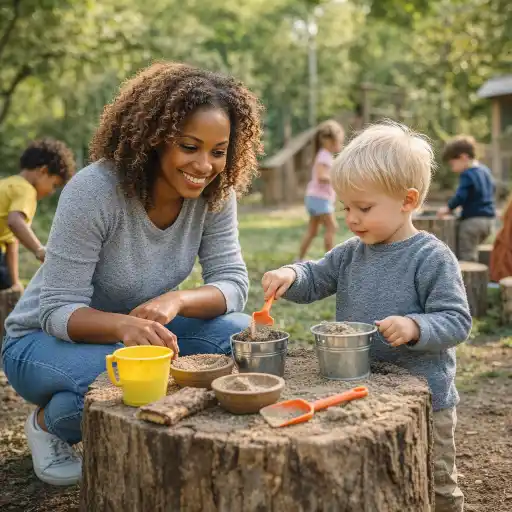
Designing outdoor learning is about choice, clear invitations, and linking play to goals. Use these numbered steps to plan simple, repeatable outdoor blocks.
- 🌳 Create clear play invitations
Set up 2–4 areas: movement, sensory, building/loose parts, and quiet observation. Use signs or trays that ask a single question ("Count 5 seeds") to focus learning.
- 🔁 Rotate materials and themes weekly
Keep interest high by rotating bins of loose parts, sensory materials, or art supplies. See small-space and rotation tips in ChildCareEd’s Outdoor play ideas for small spaces.
- ✍️ Link to one learning goal per block
Pick a vocab word, a counting target, or a social goal for that outing. For lesson ideas and nature-based activities see What Are Creative Ways to Use Nature as Your Classroom?.
- 🪵 Use natural loose parts and risk-friendly equipment
Logs, rocks, ropes, and sand invite creativity and safe risk. Learn about loose parts in Loose Parts Play.
- 📚 Bring curriculum outdoors
Count seeds for math, make observation journals for science, and do storytime on a blanket for language. ChildCareEd’s The Natural Classroom has many examples.
Quick activity ideas (numbered):
- 🔎 Nature scavenger hunt (observation + vocab)
- 🌱 Mini gardening (science + responsibility)
- 🏃 Obstacle course using logs and cones (gross motor + listening)
- 🎨 Outdoor art with natural materials (fine motor + creativity)
How can programs make outdoor play a daily habit with staff and families?
Turning outdoor play into a routine takes small, steady steps. Use these numbered tips to build habits that stick.
- 👩🏫 Short, regular staff practice
Run 10–15 minute drills each month: practice hazard scans, zone moves, and quick lesson setups. ChildCareEd courses like Creating the Natural Outdoor Classroom
Buy Now $16.00 are great for staff training. - 📣 Communicate with families
Send one photo and one learning note after outdoor time. Host a family nature day and share packing lists. ChildCareEd’s free resources include sample family notes (Resources - Creating the Natural Outdoor Classroom).
- 🤝 Make gear and access fair
Create a gear library or swap for boots and coats. Small lending programs remove barriers for families.
- 📊 Track simple wins
Pick 3 signs to watch weekly (more active play, new words, calmer transitions) and record a photo or one-line note.
Common mistakes and quick fixes:
- ❌ Too many toys out — ✅ Rotate and reduce choices.
- ❌ No plan for bad weather — ✅ Move the invitation indoors or shorten the block.
- ❌ Poor family communication — ✅ Send quick, positive updates with one photo.
FAQ (short):
- Q: How long should outdoor time be? — A: Multiple short blocks (20–30 minutes) daily work well for toddlers and preschoolers.
- Q: What if space is tiny? — A: Use zones, vertical play, and bins of loose parts (small space ideas).
- Q: Who decides to go outside? — A: The director or assigned staff follows the posted weather and safety chart.
- Q: Are there training tools? — A: Yes. See ChildCareEd courses and free PDFs at Resources.
Conclusion
Outdoor #play is one of the best tools you have to help children grow physically, socially, and emotionally. Start with one change this week: a 20-minute outdoor block, a daily hazard scan, or one new loose-parts bin. Use simple records to show progress and share wins with families. For practical training and templates, explore ChildCareEd’s guides and courses like Creating the Natural Outdoor Classroom Buy Now $16.00 and the free resource library at Resources.
Final reminders: keep safety routines simple, let children take small risks to grow, and remember state requirements vary - check your state licensing agency. Your small routines make big differences for children’s #learning, #children, and #safety outdoors.
- 45 Hour Child Growth and Development
- Abuse and Neglect: Signs and Reporting
- Creating the Natural Outdoor Classroom
- 1,2,3, Eyes on Me: Classroom Safety
- Healthy Starts: Safety, Nutrition, and Wellness in Child Care
- Texas Director Credential
- Family Child Care: Building, Premises, and Outdoor Safety
- Technology as a Classroom Tool
- Today Is Earth Day!
- Bye Bye Winter: The Role of Outdoor Play in Early Childhood Development
- CDA Certification en Español: Recursos y Consejos para Educadores Bilingües
- Recursos en Español sobre el Sueño Seguro del Bebé
- Consejos de Supervisión Activa para Salones de Preescolar y el Juego al Aire Libre
- Retraso del Habla en la Guardería: Cómo Pueden Ayudar los Proveedores
- How Do Minnesota Winters Affect Young Children's Mental Health?
- Why Should Early Childhood Programs Prioritize Outdoor Play?
- How can child care programs prevent heat-related illness during outdoor play?
- How can child care programs build reliable sun safety routines with sunscreen, hats, and shade?
- Should Early Childhood Programs Give Children More Outdoor Time?
- How can childcare programs create high-quality outdoor classrooms and nature-based care?
- How can preschool programs intentionally support early math skills every day?
- What Is the Waldorf Approach and How Can Child Care Providers Use It?
- How Can Early Childhood Programs Implement Practical Sustainability Practices?
- What Will the Future of Early Childhood Education and Care Look Like?
- National Massachusetts Day for Kids: Explore the Bay State Through Play
- Why Is Outdoor Learning Growing in Early Childhood?
