Teaching young children about the outdoors can be simple, joyful, and full of learning. This article helps child care providers and directors in #NorthDakota bring #nature and #wildlife into daily play and lessons. You will find why it matters, hands-on ideas, safe spots to visit, partners in the state, and ways to include families and staff. Use small steps and repeat routines — children learn best through doing and wondering.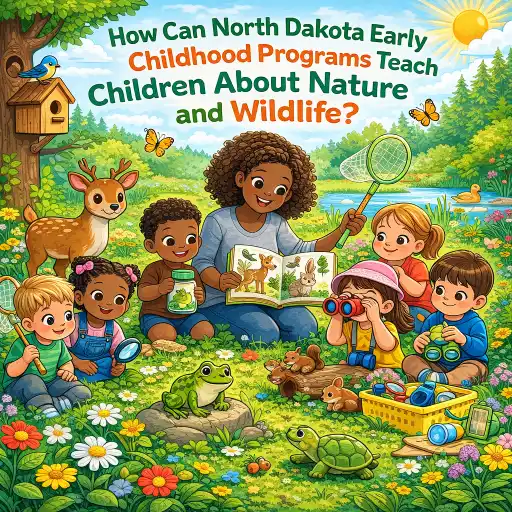
Why does teaching nature and wildlife matter for young children?
1) Nature helps whole-child growth. Time outside supports movement, calm, language, and thinking. Research and training for early childhood teachers show that outdoor play improves attention, self-regulation, and physical skills. See ChildCareEd’s explanation of the importance of outdoor play as part of outdoor learning benefits.
2) Nature teaches real science and empathy. Observing animals, plants, and weather builds early science habits: notice, ask, test, and share. Use bird watching or insect study to grow curiosity and care for living things.
3) Social and language gains happen naturally. Group nature projects and storytelling build vocabulary and turn-taking. For hands-on ideas that fit daily routines, try ChildCareEd’s guide on using nature as your classroom.
Why it matters: a small garden, a consistent nature table, or a 15-minute outdoor block can change how children move, speak, and solve problems. These are not add-ons — they are essential parts of play-based #learning.
How can we bring nature and wildlife into daily learning?
1) Use simple, repeatable routines every week. Try an outdoor story circle, a nature table, or a short sensory walk. Keep materials low-cost: magnifiers, buckets, and picture cards.
- 🍃 Scavenger hunts: give each child a picture card and ask for 3 safe items (leaf, smooth rock, seed). This builds observation and counting.
- 🌱 Mini garden: plant easy seeds in pots. Let children water and name plant parts. Harvests can become classroom snacks or art supplies.
- 🔎 Nature art and sensory play: use leaves, sticks, mud, and water for open-ended art and messy play.
2) Blend subjects outside. Count petals for math, draw bugs for art, sing a bird song for language. For more activity ideas and planning tips, see ChildCareEd’s free training Creating the Natural Outdoor Classroom.
🌿 Natural outdoor classroom: For staff who want to build confidence in planning and facilitating nature-based learning experiences, ChildCareEd's Creating the Natural Outdoor Classroom  Buy Now $16.00 is a 2-hour online course covering how to design safe, engaging outdoor environments and routines that connect young children to nature — a direct match for the scavenger hunts, mini gardens, and outdoor story circle ideas described in this guide.
3) Bring nature indoors when needed. Keep a season table with shells, seeds, and photos. Rotate items and ask children to make observations and stories.
Where can North Dakota programs visit or partner to teach wildlife?
1) Local field trip ideas that are rich learning sites:
- 🚌 State parks and nature centers — Theodore Roosevelt National Park and local refuges offer prairie and bison learning opportunities. ChildCareEd lists field trip ideas for programs in North Dakota.
- 🦆 Zoos and farms — Dakota Zoo and Red River Zoo offer safe animal observation and staff-led talks. See ChildCareEd’s list of best daycare field trips in North Dakota.
- 🌳 Local naturalists and university partners — contact the University of North Dakota fisheries and wildlife programs for guest speakers or student-led projects (see UND’s Wildlife Biology page).
2) Use state and regional resources for lesson plans and webcams. The Minnesota DNR and other regional groups share wildlife lessons and cams that work well for prairie and bird study; adapt their resources for North Dakota sites (see teacher resources like How to teach outside and wildlife education pages).
3) Field trip planning tips:
- 📋 Prepare families and staff with photos, permission slips, and simple language goals.
- 🧭 Scout sites first and plan supervision zones.
- ✅ Use short trips for younger children and longer, deeper visits for older preschoolers.
How do we keep children safe, include families, and measure success?
1) Follow clear safety steps and rules. Safety starts with daily checks, active supervision, and simple group rules. ChildCareEd offers practical safety tools for trips and outdoor supervision as part of field trip planning and training resources like active supervision Buy Now $0.00.
Note: state requirements vary - check your state licensing agency for ratios, transport, and medicine rules.
2) Train staff and involve families:
- 👩🏫 Staff training: Use short modules on supervision, nature-teaching techniques, and risk/benefit planning. ChildCareEd’s courses such as Creating the Natural Outdoor Classroom and local CDA trainings help staff feel confident. Staff or programs seeking formal credentials and clear North Dakota steps can review a practical guide on how to become a preschool teacher in North Dakota.
- 👀 Active supervision and field trip safety: To make sure all staff are prepared for the supervision demands of outdoor and field trip learning, ChildCareEd's Safe Supervision in Child Care: Birth to School Age Buy Now $24.00 is a 3-hour online course covering active supervision strategies, hazard awareness, and how to maintain safe ratios during outdoor activities — directly supporting the safety steps and staff huddle routines outlined in this article.
- 📣 Family engagement: Share photos and one new word after each outing. Invite families to a planting day or a short nature walk so they see learning firsthand.
3) Common mistakes and how to avoid them:
- ⚠️ Forgetting daily hazard checks — fix: add a 3-minute checklist each morning.
- ⚠️ Overpacking activities — fix: choose one clear goal per outing (listen for birds, find leaves, count seeds).
- ⚠️ Skipping staff huddles — fix: quick 2-minute role checks before going outside.
FAQ
- Q: How long should outdoor blocks be? A: Even two 20–30 minute blocks daily help young children. Regular timing builds routine.
- Q: What if ticks or stinging insects are a concern? A: Use clothing strategies, repellents per label rules, and daily checks. See safety resources and local health guidance; state requirements vary - check your state licensing agency.
- Q: How do we track learning? A: Note 2–3 learning signs each week: new word use, a drawing, or a confident self-help skill (e.g., watering plants).
- Q: Where can I get free lesson ideas? A: ChildCareEd free resources and printable packs are a good start — see their outdoor activity resources Buy Now $0.00.
Conclusion
Teaching about #nature and #wildlife in #outdoor spaces is reachable for every program in #NorthDakota. Start with one routine, one goal, and a quick safety checklist. Partner with local parks, zoos, and university programs for richer lessons. Use ChildCareEd trainings and state resources to build staff confidence. Small, consistent steps help children grow into curious, caring learners. For more tools and specific course links, explore ChildCareEd’s trainings and resources listed above.
- 45 Hour Child Growth and Development
- Creating the Natural Outdoor Classroom
- 45 Hour Preschool Methods and Materials
- Birth to Five CDA Credential with Portfolio Review
- Teach with Respect!
- CDA Bridge Bundle: Family Child Care without Portfolio Review
- Texas Director Credential
- Wellness in Action: Teaching Healthy Habits to Children
- Enhancing STEM Education for Infants and Toddlers
- CDA Certification en Español: Recursos y Consejos para Educadores Bilingües
- 👶 ¿Cuáles son las proporciones y grupos requeridos en Dakota del Norte? 🏫
- Recursos en Español sobre el Sueño Seguro del Bebé
- Lista para Abrir una Guardería en Casa en Dakota del Norte: Cómo Empezar
- Retraso del Habla en la Guardería: Cómo Pueden Ayudar los Proveedores
- Cómo Trabajar en el Cuidado Infantil en Carolina del Norte: Requisitos y Pasos
- North Dakota Early Childhood Workforce Registry: What Child Care Providers Need to Know
- Which Georgia Parks and Nature Centers Are Best for Preschool Field Trip Adventures?
- How can North Dakota programs climb the Bright & Early ND steps before the July 2026 update?
- How Do Art Activities Support Cognitive Growth in North Dakota Preschoolers?
- How can Washington early childhood programs keep children safe from poisonous plants and forest wildlife outdoors?
- How can North Dakota early childhood programs teach children about nature and wildlife?
- Why is outdoor education essential for children growing up in North Dakota?
- How Do Art Activities Support Cognitive Growth in North Dakota Preschoolers?
- How can North Dakota providers celebrate America’s 250th in age-appropriate ways?
- How can North Dakota programs teach children about bug safety?
- How can North Dakota child care providers celebrate America’s 250th in simple, respectful ways?
- How can North Dakota child care programs prepare children for school using social-emotional skills?
- How should North Dakota child care programs handle transportation safety and car seats?
