Starting a small garden with preschoolers is simple, fun, and full of learning. In this short guide, you will find step-by-step ideas for planning, activity ideas tied to learning goals, safety steps, and where to find partners or small grants in New York. Why it matters: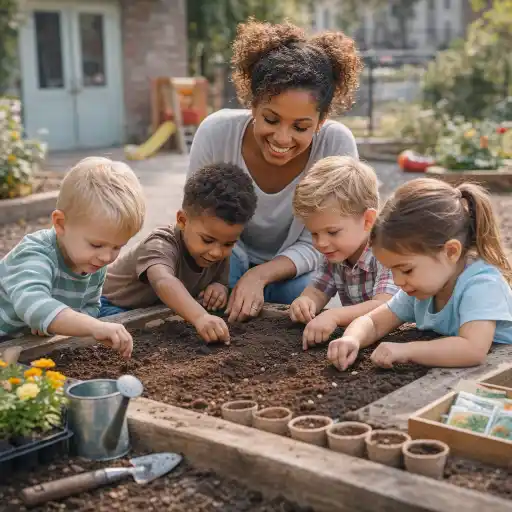
1) Gardens are hands-on science: planting seeds, watching growth, and counting leaves turn real experiences into learning. See ChildCareEd's step-by-step tips in How to Build a Classroom Garden.
2) Gardens support healthy habits and social skills: children taste new foods, share tools, and feel pride when things grow. For New York-specific tips, read " How New York early childhood programs can use garden-based learning?. Remember: state requirements vary - check your state licensing agency.
How do we plan a small, safe garden for preschoolers in New York?
Planning keeps the project doable. Follow these simple numbered steps:
- 🔎 Choose the spot:
- 1) Use containers, window boxes, or 1 raised bed if space is tight.
- 2) Pick a place with some sun (or a bright window for indoor pots).
- 🧰 Gather materials: pots, soil, seeds, small tools, watering cans, labels, and clipboards for observations. See practical materials in How to Build a Classroom Garden.
- 🌱 Pick easy plants:
- 1) Herbs (basil, mint), lettuce, radish, sunflowers, or marigolds — quick to sprout and child-friendly.
- 2) Use the ChildCareEd non-poisonous plant list to check safety: List of Non-Poisonous Plants for Children.
- 📅 Make a simple schedule: set watering helpers, a weekly observation time, and a harvest celebration.
- 🤝 Get permissions & partners: tell families, get permission for tasting and sun care, and ask local groups for help. For NY program ideas, see the NY garden guide.
- 📌 Start very small: 1–3 containers or one raised bed. Small wins keep staff and children excited.
Tip: check local frost dates for planting timing (New York ranges by region) — a planting calendar helps plan seeds and transplants.
Using this plan keeps the work simple and lets you grow confidence slowly while your #garden and your team learn together. This is great for your #children.
What activities teach learning goals and keep preschoolers engaged?
Link activities to clear learning goals: science, math, language, motor skills, and social-emotional growth. Try these numbered activities with short descriptions:
- 🌱 Plant & Observe
- 1) Plant seeds in clear cups so children can watch roots and shoots.
- 2) Count days to sprout, measure plant height each week, and draw observations in a journal.
- 🎨 Nature Art & Language
- 1) Make leaf rubbings, seed mosaics, or flower collages.
- 2) Encourage children to describe textures and colors to build vocabulary.
- 🥕 Taste Tests & Tiny Chefs
- 1) Let children taste small samples of harvested herbs or salad greens with family permission.
- 2) Connect to food and nutrition learning; ChildCareEd suggests pairing garden snacks with food-safety training.
- 🔬 Sensory Science Stations
- 1) Soil touch bins, worm watches, and magnifiers to explore insects and textures.
- 2) These build inquiry skills and fit the idea of using nature as your classroom.
- 🌿 Pollinator Projects
- 1) Plant flowers for butterflies or bees and count visitors on a walk.
- 2) Use labels and simple signs so children can "read" the garden.
You can tie these activities to World Bee Day (May 20) with simple bee-themed crafts and observation sheets for young children; see World Bee Day activities for crafts and class ideas.
How these activities connect to learning:
- Math: counting seeds, measuring growth. For specific hands-on preschool arithmetic games that pair well with seed counting and measuring activities, see Preschool Arithmetic Activity.
- Science: life cycles and observation.
- Language: new words from plant labels and descriptions.
- Social skills: taking turns watering, sharing tools.
🌿 Natural outdoor classroom: For staff who want to build confidence in planning and running a garden project, ChildCareEd's Creating the Natural Outdoor Classroom  Buy Now $16.00 is a 2-hour online course covering how to design safe, engaging outdoor learning experiences that connect children to their environment — a direct match for the plant-and-observe, nature art, and pollinator project activities outlined in this guide.
For printable activity ideas and preschool lesson plans, see resources like Pre-K activity guides and the ChildCareEd curriculum pieces on outdoor learning.
Keep sessions short, active, and repeated. This builds routine and helps children notice change over time during your #outdoor work in the garden.
How do we keep the garden safe, easy to maintain, and in line with rules?
Safety and routine let the garden be a calm learning spot. Use this numbered checklist for daily, monthly, and seasonal tasks:
- 👀 Daily checks (before children go out):
- 1) Quick hazard scan for broken tools, sharp objects, or wildlife.
- 2) Check weather, air quality, and sunscreen/hats for sunny days.
- 🌿 Plant safety and ID:
- 1) Identify every plant children can reach and remove unknowns.
- 2) Use ChildCareEd's safe plant lists: List of Non-Poisonous Plants and Non-Toxic Plants for Child Care Outdoor Spaces.
- 🧰 Storage & tools:
- 1) Lock away fertilizers, sprays, and sharp tools.
- 2) Use child-size tools with blunt edges and store extras out of reach.
- 🧑🏫 Supervision & training:
- 1) Practice active supervision: assign staff to zones and do 1–2 minute scans.
- 2) Train staff with short modules; ChildCareEd offers courses on outdoor classrooms and safety.
- 🩺 Emergency plan:
- 1) Post emergency numbers and Poison Control (1-800-222-1222) near first aid.
- 2) If severe signs appear (difficulty breathing, swelling), call 911 immediately.
🥜 Allergy and medication safety: For staff who need to feel confident managing allergy permissions and emergency response during taste-test activities, ChildCareEd's Illness, Medication, and Allergies in Child Care Buy Now $32.00 is a 4-hour online course covering allergy recognition, action plan procedures, and emergency response steps — directly supporting the family permission collection, allergy-checking, and Poison Control/911 steps described in the safety section of this article.
Special notes:
- Animals and pets: avoid live animals that are risky for young kids; follow CDC guidance about classroom animals (CDC: Schools & Daycares).
- Allergies and food rules: get family permission for tasting and check allergies ahead of time. State requirements vary - check your state licensing agency.
Label plants with a simple sign like “Look — don’t eat” to teach rules and reduce accidental tasting. A simple monthly plant walk and clear roles help staff keep the garden healthy and safe for your #children and the whole team focused on #safety.
Where can we find funding, partners, and steps to grow the project?
Small projects can grow with partners and small grants. Use these numbered steps to find help and write a compact grant or plan:
- 🌱 Start small and show impact:
- 1) Begin with 1–3 containers and a short weekly routine.
- 2) Collect photos, short child quotes, and simple growth charts to show learning.
- 💸 Search for small grants:
- 1) Look at local New York grant lists like GrantWatch for preschool or community grants (GrantWatch NY).
- 2) Checksmaller-capacityy grants from groups like Terra Science and Education (Terra Science).
- 3) EPA and state environmental education grants can support composting or pollinator projects — see EPA profiles of NY grants (EPA NY grants).
- 🤝 Build partners:
- 1) Contact Cornell Cooperative Extension, botanical gardens, or local gardening clubs for plant donations, training, or volunteers.
- 2) Libraries, community gardens, or local farms can offer field trips or seed donations (library garden ideas: WebJunction).
- 📝 Write a simple proposal & budget:
- 1) Define goals, list materials, show a timeline, and describe how you will document learning.
- 2) Attach a brief letter of support from your director or a community partner.
- 📈 Measure & share results:
- 1) Use photos, sample drawings, and a short story from a child each month.
- 2) Share successes at family nights and in grant reports to build more support.
For curriculum and farm-to-preschool ideas, see USDA and Farm to Preschool resources and ChildCareEd articles on nature-based curriculum. Partnering locally and starting very small makes funding easier to get and keeps the project manageable as it grows in your #nature-focused space.
Conclusion: What next steps and common mistakes should we watch for?
Follow these easy next steps (numbered) to get started this week:
- 1) Pick 1 planter and 2 easy plants (basil, lettuce, marigolds).
- 2) Schedule a 15–20 minute outdoor block and a photo for the first week.
- 3) Tell families and get simple permissions for tasting and sunscreen.
- 4) Assign staff watering days and one person to do a monthly plant ID check.
Common mistakes and how to avoid them:
- ❌ Over-planting — Start tiny and add more beds later.
- ❌ No watering plan — Make a rotating chart with staff and child helpers.
- ❌ Unknown plants in reach — Photograph and identify every plant; remove uncertain ones.
FAQ (quick):
- Q: Do we need much space? A: No — containers, window boxes, and vertical planters work well.
- Q: How do we handle pests? A: Use child-safe, organic methods and turn observation into a science lesson.
- Q: Can infants join? A: Sensory touches and supervised outdoor naps are fine — follow your licensing rules.
- Q: Where are lesson plans? A: ChildCareEd and many preschool resource sites provide printable plans and activity packs.
Starting small, using clear routines, and partnering locally will help your New York preschool build a joyful, safe #garden project where children grow, learn, and belong. You are not alone — use ChildCareEd resources and local partners to build confidence and success.
- 45 Hour Child Growth and Development
- CDA Preschool Credential
- Birth to Five CDA Credential with Portfolio Review
- CDA Family Child Care Credential with Portfolio Review
- CDA Bridge Bundle: Preschool
- Pediatric RSV First Aid & CPR/AED
- CDA Infant/Toddler Credential with Portfolio Review
- CDA Preschool Credential with Portfolio Review
- Texas Director Credential
- Capacitaciones requeridas en New Hampshire
- Field Trip Ideas in New York: Engaging, Educational, and Fun Adventures for Children
- 👶 ¿Cuáles son las proporciones y grupos requeridos en Dakota del Norte? 🏫
- Cómo Abrir Una Quardería En Casa Sin Dinero?
- Cómo Empezar una Guardería en Casa: Requisitos y Pasos
- Proporciones de Cuidado Infantil y Tamaños de Grupo por Edad en Maryland (Guía Rápida para Centros y Hogares)
- Proporciones de Cuidado Infantil y Tamaños de Grupo por Edad en Nueva Jersey (Guía Rápida para Centros y Hogares)
- Proporciones de Cuidado Infantil y Tamaños de Grupo por Edad en Virginia (Guía Rápida para Centros y Hogares)
- Lista para Abrir una Guardería en Casa en Dakota del Norte: Cómo Empezar
- Lista para Guardería en Casa en Illinois: Cómo Iniciar una Guardería en el Hogar
- Lista para Guardería en Casa en Texas: Cómo Iniciar una Guardería en el Hogar
- Cómo Ser Maestra de Preescolar en Virginia
- How can New York early childhood programs use garden-based learning?
- Celebrando la amistad en el cuidado infantil durante el Día de los Mejores Amigos
- Cómo simplificar la capacitación para sus empleados de daycare
- How can New York providers bridge the summer gap with year-round learning?
- How can I build a nature-based curriculum for my New York program?
- How can I start a small garden project with New York preschoolers?
- How can I plant a classroom garden with preschoolers?
