You work hard every day caring for children. You can turn the things in your classroom or home into real learning tools for little ones. This article helps child care providers and directors plan simple, low-cost Practical Life activities for #toddlers using items you already have. The ideas are safe, easy to set up, and gentle on your budget. Use them to build skills, calm the room, and grow confidence in each child.
What practical life activities can I make from household items?
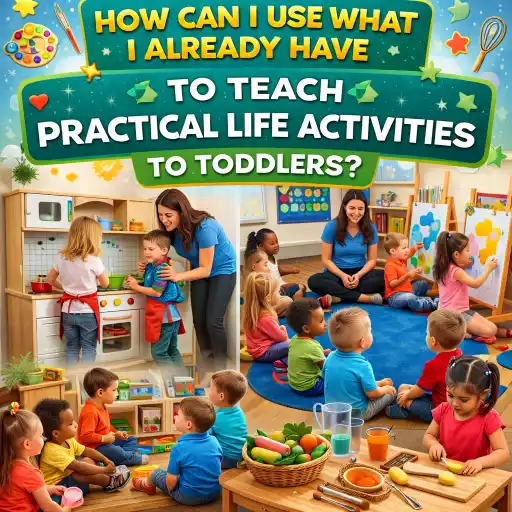
Here are clear, easy activities you can make right now. Each one uses common supplies and builds real skills.
- 🍽️ Pouring station
- Materials: small pitcher, child cup, tray, spare towel.
- How: Put the pitcher and cup on a tray. Show one slow demo. Let the child try.
- Why: Builds hand-eye control and early #practicallife skills. See ideas at Can Pouring, Spooning, and Snack Prep Build Independence?.
- 🧽 Washing and wiping tray
- Materials: shallow bin, sponge, small soap dish, towel.
- How: Fill bin with warm (not hot) water and a little soap. Show how to wash and wring the sponge.
- Why: Great for #sensory play and motor practice. Inspired by Practical Life washing ideas like Practical Life Washing Activities.
- 🥄 Transfer and spooning tray
- Materials: two small bowls, spoon, dry rice or beans.
- How: Child moves beans from one bowl to the other with a spoon. Start with big spoons and large beans.
- Why: Builds fine motor control and concentration. See more at Understanding Practical Life Activities.
- 🧺 Laundry helpers
- Materials: small basket, clothespins, socks.
- How: Child practices pinching clothespins and matching socks. Use a low line to hang small clothes if you have space.
- Why: Teaches dressing skills and responsibility. Learn more in Montessori at Home: Chores That Empower.
- ✂️ Cutting and art corner
- Materials: playdough, blunt scissors, recycled paper, glue with brush.
- How: Let children cut soft playdough or tear paper for collage. Supervise closely.
- Why: Strengthens small hand muscles and creativity. ChildCareEd shows many low-cost Montessori options like Montessori Magic.
How do these activities help my toddlers learn and grow?
- Motor skills and self-care
Children practice strong hand movements (fine motor) and whole-body balance (gross motor). Pouring, spooning, and pegging socks help tiny muscles get ready for writing and dressing. See the research and steps at Understanding Practical Life Activities.
- #independence and confidence
Doing real tasks helps children feel proud. When toddlers set their snack or wipe a table, they learn they can help. That builds calm, focus, and self-respect. Montessori trainers explain how chores and work give children purpose: Montessori at Home.
- Language and thinking
As children work, they hear words and follow steps. You can add vocabulary (pour, scoop, wring) and simple counting during play. STEAM and sensory ideas from ChildCareEd STEAM blend well with Practical Life.
- Social and emotional growth
Practical tasks teach patience, turn-taking, and care for the environment. Children learn to finish a job and to help others.
How can I set up activities safely, affordably, and legally?
- Prepare the space
1. Use low shelves or a small table. 2. Put each activity on one tray. 3. Keep a small rug or mat to mark the work area.
- Choose child-size tools
1. Pick light pitchers, small spoons, and easy-to-grip brushes. 2. Avoid heavy glass and sharp tools. 3. Use blunt scissors and plastic versions for toddlers.
- Rotate and limit choices
1. Offer 2–4 clear activities at a time so children choose without feeling overwhelmed. 2. Rotate weekly to keep interest high. For setup tips see Montessori snack station ideas.
- Keep safety front and center
1. Supervise all snack, water, and cutting activities. 2. Store small choking items out of reach when not in use. 3. state requirements vary - check your state licensing agency.
- Common mistakes — and how to avoid them
- Too much adult help: Wait and watch. Let children try before stepping in.
- Tools too big or heavy: Swap for child-size items from thrift stores or dollar shops. See cheap options in Making Montessori Ours.
- Too many items out: Offer fewer choices and tidy after each work.
How should I teach and scaffold Practical Life lessons so toddlers succeed?
Teaching is calm, short, and clear. Use step-by-step demos and gentle praise.
- Lesson steps (3 simple parts)
- 👀 Demonstrate slowly at child level. Use few words and clear motions.
- 🤝 Invite the child: "Now you try." Stay close but don’t take over.
- ✅ Close the lesson: Child returns items and you name the work: "You poured carefully."
See detailed lesson tips at Can Pouring, Spooning, and Snack Prep Build Independence?.
- Scaffold by age
- 2–3 years: Dry pouring, spooning, simple dressing tasks.
- 3–4 years: Water pouring, simple cutting of soft food (adult supervises), pegging clothes.
- 4+ years: More steps, child-led snack prep and simple cooking with close supervision.
For practical, age-by-age suggestions you can adapt for home or center routines, see Montessori Magic at Home: Tips for Every Age for ideas tailored to each developmental stage.
- Observe and share progress
1. Take quick notes: who did it alone, who needs help. 2. Use photos to show families growth. ChildCareEd courses and resources can help staff training (Mastering Observation Techniques).
- FAQ (short answers)
- Q: When can toddlers start pouring water? A: Start dry pouring at about 2 years; water pouring comes later when balance improves. See progress ideas at this guide.
- Q: What if a child spills? A: Spills are learning. Teach wiping and provide a small spill kit.
- Q: How many activities should I have out? A: 2–4 clear options per area is a good rule.
- Q: Can we use recycled materials? A: Yes — cardboard, bottle caps, and fabric scraps are great and inexpensive (see Montessori Magic).
Summary
Practical Life activities help your #toddlers practice real skills with things you already own. They strengthen hands and minds, nurture #independence, and make your room calmer and more joyful. To start: choose simple works, use child-size tools, demonstrate clearly, and let children try. Rotate materials and keep safety in mind — state requirements vary - check your state licensing agency.
Try one new tray this week. Watch how a small job can build big confidence. For more ideas and printable activities, check ChildCareEd resources like Montessori Magic and their free Practical Life PDFs (Montessori Practical Life Activity Buy Now $0.00).
Thank you for the care you give every day. Your simple, thoughtful setups turn ordinary items into powerful lessons for growing children. Keep trying, keep observing, and celebrate every small success.
Why it matters: Practical Life activities are everyday tasks that help children feel capable. When toddlers do small jobs, they build skills that matter for school and life. These activities are not busywork — they are the work of childhood.Use what you have. Small changes make a big difference. Follow these steps to set up simple, safe work areas.- 45 Hour Child Growth and Development
- 45 Hour Preschool Methods and Materials
- 45 Hour Infant and Toddler Methods and Materials
- Pediatric RSV First Aid & CPR/AED
- CDA Bridge Bundle: Infant/Toddler without Portfolio Review
- CDA Bridge Bundle: Infant/Toddler
- Texas Director Credential Renewal
- Texas Director Credential
- Montessori for Toddlers: Fostering Independence and Learning
- CDA Certification en Español: Recursos y Consejos para Educadores Bilingües
- Recursos en Español sobre el Sueño Seguro del Bebé
- Capacitación en Salud y Seguridad Preventiva en Línea para Proveedores de Cuidado Infantil
- Cómo Empezar una Guardería en Casa: Requisitos y Pasos
- Normas de Licenciamiento de Cuidado Infantil en Virginia para Centros Diurnos Infantiles y Hogares Diurnos Familiares
- Proporciones de Cuidado Infantil y Tamaños de Grupo por Edad en Nueva Jersey (Guía Rápida para Centros y Hogares)
- Proporciones de Cuidado Infantil y Tamaños de Grupo por Edad en Virginia (Guía Rápida para Centros y Hogares)
- Cómo Celebrar el Día Nacional del Kindergarten
- Lista para Guardería en Casa en Illinois: Cómo Iniciar una Guardería en el Hogar
- Lista para Guardería en Casa en Texas: Cómo Iniciar una Guardería en el Hogar
- Cómo Trabajar en el Cuidado Infantil en California: Requisitos y Pasos
- Celebrando la amistad en el cuidado infantil durante el Día de los Mejores Amigos
- How Can I Use Fun Math Activities for Preschoolers Every Day?
- Cómo simplificar la capacitación para sus empleados de daycare
- Grace and Courtesy Activities for Montessori Classrooms
