Field trips to an aquarium or marine center can spark a child’s curiosity. These trips help young learners see real animals, touch safe sea creatures, and ask big questions. As you plan, remember: state requirements vary - check your state licensing agency. This guide helps child care providers and directors plan trips in Washington that are fun, safe, and tied to learning goals.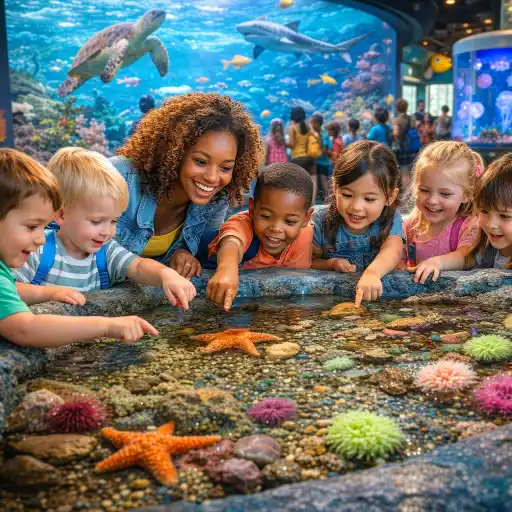
Why it matters:
1. Seeing animals in real life makes learning stick. Research shows that excursions help children remember and build new knowledge through direct experience (see an example study about excursions at ECRP).
2. Aquariums and marine programs spark language, science curiosity, social skills, and respect for nature. Use visits to boost classroom learning before and after the trip.
What makes Washington aquariums and marine centers great for curious young children?
- 🐟 Many venues, like the Seattle Aquarium, offer touch pools and child-friendly displays that let children safely explore marine life.
- 🧭 Smaller marine centers and national sanctuary programs offer field lessons and age-appropriate activities — for example, NOAA's Sanctuary School Programs include hands-on, NGSS-aligned options.
- 🐬 Big aquariums and local science centers often provide educator-led tours and conservation stories that fit preschool and early elementary levels.
How this helps learning:
- Children connect classroom ideas (like habitat and life cycles) to what they see at the #marine exhibit.
- Touch and sensory time supports language: kids name animals, describe textures, and ask questions.
- Visiting builds social skills: lining up, listening to guides, and sharing observations with friends.
How do I plan and prepare a safe, learning-focused field trip?
- 🎯 Pick 1–2 simple goals (example: "Name three sea animals" or "Notice how kelp moves").
- 📚 Prep with a short book or picture talk so children know what to expect.
2. Safety and logistics (check local rules — state requirements vary - check your state licensing agency):
- 📋 Get permission slips, emergency contacts, and health notes.
- 🧑⚕️ Ensure staff have first aid/CPR and know medication plans.
- 🚌 Plan transportation, adult-to-child ratios, and a clear meeting place if someone gets separated.
3. Use field trip planning tools: ChildCareEd has practical checklists and tips for young groups in their Field Trip Ideas article and safety guidance. For ocean-themed classroom prep and follow-up, see their beach and ocean activities.
What activities and curriculum connections work before, during, and after the trip?
- 📖 Read a short picture book about tide pools or fish.
- 🎨 Do a simple craft: paper plate fish or a sensory bin with large shells.
- 🔎 Make a picture checklist with 4–6 animals to spot at the #aquarium.
2. During the visit (keep it short and active):
- 🐠 Use 3 quick questions at each exhibit: "What do you see?", "How does it move?", "What color is it?"
- 👀 Let children touch only supervised, safe touch pools and follow staff rules.
- 🕒 Keep the visit brief with planned breaks and a snack zone to avoid overload.
3. After the visit (deepen learning):
- ✍️ Have kids draw their favorite animal and tell one fact to a partner.
- 📷 Share photos with families and suggest a short home activity from ChildCareEd to extend learning. For a hands-on STEAM art-and-science extension that strengthens observation and fine-motor skills, try a galaxy-making project from ChildCareEd (create your own galaxy) that lets children explore pattern, color mixing, and scale while connecting to broader science concepts.
- 🔁 Use later circle time to connect the trip to science goals like habitats and life cycles.
How do we include every child and avoid common mistakes?
1. Inclusion tips:
- 🤝 Ask families about mobility, sensory needs, or allergies before the trip.
- ♿ Choose venues with accessibility info (many aquariums list ADA and sensory supports online).
- 🗣️ Provide simple visual schedules and quiet spots for children who need a break.
2. Common mistakes and how to avoid them:
- ❌ Too long a visit — plan 45–90 minutes for preschool groups.
- ❌ No backup plan for poor weather or high noise — have an indoor quiet activity ready.
- ❌ Too many loose items — keep small groups, name tags, and a buddy system.
3. Quick FAQ for providers:
- Q: How many adults per child? A: Follow your program’s ratio and venue rules; ChildCareEd’s planning guide suggests tight supervision for young groups.
- Q: Can toddlers touch animals? A: Only in supervised touch pools and per venue rules.
- Q: What if a child is upset by animals? A: Offer choices, let them observe from a distance, and provide a calming activity.
- Q: Where can I get curriculum-aligned activities? A: NOAA sanctuaries provide lesson plans and activities for grades K–5 (see NOAA lesson plans).
Conclusion
1. Aquariums and marine centers in Washington are rich places for young children to learn. Use short, clear goals and ChildCareEd planning resources to make your trip smooth and meaningful.
2. Keep safety and inclusion front and center, tie the visit to classroom lessons before and after, and use simple hands-on activities to help children remember and care about the #marine world.
3. Helpful links: Seattle Aquarium, NOAA Sanctuary Programs, and ChildCareEd’s Field Trip Ideas.
1. Before the visit (build curiosity):1. Set clear learning goals:1. Local variety and hands-on exhibits:
- CDA Certification en Español: Recursos y Consejos para Educadores Bilingües
- 🔍 ¿Qué ves cuando observas a un niño aprender?
- 💛🧩 ¿Cómo puedo hacer que mi enseñanza sea inclusiva para los niños con autismo?
- Recursos en Español sobre el Sueño Seguro del Bebé
- Proporciones de Cuidado Infantil y Tamaños de Grupo por Edad en Maryland (Guía Rápida para Centros y Hogares)
- Proporciones de Cuidado Infantil y Tamaños de Grupo por Edad en Nueva Jersey (Guía Rápida para Centros y Hogares)
- Proporciones de Cuidado Infantil y Tamaños de Grupo por Edad en Virginia (Guía Rápida para Centros y Hogares)
- Lista para Guardería en Casa en Illinois: Cómo Iniciar una Guardería en el Hogar
- Las Mejores Ideas de Excursiones para Guarderías en Dakota del Norte
- Las Mejores Ideas de Excursiones para Guarderías en Texas
- Las Mejores Ideas de Excursiones para Guarderías en Georgia
- Capacitación Previa al Servicio para Proveedores de Cuidado Infantil en Texas
- Best Daycare Field Trip Ideas in Virginia
- Best Daycare Field Trip Ideas in California
- How can Washington aquariums and marine field trips spark curiosity for young children?
- Summer Field Trips for Daycares in California
- Canciones, juegos y preguntas de círculo para niños
- Cómo simplificar la capacitación para sus empleados de daycare
- Field Trips for Elementary Students: 15 Adventures That Bring Learning to Life
