Storytelling is a simple, powerful way to teach young learners. In this article you will find friendly, practical ideas for child care providers and directors to use #storytelling with #children to boost #literacy and #engagement — and to support your work as #teachers. State requirements vary - check your state licensing agency.
What is storytelling as a teaching tool and why does it matter?
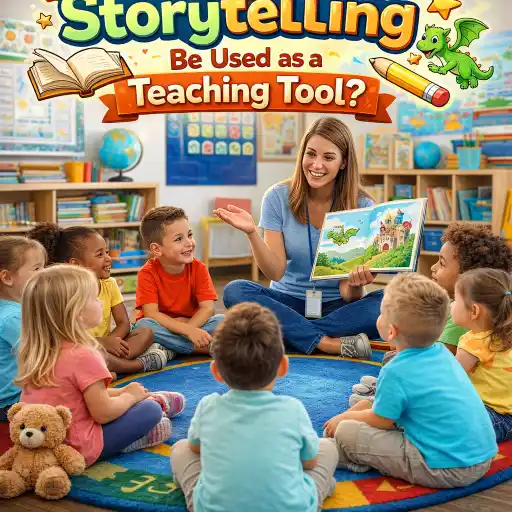
Storytelling means using stories, voices, props, pictures, or movement to help children learn. Stories can be told from memory, read from a book, acted out, or created together. Storytelling matters because stories help children:
- Grow language and vocabulary. Reading and telling stories adds new words and ideas. See practical tips in How Can I Make Storytime the Most Powerful Part of My Day?.
- Build thinking skills. Pretend play and stories support problem solving and perspective taking as described in research on play and cognition (ECRP on pretend play).
- Learn social and emotional ideas. Stories help children name feelings, practice kindness, and try solutions in a safe way (Helping Children Navigate Crisis).
Why it matters: early storytelling links directly to later reading and school success. Storytime builds background knowledge and the kind of language children need for classroom learning. For ideas that bring storytelling to daily routines, check child care resources like Storytime Superpowers and courses such as Reading Aloud and Storytelling  Buy Now $16.00.
How can I use storytelling to boost language and literacy?
Use stories with clear goals. Pick one literacy goal each time (vocabulary, sequencing, or predicting). Follow these steps:
- Choose a good book or story: pick one that fits the children’s age and interests. ChildCareEd lists lots of themed activities and book ideas (National Reading Month Activities Buy Now $0.00).
- Plan 3 talk moments: before, during, and after the story.
- Before: show the cover and ask one prediction question.
- During: pause to point out pictures and repeat a key phrase.
- After: ask children to retell the main parts in their own words.
- Make it interactive: use call-and-response, puppets, or movement. For step-by-step ideas, see How Can I Make Storytime... and the activity Story Stones Adventure Buy Now $0.00.
- Repeat and build: use the same story across days to deepen language. Add small changes (a new voice, a new prop) each time.
Research also shows that interactive and responsive story formats — like animated books that react when children join in — can improve recall and attention (Carnegie Mellon study).
What hands-on activities and materials work best?
Hands-on materials help children connect words to real things and actions. Try these ideas and adapt them to your group size and space:
- 🟠 Story Stones: place pictures or objects on stones. Children pick stones and build a story sequence. Find a printable kit at Story Stones Adventure Buy Now $0.00.
- 🎒 Montessori Story Basket: include 3–5 small objects that match a simple story. Let children explore items and tell the tale in their own words — see Montessori Story Basket Activity Buy Now $0.00. For guidance on selecting and preparing Montessori materials that encourage hands-on learning and independence, see Understanding Montessori Materials.
- 🧸 Puppets and stages: puppets invite shy children to speak. Classroom studies show puppets boost interaction, even in children with special needs (ECRP on puppets).
- 🎭 Drama and role-play: use dress-up, reader’s theatre, or short skits to act out stories. These activities support imagination and language (The Power of Imagination).
- 📱 Responsive digital books: when used thoughtfully, animated or contingent e-books can increase recall for children who need extra attention supports (CMU research).
Tip: rotate materials, keep books reachable on low shelves, and make a cozy reading nook. For structured training, consider live or online courses like Setting the Stage: Story Time Buy Now $25.00.
How do I avoid common mistakes and know if storytelling is working?
Common mistakes to avoid:
- 🔴 Reading without interaction — don’t only read; ask children to join in.
- 🔴 Too-long stories for the group’s attention span — pick short books for younger children.
- 🔴 Using only one voice or tone — vary pitch, pace, and expression to keep children engaged.
- 🔴 Skipping follow-up — always include retell, drawing, or acting to check understanding.
How to measure success (simple steps):
- Count participation: how many children answer, repeat phrases, or hold props? (Record weekly.)
- Listen for language growth: do children use new words from the story during play?
- Check sequencing and recall: ask children to name 3 events in order. Repeat this monthly to watch progress.
- Use narrative tools when needed: narrative assessment guides help staff see strengths and gaps (Edmonton Narrative Norms Instrument).
How to avoid pitfalls: scaffold questions (start easy, grow harder), invite quiet children with puppets, and make routines short and predictable. Remember: storytelling is play and teaching together. State requirements vary - check your state licensing agency when using new materials or tech.
Conclusion and FAQ
Storytelling is flexible, low-cost, and full of learning. Use short, repeated stories, hands-on props, movement, and questions to boost language and social skills. For ready-made activities and staff training, ChildCareEd has toolkits and courses like Reading Aloud and Storytelling Buy Now $16.00 and printable resources such as Story Stones Adventure Buy Now $0.00.
FAQ (quick):
- Q: How often should I do storytime? A: Daily is ideal — even 10–15 minutes builds routine and gains.
- Q: What if children are restless? A: Add movement, shorten the book, and use props or songs.
- Q: Can infants benefit? A: Yes — talk, sing, and show high-contrast books; see support for infants and toddlers.
- Q: How to include multilingual children? A: Share stories in their home language and use gestures, pictures, and repetition.
- Q: Where to get more training? A: Explore ChildCareEd courses and resources linked above.
Try one small change this week: add a puppet, one predict question, or a short retell. Small, steady steps make storytelling an everyday teaching tool that helps children love language and learning.
- 45 Hour Child Growth and Development
- CDA Home Visitor Subject Area 3 Part 3 Birth to 5
- CDA Home Visitor Subject Area 2 Part 3 Birth to 5
- Reading Aloud and Storytelling
- 45 Hour Preschool Methods and Materials
- Birth to Five CDA Credential with Portfolio Review
- 45 Hour School Age Methods and Materials
- Texas Director Credential
- Wellness in Action: Teaching Healthy Habits to Children
- Tiny Hands, Big Dreams: Fostering Creativity in Preschoolers
- The 2026 Guide to Leveling Up Your Childcare Expertise
- CDA Certification en Español: Recursos y Consejos para Educadores Bilingües
- Teaching with Purpose
- Can the 45-Hour Growth and Development Course Transform Your Teaching Practice?
- How can storytelling be used as a teaching tool?
- How can storytelling support teaching in North Dakota early childhood classrooms?
- How Can Preschool Teachers Make a Simple Classroom Movie to Boost Early Storytelling?
- Dr. Seuss Book List for Teachers: Easy Ways to Use It for Story Time and Learning
- How Can Developmental Observation Strengthen Early Childhood Practice?
- How Can Child Care Providers Use Observation and Assessment to Support Every Child?
- How Can Clip Cards Prepare Little Hands for Writing?
- How Can Puppets Support Communication and Literacy in Early Childhood?
- What Makes a Preschool Curriculum Meaningful, Inclusive, and Effective?
- How Do Mazes Strengthen Pencil Control and Problem-Solving in Preschool?
- How Can Child Care Providers Teach Holiday Vocabulary with Context and Care?
- How Is Classroom Observation Different from Developmental Screening?
- How Can Educators Invite Children to Revise a Story They Told Earlier?
- How Can You Teach a New Word So Children Use It Beyond the Activity?
