Indoor creative play can help children learn to work together, solve problems, and feel like part of a group. This article gives practical, easy-to-use ideas you can try in your room tomorrow. It focuses on short activities, clear steps for teachers, and ways to meet California rules and ratios while you teach teamwork. These tips support your #teamwork goals and help your #preschoolers practice #play, #cooperation, and belonging in your #California program. Remember: state requirements vary - check your state licensing agency.
What indoor creative play activities build real teamwork?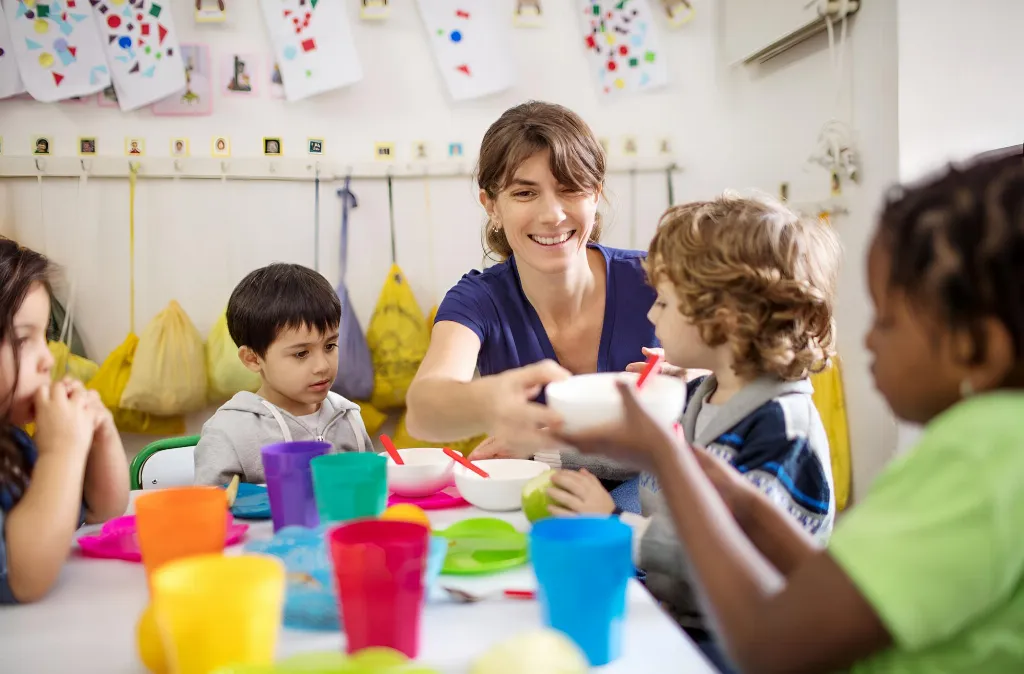
Try small, focused activities that need two or more children to succeed. Use these 1–8 ideas and adapt materials you already have.
- 😊 Cooperative Obstacle Course — children must help each other through a course (blindfold leader, buddy guide). See a classroom-tested example at Cooperative Obstacle Course.
- 🧩 Team Build Block Challenge — small groups build one big structure with roles (architect, carrier, finisher). For more guided-play building ideas, see How to Foster Friendship Skills Through Guided Play.
- 🎭 Puppet Problem-Solving — puppets act out a problem; children suggest fixes and practice scripts. ChildCareEd offers puppet and role-play ideas in Friendship Skills with Activities and Role-Play.
- 🎲 Cooperative Games & Puzzles — large floor puzzles, cooperative board games, and group art projects build shared goals (see National Puzzle Day Activities Buy Now $0.00).
- 📚 Read-and-Act — pause a story and ask, “What can friends do?” Use roles so children act out solutions (see How to Teach Friendship Skills).
- 🥁 Jam Session or Band — group music-making needs listening and turn-taking.
- 🧵 Group Art/Mural — everyone adds a part to one big piece; post the work and name contributors.
- 🔁 Turn-Taking Games with Timers — short sand timers or song-length turns help children wait and trade roles.
Many of these ideas are low prep and can be repeated often. For more ready-to-use classroom activities, check ChildCareEd’s activity resources, like classroom activity packs Buy Now $0.00.
How should we set up the space and schedule so teamwork happens naturally?
Good design and routines make teamwork easy. Follow these numbered steps to set the stage.
- 🪧 1. Define zones: create a Building Zone, Dramatic Play Zone, Quiet Group Zone, and Movement Zone. Keep materials for teamwork (large blocks, props, instruments) in labeled bins.
- 2. Post roles: make simple role cards (Leader, Builder, Helper, Timer) so children know jobs. Swap roles each day.
- 😊 3. Use short routines: 5–15 minute guided-play sessions give focused practice; repeat daily so skills grow.
- 4. Plan transitions: use songs, timers, or a 3-step handoff to move groups without chaos.
- 5. Respect ratios and safety: plan group sizes to match California rules. See Title 22 and ratio guidance at Understanding Title 22 Rules for California Child Care and quick ratio charts at California Child Care Ratios and Group Sizes. State requirements vary - check your state licensing agency.
- 6. Rotate materials: refresh one bin each week to keep engagement high (puzzles one week, blocks the next). Consider adding a sensory bin activity—such as a DIY moon sand sensory bin—that supports cooperative tactile play and fine-motor practice.
Set up a small teacher-table or clipboard with a quick coaching plan: 1 skill to prompt, 1 phrase to model, and 1 child to praise. This simple habit helps staff coach teamwork consistently across shifts; see team-building tips at How Can We Build Effective Teamwork.
How can teachers guide interaction and use scripts so children really learn to cooperate?
Adults are the guides. Use short scripts, modeling, and consistent prompts so children try new social words and actions.
- 🎭 1. Teach two-line scripts: examples: "Can I play?" and "Your turn in two minutes." Practice with puppets first. ChildCareEd gives many scripts in Friendship Skills.
- 2. Model and narrate: narrate teamwork aloud: "Maria helps Sam stack these blocks. Teamwork!" Short narration shows the language you want.
- 3. Prompt, wait, praise: give a quick cue, allow a few seconds, then praise the attempt specifically (e.g., "You asked nicely and waited—great sharing!").
- 🧑🤝🧑 4. Use peer buddies and roles: pair a child who needs support with a steady peer; give each a clear role in the activity.
- 5. Guided play moments: join small groups for 5–10 minutes to steer cooperation. For guided-play strategies, see Guided Play.
- 6. Teach repair steps for conflicts: stop, name the problem, offer simple choices, ask for a repair ("Can you say sorry or help pick up?"). Use short coaching, then praise.
- 7. Track practice: pick one teamwork skill each week (sharing tools, role-taking) and note progress on a simple chart.
Remember to value parallel play as a step toward cooperation—see the explanation at Parallel vs Cooperative Play. Small, repeated guided moments help children move from side-by-side play to true #cooperation.
How do we include diverse learners and stay compliant with California rules?
Inclusion is teamwork too. Make small changes so every child can join. Follow these 1–7 steps.
- 1. Adapt roles and materials: bigger handles, fewer small parts, and visual cards help children with motor or language needs.
- 🧩 2. Use cooperative games designed for inclusion. See ideas for children with special needs at Cooperative Games for Children with Special Needs.
- 3. Slow the pace: shorten turns and give pre-joining practice (priming) for children who need it.
- 4. Pair peers carefully: select calm, patient buddies and rotate pairings so friendships grow.
- 5. Watch safety & ratios: follow California Title 22 rules and keep trained staff nearby. Helpful guidance on Title 22 and required trainings is at Title 22 Rules. state requirements vary - check your state licensing agency.
- 6. Make activities multi-level: offer the same task with 2 or 3 difficulty options so all children contribute (example: pass one block vs pass three).
- 7. Communicate with families: share short home scripts and invite feedback—family partnership ideas are in Building Effective Teamwork.
For rainy-day or indoor movement teamwork, extra gross-motor ideas that encourage cooperation are in ChildCareEd’s gross motor games list: The Gross (Motor) Truth. Also consider repeating successful activities often—practice makes social skills stick.
Conclusion: Quick checklist, common mistakes, and next steps
Use this short checklist to start building teamwork today:
- ✅ Pick 1 teamwork skill for the week (sharing, asking, role-taking).
- ✅ Set one guided-play block per day (5–15 minutes) and use short scripts.
- ✅ Create role cards and buddy pairings; rotate weekly.
- ✅ Keep materials accessible and safe; follow California ratios and Title 22 guidance (Title 22).
- ✅ Share one home script with families each week.
Common mistakes and how to avoid them:
- 🚫 Pushing group play too fast — Fix: start with parallel play and short pair tasks.
- 🚫 Overcomplicating roles — Fix: use 1–2 word role cards and model once.
- 🚫 Ignoring safety/ratios — Fix: plan groups by age and staff counts; consult California ratios.
If you want one next step: try a single 10-minute cooperative activity tomorrow (buddy obstacle course or team mural). Note what worked, praise it, and repeat. If you'd like a lighthearted piece to share with staff, consider reading Crayons, Chaos, and Coffee, a five-year-old's whimsical take on a typical day in early childhood education. Small, steady practice helps children grow strong social skills, and your program will feel calmer and more joyful. Thank you for the teamwork you bring to young children every day.
Quick links: Guided Play ideas — ChildCareEd Guided Play; Friendship scripts — Friendship Skills; Title 22 basics — Title 22.
- CDA Home Visitor Subject Area 3 Part 3 Birth to 5
- CDA Home Visitor Subject Area 2 Part 3 Birth to 5
- Balancing Physically Active Play in Child Care
- Bienvenido! Welcoming All Families
- Birth to Five CDA Credential with Portfolio Review
- Pediatric RSV First Aid & CPR/AED
- Working Together: Teachers & Preschoolers
- Art from the Heart for Preschoolers: Open Ended Art Projects that Build Self-Esteem
- Wellness in Action: Teaching Healthy Habits to Children
- Balancing Active Play in Child Care
- Tiny Hands, Big Dreams: Fostering Creativity in Preschoolers
- CDA Certification en Español: Recursos y Consejos para Educadores Bilingües
- ❄️ ¿Qué actividades al aire libre funcionan bien para los niños de Illinois en cada estación? 🌷🍂
- Que es Título 22 en California?
- Actividades de Motricidad Gruesa que Desarrollan el Equilibrio, la Coordinación y la Fuerza
- 10 Ejemplos de Cómo la Cultura Influye en el Desarrollo Infantil
- ¿Cómo solicito la licencia para una guardería en California?
- Regulaciones de Licenciamiento de Cuidado Infantil en California para Centros y Hogares de Cuidado Infantil Familiar
- Proporciones de Cuidado Infantil y Tamaños de Grupo por Edad en Maryland (Guía Rápida para Centros y Hogares)
- Proporciones de Cuidado Infantil y Tamaños de Grupo por Edad en Nueva Jersey (Guía Rápida para Centros y Hogares)
- Actividades de Otoño Fáciles para Preescolares esta Temporada
- Lista para Guardería en Casa en California: Cómo Iniciar una Guardería en el Hogar
- Cómo Trabajar en el Cuidado Infantil en California: Requisitos y Pasos
- Cómo Ser Maestra de Preescolar en Virginia
- How can indoor creative play encourage teamwork for preschoolers in California?
- How can we encourage teamwork and cooperation in early childhood programs?
- Celebrando la amistad en el cuidado infantil durante el Día de los Mejores Amigos
- Canciones, juegos y preguntas de círculo para niños
- Cooperative Play vs. Parallel Play: What’s the Difference?
- ¿Qué habilidades preceden al recorte y cuándo deben aprender los niños a usar tijeras?
