You work with children every day who feel big feelings. This article gives clear, kind, and practical steps to help Georgia preschool teachers and directors support young children with strong #emotions, build steady #routines, and keep their classroom calm and safe. We focus on simple scripts, easy routines, and things you can try tomorrow. Many of these ideas come from practical ChildCareEd guides, such as How Can We Help Children Manage Big Emotions? And How Do I Create a Calm-Down Corner in a Preschool Classroom?.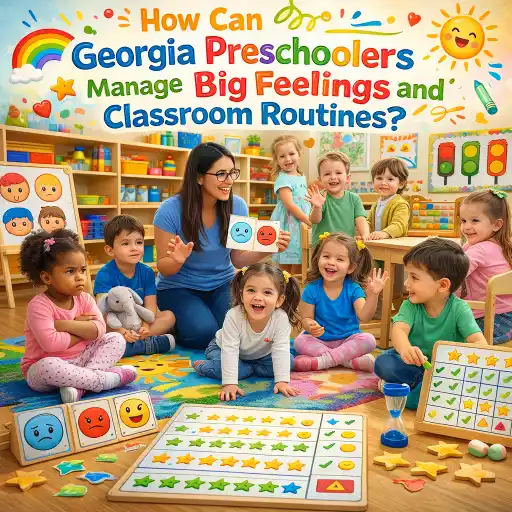
Why it matters:
1. Predictable #routines help children feel safe, reduce meltdowns, and keep learning time strong. See research and practical tips in the CSEFEL brief on schedules and routines: Helping Children Understand Routines and Classroom Schedules.
2. Teaching simple calming tools builds independence. Georgia programs have invested in social-emotional kits for classrooms—learn more in the Georgia Pre-K announcement: Georgia kits purchase.
What routines lower stress, and how do I set them up?
- 🔁 Start small. Pick 3 daily routines: arrival, snack, and clean-up. Teach them and repeat each day.
- 🖼️ Use a picture schedule. Post a 6–8 item visual schedule at the child's eye level.
- ⏳ Give short warnings. Use a 2-minute warning and the same song or timer each time to signal transitions.
- 😊 Practice predictability. Rehearse routines when kids are calm (circle time or morning meeting).
- 📊 Track and tweak. Note when meltdowns happen (time of day, activity). Adjust the schedule—shorten circle time or add a movement break if needed.
Why this works: routines reduce surprises, so children with big feelings can predict what comes next. For classroom-ready tips and scripts, see ChildCareEd's article on transitions and routines: Navigating Big Feelings.
How can I teach children to notice and calm their big feelings?
- 🧑🤝🧑 Connect: Get to the child's level and name what you see. Say one short line: "You look mad."
- 😮💨 Calm: Offer one breathing choice. Teach 1–2 tools and practice them daily (balloon breathing, turtle breathing). ChildCareEd calm cards are useful: Calm Down Strategy Cards Buy Now $0.00.
- 💬 Coach: After calm, ask one question: "What helped? What can you try next time?" Keep language simple and concrete.
Practice ideas (daily):
- 🎵 Short circle time practice: 1–2 minutes of breath or a feelings check-in.
- 🎲 Games that teach self-control: Red Light/Green Light or Freeze Dance.
- 📚 Read a feelings book and pause to ask, "How does that child feel?" (ChildCareEd resource lists books and lesson ideas.)
Tip: Teach the language of feelings ahead of meltdowns. Use resources like My Book of Emotions Buy Now $0.00 and the Child Social-Emotional Competence Checklist (checklist Buy Now $0.00) to plan lessons.
How do I build a calm-down corner and use it without making it a punishment?
- 🧸 Pick 2–4 low-stim items: small rug, soft toy, breathing visual, and a sensory bottle.
- 📌 Post simple rules with pictures: "Choose if you need a break" and "Staff stay nearby."
- 🔒 Keep it visible and short: 2–5 minutes for a quick reset; staff remains nearby for safety.
- 🎯 Teach it during calm time: model how to use the corner and let each child try it once when calm.
- 📋 Log visits briefly: note trigger, tool used, and outcome to find patterns.
Common mistakes and fixes:
- ❌ Using the corner as punishment → ✅ Teach and model it during calm times so it stays a positive choice.
- ❌ Too many toys → ✅ Limit items to avoid overstimulation.
- ❌ Long talks during meltdowns → ✅ Use one short sentence + one simple choice.
For items and printable posters, see ChildCareEd calm-down kit ideas and the "I Need a Break" printables: Calm-Down Corner guide. Remember: state requirements vary - check your state licensing agency.
When should I get extra help, and how do I partner with families and staff?
Sometimes a child needs more support than classroom tools alone. Use data, teamwork, and family partnership before making big changes. ChildCareEd recommends clear steps and training, such as From Tantrums to Triumphs Buy Now $25.00 and other courses, to boost staff skills.
- 🛑 When to get extra help:
- a. Meltdowns are frequent and long.
- b. The child hurts themselves or others often.
- c. Usual tools don’t help after weeks of practice.
- 🤝 How to partner with families:
- a. Share simple notes: one-sentence wins and one home idea to practice.
- b. Ask about what calms the child at home and use similar tools at school.
- c. Invite families to short, solution-focused meetings with examples from your logs.
- 👩🏫 How to support staff:
- a. Offer short refresher trainings and coaching.
- b. Use the CSEFEL and trauma-informed resources to guide classroom plans: Trauma-Informed Care.
FAQ (quick):
- Q: How long should calm-corner visits be? A: 2–5 minutes for a reset; longer only with staff nearby.
- Q: What if a child refuses help? A: Stay nearby, offer one choice, and try again later; practice when calm.
- Q: When to refer to specialists? A: If safety is a concern or tools don’t work after consistent practice, involve family, mental health consultants, or early intervention.
Resources to learn more: ChildCareEd has printable calm cards, emotion books, and courses (links throughout this article). The Georgia Pre-K kit rollout shows state-level commitment to social-emotional health in classrooms: Georgia kits.
Summary
1) Pick a few steady #routines and teach them every day. 2) Teach 1–2 calming tools and practice in short bursts. 3) Build a simple calm-down corner and keep it voluntary. 4) Track patterns, partner with families, and ask for help when needed. You are not alone—use ChildCareEd resources and local supports. Your calm, consistent steps help children learn to manage big feelings and stay in the #classroom ready to learn.
Routines give children a map of the day. Use short, consistent steps so kids know what to expect. The CSEFEL guide explains how visual schedules and predictable routines help children feel secure: CSEFEL routines. Try these numbered steps to set routines fast: Teaching emotion words and simple calming tools gives children skills they can use again and again. Use the short order: Connect → Calm → Coach. This approach is described in practical ChildCareEd guidance: How can we help children manage big emotions?. A calm-down corner is a simple, low-stim space where children choose to practice calming. ChildCareEd's step-by-step guide explains how to set one up: Create a Calm-Down Corner.- 45 Hour Child Growth and Development
- Building Equity: Inclusionary Practices in Preschool
- 45 Hour Preschool Methods and Materials
- Bienvenido! Welcoming All Families
- CDA Infants/Toddlers: Importance of Consistent Care
- Play Safe, Think Big: Literacy Through Play
- Art from the Heart for Preschoolers: Open Ended Art Projects that Build Self-Esteem
- CDA Bridge Bundle: Preschool without Portfolio Review
- Texas Director Credential
- Behind the Scenes: Baby Routines ONLINE
- Recursos en Español sobre el Sueño Seguro del Bebé
- 10 Ejemplos de Cómo la Cultura Influye en el Desarrollo Infantil
- Actividades de Fiesta para Niños de Preescolar y Primaria
- Proporciones de Cuidado Infantil y Tamaños de Grupo por Edad en Maryland (Guía Rápida para Centros y Hogares)
- Proporciones de Cuidado Infantil y Tamaños de Grupo por Edad en Nueva Jersey (Guía Rápida para Centros y Hogares)
- Proporciones de Cuidado Infantil y Tamaños de Grupo por Edad en Virginia (Guía Rápida para Centros y Hogares)
- Actividades de Otoño Fáciles para Preescolares esta Temporada
- How can Georgia preschool teachers use positive guidance to help preschoolers share during indoor play?
- How can positive guidance help manage big feelings during indoor play in Oklahoma classrooms?
- How can rainy day indoor activities help preschoolers learn kindness and cooperation in Georgia?
- How can visuals, routines, and gentle words support Georgia preschoolers with special needs?
- How can Georgia preschoolers manage big feelings and classroom routines?
- Celebrando la amistad en el cuidado infantil durante el Día de los Mejores Amigos
- Cómo simplificar la capacitación para sus empleados de daycare
- How can child care providers teach children to name and manage emotions?
- Toddler Classroom Management: Routines, Behavior, and Big Feelings
- What Is Co-Regulation and How Can Child Care Teachers Use It?
- How Can Child Care Providers Teach Preschoolers to Manage Big Emotions?
- How Can Child Care Providers Teach Emotional Regulation to Toddlers and Preschoolers?
- When a Preschool Rule Expects More Self-Control Than Children Can Manage, What Should Educators Do?
