This short guide helps child care leaders and #educators learn simple, practical steps to make their rooms safer and kinder for young #children. Use this article to plan changes that help kids feel secure, calm, and ready to learn. You will find quick steps, training links, and ideas you can try tomorrow. State requirements vary - check your state licensing agency.
What is trauma-informed care and why does it matter?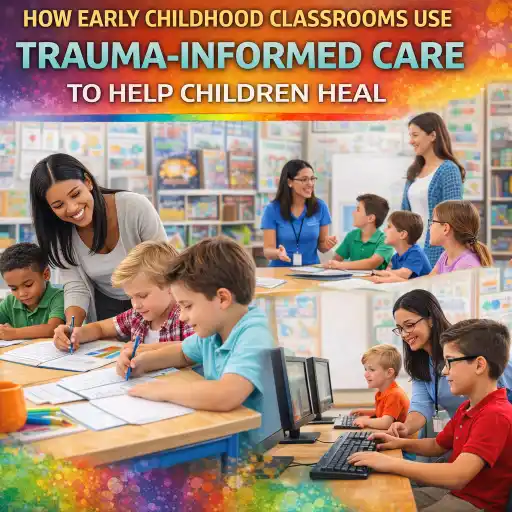
1) Trauma-informed care means we notice how hard experiences affect a child and we change how we respond. It asks, “What happened to this child?” instead of “What’s wrong with this child?” This mindset helps adults act with #empathy and patience. Learn more from the helpful ChildCareEd overview on implementing trauma-informed care.
2) Why it matters:
- 🧠 Young brains grow fast. Early support can change big outcomes for life. See the CDC on preventing adverse childhood experiences for public health reasons.
- ❤️ Stable, caring classrooms build trust and help children learn. The NCTSN explains how trauma shows up in young children and how care helps.
- 📚 Teaching with a trauma lens helps every child, not only those with a known history. ChildCareEd explains why it should be a universal approach in early childhood here.
3) Quick signs trauma may affect a child: trouble focusing, big emotions, withdrawal, or repeated physical complaints. If you see these, supportive classroom steps matter more than labels.
How can I change my #classroom today to use trauma-informed practices?
Use these easy, numbered steps you can start now. ChildCareEd’s Trauma-Informed Care Checklist Buy Now $0.00 is a great tool to follow.
- 🧭 Create predictable routines
- Post a visual schedule and follow it each day.
- Use short warnings ("2-minute warning") before transitions.
- 🛋️ Add calming places and tools
- Set a calm corner with soft items, a feeling chart, and 1–2 quiet activities.
- Offer simple sensory choices like squeeze balls or quiet books.
- 🙂 Teach emotion and coping skills
- Practice 3 deep breaths together each morning.
- Use short role plays to name feelings and show safe choices.
- 🤝 Build strong adult-child relationships
- Greet each child by name and give brief, positive attention daily.
- Follow through on promises to build trust.
- 📣 Respond to behavior with empathy
- Describe what you see: “You look upset. I can sit with you.”
- Teach a calm choice instead of punishing.
For ready-made training and class activities try ChildCareEd’s course Trauma-Sensitive Care: Supporting Young Children with Empathy  Buy Now
 $16.00$11.00 and their free resources page here.
How do we support staff, families, and avoid common mistakes?
Programs last when adults are supported and teams practice together. Use the Georgetown resources on creating trauma-informed organizations (Module 3) and tools like Cornell’s Therapeutic Crisis Intervention for calming and de-escalation (TCI).
- 🧑🏫 Train and practice as a team
- Offer short refresher trainings (15–30 minutes) and use coaching.
- Use a PLC or meeting to try one new strategy each week.
- 🌿 Support staff wellness
- Build brief daily breaks and peer check-ins to reduce burnout.
- Notice staff stress—teachers who are calm help children feel calm (research shows classroom stress spreads to kids).
- 🤝 Involve families
- Listen to family stories and share small home tools like breathing games.
- When sharing screenings or records, remember: state requirements vary - check your state licensing agency.
Common mistakes and how to avoid them:
- ❌ One-time training with no follow-up. ✅ Fix: regular practice, coaching, and checklists.
- ❌ Reacting with punishment. ✅ Fix: teach replacement behaviors and use calm coaching statements.
- ❌ Ignoring staff trauma. ✅ Fix: make staff self-care and peer supports part of your plan (see ROCK Toolkit ROCK).
How will we know it’s working and where can we get help?
Measure simple, real signs of progress and use trusted resources for training and consultation.
- Signs it’s working
- 📈 Fewer big meltdowns and faster recovery after upset.
- 🗣️ More children asking for help or using feeling words.
- 🤝 Stronger, calmer relationships between children and adults.
- 📅 Staff report better confidence and less stress.
- Where to get help right now
- Visit ChildCareEd for articles, a checklist Buy Now $0.00, and a practical course (Trauma-Sensitive Care Buy Now
$16.00$11.00). - Use public health materials from the CDC and resources from the NCTSN.
- For organizational change, see Georgetown’s Module 3 and Cornell’s TCI.
- Visit ChildCareEd for articles, a checklist Buy Now $0.00, and a practical course (Trauma-Sensitive Care
FAQ (short):
- Q: Do we need to diagnose children? A: No. Focus on supports, not labels.
- Q: When should we refer for mental health help? A: If a child’s behavior or safety is a worry, consult your mental health partner or local agency.
- Q: Is trauma-informed care only for some kids? A: No—these practices help every child.
- Q: What trainings are most practical? A: Short, practice-focused trainings and coaching. Try ChildCareEd courses and the ROCK toolkit for team tools.
Conclusion
1) Start small and steady: one visual schedule, one calm corner, one team check-in. 2) Use free tools like the ChildCareEd checklist and public health guidance from the CDC. 3) Support your staff—calm adults make calm rooms. You are the steady person a child needs. Your everyday kindness and routines help children heal and learn. For more practical resources, start with ChildCareEd’s articles and courses (see links above) and join local networks for coaching and support.
- 45 Hour Child Growth and Development
- CDA Home Visitor Subject Area 3 Part 3 Birth to 5
- CDA Bridge Bundle: Family Child Care without Portfolio Review
- CDA Bridge Bundle: Infant/Toddler without Portfolio Review
- CDA Bridge Bundle: Preschool without Portfolio Review
- Potty Training Made Simple
- Texas Director Credential
- Trauma-Sensitive Care: Supporting Young Children with Empathy
- Helping Your Child Navigate the Flashbacks and Triggers of PTSD
- Dance It Out: How Movement Therapy Helps Kids Heal Their Minds through Their Bodies
- Trauma-Sensitive Care: Supporting Young Children with Empathy
- Is Trauma the Same for All Children?
- Trauma-Informed Sleigh Rides: Supporting Children Through Play
- Why Trauma-Informed Care Should Be a Universal Approach in Early Childhood Settings
- Implementing Trauma-Informed Care in Early Childhood Education
- The Importance of Trauma-Informed Care in Early Childhood Classrooms
- Trauma-Informed Care: Because Every Tiny Human Deserves a Safe Place to Land
- CDA Certification en Español: Recursos y Consejos para Educadores Bilingües
- Abuse and Neglect Training: The Essential Guide for Childcare Providers
- How can early childhood classrooms use trauma-informed care to help children heal?
- Cómo Trabajar en el Cuidado Infantil en Carolina del Norte: Requisitos y Pasos
- How Can New York Childcare Educators Support Children After Trauma?
- What Does Michigan's Overdose Decline Mean for Trauma-Informed Child Care?
- What Is the Difference Between Early Childhood Education and Child Development?
- How Can Child Care Providers Put Trauma-Informed Practices Into Action?
