Good classroom management helps children learn and makes your day kinder and calmer. This article gives easy, practical ideas preschool teachers and directors can use right away. It explains how to teach routines, set up the room, guide behavior with respect, and work with families and staff. Why it matters: calm classrooms help children feel safe, make learning easier, and lower stress for teachers. When children know routines and see fair rules, they join in more and problem behaviors fall. For more classroom-tested ideas, see Effective Classroom Management Strategies for Preschool Teachers and Classroom-tested strategies.
What simple routines help preschool classrooms run smoothly?
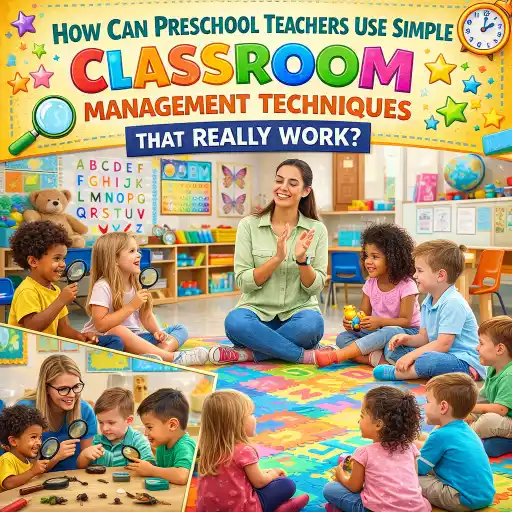
Teaching routines is the first step to a peaceful day. Routines let children know what will happen next. That helps them feel safe and ready to learn. Use a small number of short, positive rules (3–5). Make them visible with pictures and practice them often. See ChildCareEd's tips on rules and schedules for examples: How can I set classroom rules preschoolers understand? and CSEFEL's guide to teaching routines: CSEFEL What Works Brief #3.
Try this 4-step teaching plan (easy to repeat):
- 🔹 Say it: Name the routine with a short phrase (for example, “Walking feet”).
- 🔸 Show it: Model the routine. Use a puppet or teacher volunteer to show it.
- 😊 Practice it: Let children try with a quick role-play or game.
- 👏 Praise it: Give specific praise like, “I see Maya using walking feet—thank you!”
Use a visual schedule for the day and a small individual card for children who need one. Visuals help non-readers and children learning English. These simple steps help routines stick and reduce trouble at transitions. State requirements vary - check your state licensing agency.
Hashtags: Keep these ideas visible in your planning for #routines and add a #visuals chart by your door.
How can room layout and learning centers reduce behavior problems?
Try these steps to set up your room (easy to change):
- 🔧 Define clear centers: blocks, art, books, sensory, and quiet spots. Label with pictures.
- 📏 Manage space: Keep traffic lanes wide and remove long "runways" so kids don’t dash across the room.
- 🧰 Organize materials: Put duplicates of favorite toys in different centers so children don’t fight.
- ⏲️ Plan rotations: Use timers, songs, or a helper chart so transitions are predictable.
- 🪑 Create a calm corner: Soft lighting, a feelings chart, and cozy seating help children self-regulate.
Small changes—like moving a shelf or adding a picture label—can cut down on noise and conflict. For sample room plans and center ideas, see ChildCareEd resources and course material like Classroom Management is Collaboration!  Buy Now $16.00. If your program includes mixed-age groups, consider how multi-age classroom design supports peer learning and individualized pacing; see Multi-Age Classrooms in Montessori Education.
Hashtag reminder: Make centers clear and labeled for #centers so teachers and children know what goes where.
What positive behavior guidance techniques work best with preschoolers?
Use these concrete techniques:
- ✅ Teach rules as skills: e.g., instead of “Don’t run,” teach “Please use walking feet.”
- 💬 Use brief calm scripts: name the rule, give the action, offer the next step.
- 🎯 Offer choices: two teacher-approved options keep children feeling in control.
- 🕒 Time-in over time-out: spend brief one-on-one time to coach the child through feelings.
- 🧩 Individual supports: when behavior continues, use a small behavior plan and team work (family + staff).
Research shows that time spent building teacher-child relationships reduces disruptive behavior. Simple practices like Banking Time (playing one-on-one on the child’s terms) improve behavior over time; see the University of Virginia study summary: Study identifies a key. For children with persistent needs, follow a Positive Behavior Support plan: assess function, teach replacement skills, and change the responses that once rewarded the problem behavior (see CSEFEL PBS steps).
Hashtag: Focus lessons and praise around #behavior to build skills, not just stop actions.
How do I involve families and staff so management is consistent?
Consistency between home and school helps children learn faster. Keep families informed with short notes, a parent board, and positive messages. ChildCareEd recommends clear family communication and simple tech to ease paperwork: Classroom-tested strategies. The CDC's Watch Me! materials give tips for talking with families about development: How to talk with parents.
Steps to build strong partnerships:
- 📧 Share quick positives every week (note, photo, or text) and one concern only when you have facts and an action plan.
- 🤝 Invite families: classroom helpers, job nights, or a short meeting to share routines and expectations.
- 👩🏫 Train staff together: hold short team meetings to practice scripts and agree on responses so all adults act the same way.
- 📋 Use data: keep simple notes on when behaviors happen to spot patterns and choose supports.
- 🔗 Connect to supports: use mental health consultants or PBIS/Pyramid resources when needed (see CECMHC toolkits and Turning Behavior Around Buy Now $25.00).
Remember: state requirements vary - check your state licensing agency. Clear family partnerships and shared staff practices make routines and rules more powerful.
Hashtag: Keep families in the loop and link home and school with #families notes and quick wins.
Conclusion — What should you try this week?
Try one small change this week: pick one rule, add a picture poster at child height, and teach it with the 4-step plan. Pick one center to label and try a short timer for rotations. Send one positive note home before Friday.
Common mistakes and how to avoid them:
- 🚫 Too many rules — fix: keep 3–5 short rules.
- 🚫 Rules posted but never taught — fix: practice with role play and songs.
- 🚫 Inconsistent adult responses — fix: agree on scripts and share them with staff.
- 🚫 Blaming children instead of changing the environment — fix: check room layout and routines first.
FAQ (quick answers):
- Q: How long should routines take to teach? A: Short practice daily; children learn with many small repeats.
- Q: What if one child needs a lot of help? A: Use a simple individual plan and involve family and mental health consultants.
- Q: When do I call for outside help? A: If behavior is intense, ongoing, or stops learning, get extra support; use PBS steps in CSEFEL.
- Q: How can I keep my calm? A: Practice scripts, take short breaks, and use team support—your calm helps children calm down.
For more tools, printable posters, and courses that match these ideas, start with ChildCareEd resources like Classroom Dos and Don'ts Buy Now $0.00, Classroom Management is Collaboration! resources, and the course pages listed above. You are doing important work. Small, steady changes lead to calmer classrooms and happier children. #routines #visuals #centers #behavior #families
Room design is a quiet helper for good behavior. When materials are easy to find and centers are clear, children move calmly and stay busy. ChildCareEd explains using centers and clear zones to reduce conflicts: Classroom-tested strategies and Creating a Positive and Calm Classroom Environment. Pre-K design tips also show how to set centers for play and learning: Preschool Classroom Management and Routines.Positive guidance means teaching skills instead of punishing. Use praise, redirection, and clear choices. The Pyramid Model and PBIS give helpful frameworks for whole-class supports and targeted help. See CSEFEL and the Pyramid Model pages for steps: CSEFEL resources and Pyramid Model. ChildCareEd articles on behavior guidance also give scripts and tools: Managing Behaviors in the Early Childhood Education Classroom.- 45 Hour Child Growth and Development
- Lesson Planning for Preschoolers
- CDA Preschool Credential with Portfolio Review
- 45 Hour Preschool Methods and Materials
- From Tantrums to Triumphs: Equipping Preschoolers with Self-Regulation Skills
- Children at the Wheel: Emergent Curriculum
- 45 Hour Infant and Toddler Methods and Materials
- Texas Director Credential
- Every Moment Matters: Schedules and Transitions
- Classroom Management
- Going Head-to-Head with Challenging Behavior
- CDA Certification en Español: Recursos y Consejos para Educadores Bilingües
- Ready, Set, Kindergarten!
- Recursos en Español sobre el Sueño Seguro del Bebé
- 10 Ejemplos de Cómo la Cultura Influye en el Desarrollo Infantil
- Proporciones de Cuidado Infantil y Tamaños de Grupo por Edad en Maryland (Guía Rápida para Centros y Hogares)
- Proporciones de Cuidado Infantil y Tamaños de Grupo por Edad en Nueva Jersey (Guía Rápida para Centros y Hogares)
- Proporciones de Cuidado Infantil y Tamaños de Grupo por Edad en Virginia (Guía Rápida para Centros y Hogares)
- Cómo Ser Maestra de Preescolar en Wisconsin
- How can preschool teachers use simple classroom management techniques that really work?
- How can DC early childhood educators use simple classroom management tips in busy preschool rooms?
- Celebrando la amistad en el cuidado infantil durante el Día de los Mejores Amigos
- Canciones, juegos y preguntas de círculo para niños
- Cómo simplificar la capacitación para sus empleados de daycare
- How to Manage a Preschool Classroom with Confidence
- How Can Child Care Providers Manage Stress During Challenging Behaviors?
