Introduction
Allergies in young children are common and can be scary for families and caregivers. This article helps child care providers and directors learn simple, clear steps to keep children safe. It covers what allergies look like, how to prevent exposure, how to train staff, and how to work with families. Remember: state requirements vary - check your state licensing agency.
Why it matters:
1. Preventing allergic reactions protects children from serious health problems. 2. Good plans help staff respond quickly during an emergency. 3. Clear teamwork with families builds trust and keeps routines calm.
Five words to remember: #allergy #children #staff #anaphylaxis #epinephrine
What allergy signs should caregivers watch for?
1) Know common allergens: The foods most often involved are milk, eggs, peanuts, tree nuts, soy, wheat, fish, shellfish, and sesame. Online guides explain this list clearly, for example at CDC Food Allergies in Schools and KidsHealth.
2) Look for typical signs (use numbers to help staff remember):
- ① Skin: hives, redness, swelling.
- ② Breathing: coughing, wheeze, trouble breathing, throat tightness.
- ③ GI: belly pain, vomiting, diarrhea.
- ④ Other: dizziness, fainting, pale or very sleepy child.
3) Know anaphylaxis: This is a fast, severe reaction affecting more than one body part. Health sources like AAFP explain that airway and breathing problems are life-threatening and need immediate treatment.
4) Watch for different patterns: Kids may show stomach or breathing signs instead of hives. Teach staff to treat suspected anaphylaxis seriously and act right away.
How can we prevent allergy exposure at meals and in the classroom?
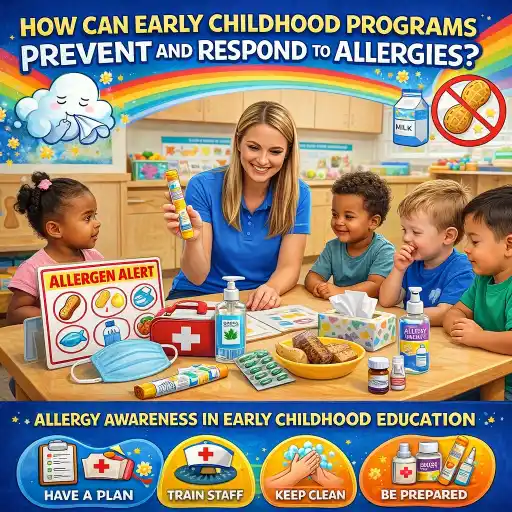
1) Collect and post key info: Ask families at enrollment for the child’s allergens, usual reaction, emergency contacts, and doctor’s action plan. ChildCareEd offers clear steps for the intake and one-page plans in their guide: How to handle food allergies in child care.
2) Daily prevention routines (numbered and simple):
- 🧼 Wash hands before and after eating (staff and children).
- 🍽️ Clean and sanitize tables and high-touch areas after meals; follow CDC cleaning guidance at CDC: How to Clean and Disinfect ECE Settings.
- 🚫 No food sharing; serve children with allergies first using clean utensils.
- 🔖 Label allergy-safe foods and store them in a clearly marked area (use placemats or signs such as the Allergy Alert Placemat Buy Now $0.00).
3) Prevent cross-contact beyond the kitchen: Avoid food in sensory bins or crafts unless you get family permission; choose non-food materials whenever possible. ChildCareEd gives helpful ideas on safe classroom activities in the same allergy guide.
4) Cleaners and safety: Use approved cleaning products and follow label contact times. Note that some disinfectants contain quaternary ammonium compounds ("quats"); review safety information before heavy use: Quats fact sheet. Train staff to use products safely and ventilate spaces when needed.
How do we train staff and respond when a child has a reaction?
1) Make training required and regular. Use short, clear sessions that cover: recognizing symptoms, reading action plans, where medications are stored, and practice with mock situations. ChildCareEd has courses like Prevention of and Response to Allergic Reactions  Buy Now $8.00 and Asthma, Allergy and Anaphylaxis Training.
2) Epinephrine is first-line for anaphylaxis. Staff must know when and how to use an auto-injector and to call 911. The Red Cross offers practical training: Red Cross Anaphylaxis Course. Clinical guidance on using epinephrine and watching for biphasic reactions is covered by medical sources like AAFP.
3) Stocking and storing epinephrine: Some states allow authorized entities to keep undesignated epinephrine. Follow storage rules and monthly checks; see state examples and training rules such as Illinois DPH guidance: Epinephrine Auto-Injector and Anaphylaxis (IL).
4) Practice makes response faster: Do drills, role-play, and post easy-to-see posters like ChildCareEd’s Anaphylaxis Wall Poster Buy Now $0.00. Clear roles reduce hesitation during the emergency.
How do we work with families and keep good records?
1) Build an allergy management plan for each child. Use a written, signed plan from the family and health provider that lists allergens, typical symptoms, medicines, and step-by-step actions. National guidance on written plans and protocols helps programs set this up: Allergy Management Plans and Protocols.
2) Share and protect information: Post a room-level list of allergies where staff can find it (keep private details secure). Keep one-page action plans at change areas and near food prep. ChildCareEd recommends a simple one-page plan and photo with the child’s file in their article: How to handle food allergies in child care.
3) Communicate often: Tell families about menus, field trips, and special events early. Offer a safe snack list and ask families for approved substitutes. Use clear, calm messages to build trust.
4) Review and update yearly: Allergy status can change. Require updated physician notes and action plans at least once a year. State health and school guidance like Minnesota DHS stresses currency of plans and staff roles.
Summary and quick checklist
Short checklist for busy directors:
- 📝 Collect allergy info and a doctor-signed action plan at enrollment.
- 🧽 Set simple meal routines: wash hands, no sharing, label safe food.
- 🎓 Train staff on recognition, epinephrine use, and drills.
- 📂 Keep one-page plans visible to authorized staff and update yearly.
- 📣 Communicate plans and menus clearly with families.
FAQ
- Q: Who can give epinephrine at my program?
A: That depends on your state rules and your program policy. Train designated staff and follow local law. - Q: Can we make a classroom nut-free?
A: Some centers choose this. It helps but is not always possible. Be "allergy aware" and use practical steps like separate food areas. - Q: How often should staff get refreshers?
A: At hiring and at least annually. Run short practice drills quarterly if possible. - Q: What if a child has mild hives only?
A: Follow the child’s action plan. If more than one body system is involved or breathing changes, treat as anaphylaxis and use epinephrine.
Common mistakes and how to avoid them
- 🚫 Not reading labels every time — fix: assign a staff member to check labels for each snack.
- 🚫 Letting children share food — fix: stop sharing and teach the rule to children and families.
- 🚫 Using strong disinfectants without training — fix: follow product labels and safety notes like the quats fact sheet.
With clear plans, regular training, and good teamwork with families, early childhood programs can keep children safer and calmer. Use available resources from health agencies and ChildCareEd to build your program’s approach.
- CDA Home Visitor Subject Area 3 Part 3 Birth to 5
- BBP (Bloodborne Pathogens)
- CDA Home Visitor Subject Area 2 Part 3 Birth to 5
- Basic Health & Safety and Breastfeeding Awareness
- Medication Administration and the Prevention of and Response to Food and Other Allergies in the Child Care Environment
- CDA Bridge Bundle: Family Child Care without Portfolio Review
- Allergies and Medication in Childcare
- Medication Administration and the Prevention of and Response to Food and Other Allergies in the Child Care Environment
- Texas Director Credential
- Medication Adminstration Training and EPI Pens Shortage Update
- Ah-Choo!
- Get Ready for Summer!
- CDA Certification en Español: Recursos y Consejos para Educadores Bilingües
- How Can New York Childcare Providers Prevent Childhood Obesity with Better Nutrition?
- How can Michigan daycares teach healthy eating habits to toddlers?
- How can food safety training protect children in my child care program?
- How can my North Dakota program make the most of food programs like CACFP?
- How can food safety training keep children safe in my child care program?
- How should Minnesota child care programs handle allergies and special diets?
- How can my child care program keep children safe from food allergies?
- How can New York child care programs best support children with food allergies?
- What Healthy Snack Ideas Will Kids Actually Love?
- How can child care programs prevent seasonal safety hazards like heat, cold, allergies, holiday risks, and outdoor play dangers?
- How can child care providers support children with feeding difficulties?
- How Can Early Childhood Programs Implement Practical Sustainability Practices?
- Nursery Snack Ideas by Age: What Can Babies, Toddlers, and Preschoolers Safely Eat?
- How Can Preschool Classrooms Strengthen Food Safety and Allergy Management?
- How Can You Check Food Allergies Before a Classroom Cooking Activity?
- What Does Allergy Refresher Training Need to Cover Beyond a Food List?
