As a child care provider or director, you play a big role in helping preschoolers learn good food habits. This short guide gives easy steps you can use tomorrow. You will find simple routines, sample ideas for menus, ways to help picky eaters, and tips to work with families and staff. We use plain language and links to trusted resources like ChildCareEd: How can child care programs teach great nutrition and the CDC's guides on early child nutrition Early Child Nutrition.
Why this matters: healthy food helps children grow, learn, and stay well. When staff and families work together, children build lifelong #nutrition and #healthy habits. Use family-style meals, short routines, and safe food prep to make mealtimes calm and learning-focused. Remember: state requirements vary - check your state licensing agency.
Why do healthy eating habits for preschoolers matter?
- 🍎 Health and growth: Nutritious meals give energy and help bones and brains develop. See ChildCareEd’s guide on nutrition for infants and young children Nutrition Guidelines for Infants and Young Children in Child Care.
- 🧠 Learning and behavior: Children who eat well can focus better and join class activities.
- 🤝 Social and habits: Mealtimes teach manners, sharing, and self-control. Family-style meals help children notice hunger and fullness (ChildCareEd family-style article).
Why it matters now: early experiences shape taste. Offer many colors and textures so children try foods over time. The CDC also has practical toddler tips on mealtime routines and food choices Tips for Mealtime Routines. Use these ideas to build calm, learning-filled #mealtimes. Consider using National Fresh Fruit and Vegetables Month activities to highlight seasonal produce and encourage children to taste new fruits and vegetables.
What daily routines and menus work best in preschool settings?
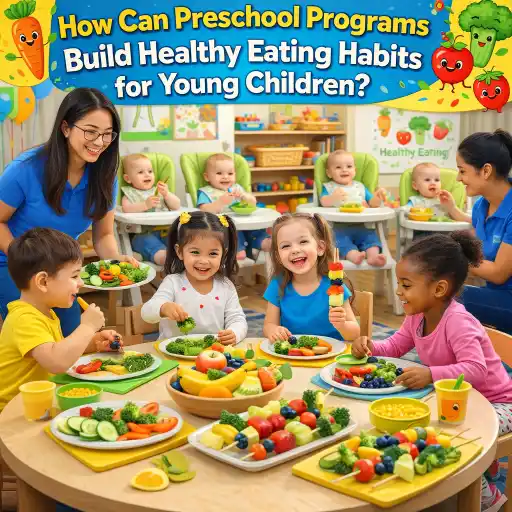
Simple routines make mealtimes predictable and calmer for staff and children. Plan 3 meals and 2 snacks or follow your program schedule. Use a weekly menu template and pick foods from all groups so each meal is balanced. ChildCareEd offers menu planners and practical tips you can copy (ChildCareEd nutrition post).
- 🍽️ Meal plan basics:
- Serve fruit or vegetables at every meal.
- Offer whole grains and lean proteins (beans, eggs, chicken).
- Provide water and plain milk; limit juice and sugary drinks (CDC guidance Foods and Drinks to Encourage).
- 🧾 Routine steps (post a picture schedule):
- Handwash, sit, serve, eat, clear, and wash hands again.
- Keep mealtimes short and calm (10–20 minutes for many preschoolers).
- 👨👩👧 Family-style serving (when safe): children scoop and pour; adults model and help. See ChildCareEd family-style tips here.
Practical menu idea (example):
- Whole-grain pita, hummus, carrot sticks, apple slices, milk or water.
- Brown rice, beans, steamed broccoli, orange slices.
- Oatmeal with mashed banana and milk; small yogurt side.
Use small portions and let children choose how much to eat. Track what each child ate and share the menu with families. For more sample menus and training, check ChildCareEd courses like "On My Plate: Children's Nutrition" On My Plate  Buy Now $24.00.
How do we help picky eaters, manage allergies, and avoid common mistakes?
Picky eating and food allergies are common in preschool. The key is low pressure, patience, and strong safety steps. The CDC and AAFP offer tips on encouraging new foods and safe beverages CDC and AAFP.
- 🙂 Help picky eaters:
- Offer tiny tastes often — kids may need many tries.
- Include a familiar favorite plus one new item at each meal.
- Model eating the food yourself and talk about textures and colors.
- ⚠️ Allergy safety steps:
- Keep an allergy list in the kitchen and classrooms.
- Read labels every time and avoid cross-contact.
- Post action plans and train staff on emergencies.
- Common mistakes and fixes:
- ❌ Mistake: Forcing bites. ✅ Fix: Offer choices, not pressure.
- ❌ Mistake: Using dessert as a bribe. ✅ Fix: Keep treats separate from meals.
- ❌ Mistake: Serving unsafe sizes (whole grapes/hot dogs). ✅ Fix: Cut and cook until soft (CDC choking guidance via ChildCareEd resources).
Keep notes for each child and share plans with families. If a child has medical feeding needs, work with parents and health providers. For step-by-step classroom ideas, see ChildCareEd’s article on helping picky eaters and promoting healthy habits How to Promote Healthy Eating Habits.
How can staff be trained and families involved so healthy habits last?
Teamwork helps good habits stick. Train staff with short practice sessions and clear checklists. Share menus and quick tips with families so home and care match. ChildCareEd has training courses and templates to help staff and families get on the same page On My Plate Buy Now $24.00 and program tips. Remember: state requirements vary - check your state licensing agency.
- 👩🏫 Staff training steps:
- Run a 10–20 minute meeting to practice family-style serving and safety.
- Use role-play for allergy response and choking first aid.
- Post short routines and a menu in the kitchen and classroom.
- 📣 Involving families:
- Send weekly menus and one quick tip (e.g., try a new veggie at home).
- Invite families to taste days or to share a simple cultural recipe.
- Ask about home routines so you can mirror them when possible.
- FAQ (quick answers):
- Q: How long should meals be? A: Keep them 10–20 minutes for many preschoolers, plus calm transitions. (See CDC mealtime tips)
- Q: Can toddlers pour and serve? A: Yes, with help—family-style builds skills and self-regulation (ChildCareEd).
- Q: What drinks are best? A: Water and plain milk. Limit juice and avoid sugary drinks (CDC).
Conclusion
Small, consistent steps make a big difference. Use simple meal routines, family-style serving when safe, plain water and milk, and patient exposure for picky eaters. Train staff with short drills, share menus with families, and keep allergy and safety plans current. For practical tools, templates, and courses, start with ChildCareEd resources like How can child care programs teach great nutrition and the CDC pages on early child nutrition Early Child Nutrition. Also see ChildCareEd's Nutrition in Early Childhood for a concise overview and practical strategies you can adapt in your program. Your steady work helps children build healthy #children #families habits that last a lifetime.
Healthy eating matters because it supports growth, brain work, and behavior. Young children need foods with vitamins, protein, calcium, and iron so they can play and learn. Public health groups like the CDC explain that early eating shapes later choices Good Nutrition Starts Early (CDC) and offer tips to introduce fruits and vegetables.- 45 Hour Child Growth and Development
- CDA Preschool Credential with Portfolio Review
- 45 Hour Preschool Methods and Materials
- Birth to Five CDA Credential with Portfolio Review
- CDA Bridge Bundle: Family Child Care without Portfolio Review
- CDA Bridge Bundle: Preschool without Portfolio Review
- Texas Director Credential
- Wellness in Action: Teaching Healthy Habits to Children
- Healthy Cooking for Picky Kids
- National Eat Your Vegetables Day June 17
- Ohio Healthy Programs (OHP)
- National Nutrition Month #HealthConscious #LivingHealth
- Eat, Play, Grow: Essential Nutritional Tips for Growing Minds
- Snack Attack! The Best Brain Foods for Growing Minds
- Cocoa, Cookies, and Cognitive Development: The Holiday Nutrition Guide for Little Learners
- A Nutcracker’s Guide to Nutrition: Teaching Healthy Holiday Eating Habits
- CDA Certification en Español: Recursos y Consejos para Educadores Bilingües
- How can child care programs teach great nutrition and healthy eating habits?
- How can preschool programs build healthy eating habits for young children?
- How can Michigan daycares teach healthy eating habits to toddlers?
- How can child care programs promote nutrition and healthy eating habits?
- How Can Early Childhood Programs Encourage Healthy Habits?
- Canciones, juegos y preguntas de círculo para niños
- How can early childhood programs effectively support children's oral health?
- How can child care programs build healthy eating habits that last?
- How Do Fruits vs. Vegetables Sorting Mats Build Healthy Eating Habits?
- How Can Child Care Providers Build Healthy Habits for Young Children?
- How Can Child Care Providers Teach Healthy Habits Without Focusing on Children’s Weight?
