Introduction
This short guide helps child care providers and directors bring a lively, safe, and learning-rich #farmers #market full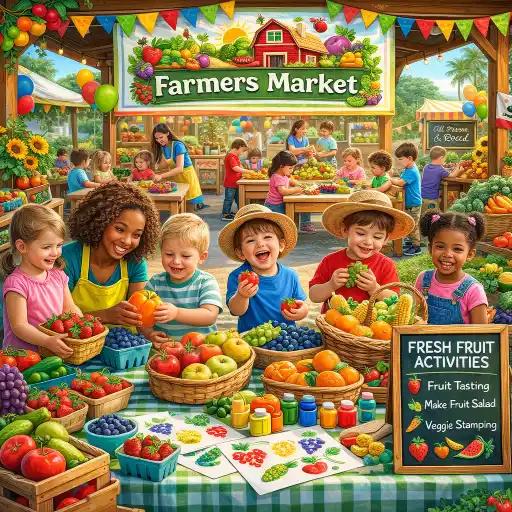 of #fruits to your #preschoolers in #California. You will get simple field trip tips, classroom and outdoor activities, pretend-play ideas, and ways to connect with families. Use the links below for sample forms, lesson ideas, and safety reminders.
Why it matters:
1. Children build healthy habits when they touch, smell, and taste fresh produce. 2. Hands-on fruit activities boost language, math, and science learning. 3. Farmer’s market experiences connect children to local communities and seasonal food. For practical planning help, see ChildCareEd’s California field trip ideas and planning resources like Field Trip Ideas in California and general field trip planning at Fun Field Trip Ideas.
How can we plan a safe farmers' market outing or on-site market day?
Planning is simple when you break it into steps. Try this 6-step plan that fits busy schedules:
- 🔍 Visit and call ahead: Phone the market or farm to ask about group programs, restroom access, bus drop-off, and food rules. If bringing families, share the plan early.
- 📝 Paperwork first: Get signed permission slips, allergy/medication forms, and emergency contacts. Use a printable permission form or your program’s template. Remember: state requirements vary - check your state licensing agency.
- 👥 Assign roles and ratios: Assign staff to small groups. Aim to keep groups small and give each adult a clear job (headcount, first aid, behavior support). Follow your licensing ratios.
- 🚸 Transport & safety: Plan transportation and seat assignments. Make a simple site map and meeting spots. For classroom trips, see safety tips in ChildCareEd’s Field Trip Safety.
- 🎒 Pack essentials: First-aid kit, allergy meds, snacks (if allowed), name tags, sunscreen, extra clothes, and printed attendance list. Do head counts at 5 points: before leaving, boarding, arrival, leaving the site, and return.
- 📚 Prep & follow-up: Read a short book about farms or markets before the trip and plan a follow-up art or counting activity after the visit to make learning stick. Use transition and anxiety-reducing activities to help children who feel nervous about new experiences; see First Day Jitters activities for classroom-ready ideas.
For more California-specific ideas and sample checklists, use ChildCareEd’s California field trip page here. Also consider low-cost local options: a nearby farmers market stall, community garden, or a short neighborhood walk to a produce stand.
What fresh fruit activities work best at the center (tasting, sensory, gardens)?
Try these practical, classroom-ready fruit activities that support development and are easy to run.
- 🍎 Taste-the-Rainbow Tasting (small portions):
- 1. Offer tiny tastes of 4–6 fruits over several days to gently introduce new flavors.
- 2. Use positive language: "You can try it if you want."
- 3. Track likes for a simple class chart.
- 💧 Fruit Sensory Water Play:
- 1. Add chopped, rinsed fruit to shallow colored water or a sensory tray. Supervise closely for allergies and choking. See a sample idea like Sensory Fruit Water Play.
- 2. Let children explore textures, smells, and colors; follow with stamping art using the fruit pieces.
- 🌱 Plant Parts and Garden Mini-Lab:
- 1. Teach which plant parts we eat using pictures and a butcher-paper sorting chart (roots, stems, leaves, fruit, seeds). A ready lesson is available from Plant Parts We Eat.
- 2. Plant herbs or quick-sprouting seeds in small pots so children can observe growth and taste herbs later.
- 🥣 No-Heat Cooking & Snack-Making:
- 1. Make fruit kebabs, parfait cups, or rainbow plates. These build math and language (counting, colors, descriptive words). For nutrition ideas, see ChildCareEd’s Nutrition Month post.
- 🔬 Simple Farm Science:
- 1. Compare which fruit rots first in a labeled bin, or explore seed sprouting. Farm science ideas are on sites like Farm Science Activities.
Always check allergy lists, cut large fruits for safety, and supervise closely. For infant and toddler-friendly adaptations, limit choking hazards and use safe, mashed samples.
How do we set up a farmers' market, dramatic play, or Market Day at the site?
A local market day on site builds social skills, math, and language. Use these steps to set up a simple market in your classroom or yard.
- 🍉 Gather materials: baskets, play fruits/vegetables, paper bags, a child-size cash register or money box, price tags, clipboards, and shopping lists. Real produce can be used if you check family permissions and allergy plans.
- 🧾 Set simple roles: vendor, shopper, cashier, bagger. Rotate roles so every child tries multiple jobs.
- 📋 Add print and math: Label stalls with prices, make a specials board, and have children write short lists or count money. Pretend-play grocery ideas and layouts are shown at resources like Pretend Play Grocery Store and Farmer's Market Day.
- 🎨 Extend with art & STEM: Make fruit stamps, create a farmer poster, or build a small cardboard stall (many bloggers share printable packs like Farmer's Market Activity Book).
- 🤝 Invite families: Ask for donated produce, recipe ideas, or help running a stall. Share photos and a short learning note afterward.
How do these activities support learning, and what common mistakes should we avoid?
Why it matters: Market and fruit activities support health, language, math, science, and social skills. They help children understand where food comes from, practice counting and sorting, and build vocabulary like "ripe," "seed," and "harvest." Research and practical guides (for example, ChildCareEd and farm-theme educators) show that these hands-on experiences are memorable and build real skills.
Key learning goals:
- Language: new words, descriptive talk, asking/answering questions.
- Math: counting, sorting, weights, and money practice.
- Science: plant parts, life cycles, sensory observation.
- Social-emotional: sharing, taking turns, role play, and responsibility.
Common mistakes and how to avoid them:
- ❌ Rushing transitions — Fix: Build extra time for bathrooms and moving groups.
- ❌ Not checking allergies or labels — Fix: Review health forms the day before and keep allergen-free zones.
- ❌ Too-large portions for tasting — Fix: Offer tiny tastes and model trying, not forcing.
- ❌ Skipping follow-up — Fix: Add one short post-activity like drawing or graphing favorites to lock learning in.
Assessment ideas: Take quick anecdotal notes on who tries new foods, who counts to 10 unaided, and who uses new vocabulary. Use those notes for lesson planning and family feedback.
Conclusion
Bringing a #farmers #market and fresh #fruits activities to your #preschoolers in #California is practical, low-cost, and powerful for learning. Start small: a market corner for dramatic play, one fruit tasting a week, or a short walk to a local stall. Use the ChildCareEd guides for field trip planning and nutrition ideas (California Field Trips, Nutrition Month), and adapt ideas from farm-theme bloggers and printable packs listed above. See ChildCareEd's June is National Fresh Fruit and Vegetables Month guide for ready-made activities and tips to encourage healthy eating and promote nutrition education in your program.
Quick FAQ
- Q: How do we handle allergies? A: Review medical forms, avoid shared utensils, and have a staff member manage meds.
- Q: How many adults per group? A: Follow licensing ratios and add extra adults for preschool trips. State requirements vary - check your state licensing agency.
- Q: Can we use real produce for play? A: Yes, with family permission and allergy checks; label everything and supervise closely.
- Q: What if transport is hard? A: Bring the market to your site—set up stalls, invite a local farmer, or use pretend-play packs.
Want sample checklists and printable activity packs? Start with ChildCareEd's field trip and nutrition posts and the farm-theme printable sites linked above to save prep time.
- CDA Certification en Español: Recursos y Consejos para Educadores Bilingües
- Que es Título 22 en California?
- Actividades de Motricidad Gruesa que Desarrollan el Equilibrio, la Coordinación y la Fuerza
- 10 Ejemplos de Cómo la Cultura Influye en el Desarrollo Infantil
- ¿Cómo solicito la licencia para una guardería en California?
- Regulaciones de Licenciamiento de Cuidado Infantil en California para Centros y Hogares de Cuidado Infantil Familiar
- Proporciones de Cuidado Infantil y Tamaños de Grupo por Edad en Maryland (Guía Rápida para Centros y Hogares)
- Proporciones de Cuidado Infantil y Tamaños de Grupo por Edad en Nueva Jersey (Guía Rápida para Centros y Hogares)
- Proporciones de Cuidado Infantil y Tamaños de Grupo por Edad en Virginia (Guía Rápida para Centros y Hogares)
- Lista para Guardería en Casa en California: Cómo Iniciar una Guardería en el Hogar
- Cómo Trabajar en el Cuidado Infantil en California: Requisitos y Pasos
- Cómo Ser Maestra de Preescolar en California
- Cómo Ser Maestra de Preescolar en Virginia
- How can we bring a farmers market and fresh fruit activities to preschoolers in California?
- How can Georgia farm field trips teach young children about animals and food?
- Calabazas, hojas y manzanas: actividades de otoño para preescolares
- Celebrando la amistad en el cuidado infantil durante el Día de los Mejores Amigos
- Canciones, juegos y preguntas de círculo para niños
- Cómo simplificar la capacitación para sus empleados de daycare
- Proporciones para guarderías en casa bajo el Título 22: Cómo la mezcla de edades cambia su capacidad en California
