Your #nutrition work helps prevent #obesity in #children when you partner with #families and encourage #physicalactivity. This guide is for New York childcare directors and providers. It gives clear, practical steps you can use right away. We link to helpful ChildCareEd articles and public health guidance so 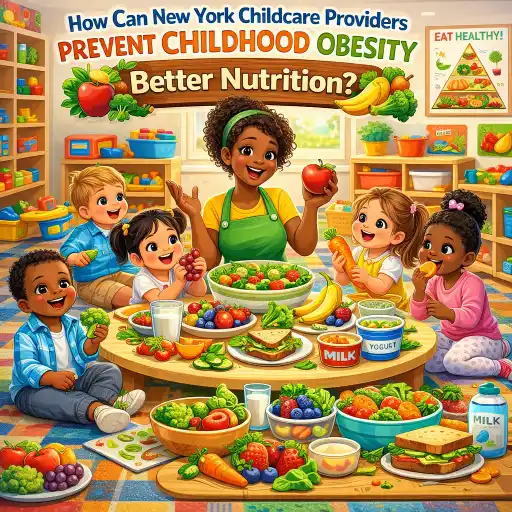 Staff can learn more. For a concise program-level action plan and tools to promote healthy habits in early care, see the ChildCareEd guide Let’s Move Child Care.
Why this matters: Healthy eating and activity in early care lowers the chance of chronic health problems later. Children who eat well learn better, are more active, and stay healthier. Programs are powerful places to shape habits that last a lifetime (see ChildCareEd Childhood Nutrition and the CDC family actions).
1) What simple nutrition steps can my program use today?
- 🍎 Plan a weekly menu that includes fruits or vegetables at every meal. Use the USDA MyPlate ideas and ChildCareEd tips like How to Promote Healthy Eating Habits.
- 🥛 Serve water and plain milk; limit sugary drinks and juices. The CDC and ChildCareEd advise replacing sweet drinks with water or milk (CDC tips).
- 🥖 Choose whole grains and lean proteins (beans, eggs, chicken). Rotate foods so kids meet a variety of tastes and nutrients (see Role of Nutrition).
- 🍽️ Use family-style serving when safe: it encourages self-feeding and portion sense. ChildCareEd has practical guides for family-style meals (How Can Child Care Programs Teach Great Nutrition).
- 📝 Post menus and label allergens. Always update allergy plans before sharing food and train staff on food safety.
Tip: Use ChildCareEd menu templates and trainings like Childhood Obesity course  Buy Now $16.00 to build staff knowledge. Remember: state requirements vary - check your state licensing agency.
2) How can we prevent obesity through activity, routines, and screen rules?
- 🏃♀️ Schedule at least two outdoor active play times each day, weather permitting. Follow CDC High-Impact Obesity Prevention Standards for physical activity (HIOPS and HIOPS physical activity).
- 🧑🏫 Train staff on age-appropriate movement games and encourage caregivers to join play. Nemours and CDC provide free tools and training ideas (Nemours Early Care & Education).
- 📺 Limit screen time and use active alternatives. Include simple movement breaks in routines and avoid using screens as rewards.
- 🛏️ Support healthy sleep and quiet rest—sleep affects appetite and weight. Share sleep tips with families from CDC guidance.
- 🔁 Do not withhold active play as punishment. Keep active time consistent across behavior plans.
Why this helps: Regular active play supports healthy weight and helps children sleep and learn better. Embedding these practices in daily routines makes prevention routine instead of extra work.
3) How do we partner with families and respect picky eaters, allergies, and cultural foods?
- 📣 Send a one-line weekly note: what you served, what kids liked, and one small suggestion to try at home. ChildCareEd suggests short invites and simple take-home activities (Engage Families).
- 👪 Invite families to share recipes and cultural foods. Add those dishes to menus when possible to honor diversity and build trust.
- 🙂 For picky eaters: offer small portions, repeat exposure, and low-pressure tasting. Let children help prepare no-heat snacks to reduce fear of new foods (tips for picky eaters).
- ⚠️ For allergies: always update forms, label foods, avoid cross-contact, and follow individual feeding plans. Use ChildCareEd trainings on allergies and safe feeding.
- 🧾 Share community resources like the New York Family Guide to early services so families can find local help (Family Guide to NYS Buy Now $0.00).
Remember to ask families what works at home and honor their schedules. Small, consistent partnership steps help kids use new foods both at care and at home.
4) What common mistakes should we avoid and how do we measure progress?
Avoid these pitfalls and track small wins to keep momentum.
- ❌ Mistake: Sending long messages to families. Fix: send one short idea each week.
- ❌ Mistake: Forcing children to eat. Fix: offer choices and model eating behaviors; encourage, don’t bribe or shame.
- ❌ Mistake: Ignoring cultural foods or allergies. Fix: include family favorites and strict allergy checks before food events.
- ✅ Measure 3 simple indicators weekly or monthly:
- Number of families who received the weekly note.
- Number of children who tried a new fruit/vegetable.
- Staff completion of one short nutrition/obesity prevention training.
- 📈 Celebrate small wins with short photo stories (with permission) and staff shout-outs. Use Nemours and CDC tools to support program-wide tracking (CDC ECE resources).
Training and policy: Make sure staff meet New York training rules and use ChildCareEd courses to meet topics like nutrition and safety (NY training requirements). And again: state requirements vary - check your state licensing agency.
FAQ (short):
- Q: How often train staff? A: At hire and annually on nutrition and allergy safety; track completion.
- Q: What if budget is tight? A: Use frozen veggies, beans, and whole grains — affordable and nutritious.
- Q: Where to start? A: Pick one menu change and one movement routine for 4 weeks, then add one more.
Conclusion
Preventing childhood obesity is practical and doable. Start small: 1) plan healthy menus, 2) add daily active play, 3) partner with families, 4) avoid common mistakes, and 5) track 1–3 simple measures. Use ChildCareEd resources like How to Promote Healthy Eating Habits, training courses, and CDC/Nemours guidance to support staff. Your daily choices in the program make a lifelong difference for children.
Nutrition and activity work together. Use clear daily routines so children get both healthy foods and movement.Family partnership is key. Use quick communications and invite families to join without pressure.Start with a few easy routines you can repeat every week. Use numbered steps so staff follow the same plan.
- Nutrition Essentials for Child Care Providers
- Birth to Five CDA Credential with Portfolio Review
- Pediatric RSV First Aid & CPR/AED
- CDA Bridge Bundle: Family Child Care without Portfolio Review
- CDA Bridge Bundle: Infant/Toddler without Portfolio Review
- CDA Bridge Bundle: Preschool without Portfolio Review
- Texas Director Credential
- Building a Healthier Tomorrow: Preventing Childhood Obesity
- Wellness in Action: Teaching Healthy Habits to Children
- Capacitaciones requeridas en New Hampshire
- Tummy Time Travelers: How to Send Your Kid’s Gut on a Yummy Health Journey
- CDA Certification en Español: Recursos y Consejos para Educadores Bilingües
- 💛🧩 ¿Cómo puedo hacer que mi enseñanza sea inclusiva para los niños con autismo?
- 👶 ¿Cuáles son las proporciones y grupos requeridos en Dakota del Norte? 🏫
- Cómo Abrir Una Quardería En Casa Sin Dinero?
- Capacitación en Salud y Seguridad Preventiva en Línea para Proveedores de Cuidado Infantil
- Proporciones de Cuidado Infantil y Tamaños de Grupo por Edad en Maryland (Guía Rápida para Centros y Hogares)
- Proporciones de Cuidado Infantil y Tamaños de Grupo por Edad en Nueva Jersey (Guía Rápida para Centros y Hogares)
- Proporciones de Cuidado Infantil y Tamaños de Grupo por Edad en Virginia (Guía Rápida para Centros y Hogares)
- Horas de Capacitación Anual para Proveedores de Cuidado Infantil en Maryland
- Lista para Abrir una Guardería en Casa en Dakota del Norte: Cómo Empezar
- Cómo Trabajar en el Cuidado Infantil en Carolina del Norte: Requisitos y Pasos
- Cómo Trabajar en el Cuidado Infantil en California: Requisitos y Pasos
- Cómo Trabajar en el Cuidado Infantil en Wisconsin: Requisitos y Pasos
- What Are Nevada Wellness Training Requirements for Child Care Providers?
- How Can New York Childcare Providers Prevent Childhood Obesity with Better Nutrition?
- Capacitación CDA gratuita en Illinois
- Celebrando la amistad en el cuidado infantil durante el Día de los Mejores Amigos
- Cómo simplificar la capacitación para sus empleados de daycare
