Want practical ways to help young children notice and express appreciation without it feeling forced? Teaching #gratitude in early care supports emotional growth, stronger relationships, and calmer classrooms — and there are concrete strategies you can start using this week. For a focused, practice-oriented next step, consider Brighter Futures: Social Emotional Development  Buy Now $16.00 to deepen your team’s understanding of emotional stages and classroom prompts, and explore family partnership tools in Families, Communities, and Classrooms: Working Together for Children Buy Now $55.00. These courses can give you ready-to-use language and activities that count toward professional development while helping you create authentic moments of appreciation.
What does gratitude look like at different ages?
Understanding developmental differences is the first step to teaching gratitude in ways that feel real to each child. Infants respond to calm, grateful language and consistent caregiving: simple phrasing such as “thank you” when handing a toy, steady eye contact, and routines that show appreciation for cooperation. Toddlers (1–3) are learning cause and effect — they can begin to label feelings (“You smiled — that felt nice!”) and practice short rituals, like saying “thank you” after a turn. Preschoolers (3–5) can engage in concrete reflection: describing who helped them, drawing or dictating a gratitude drawing, or contributing to a class kindness chain. School‑age children deepen perspective-taking and can plan small service acts or thank‑you projects.
Why it matters: age‑appropriate strategies support social-emotional milestones; they scaffold empathy rather than preaching a moral rule. These approaches align with developmental guidance from resources such as the CDC’s milestones and ChildCareEd’s classroom ideas like the Thankfulness Tree, which adapts easily by age. Remember: state requirements vary - check your state licensing agency.
How do you teach gratitude authentically rather than as a checklist?
Authenticity comes from linking gratitude to real relationships and the child’s experience. Strategies include modeling specific language (not just “Good job”), using reflective prompts, and building routines that invite noticing. For example:
- Use specific praise: “You waited and gave Sam a turn — that helped him feel happy.”
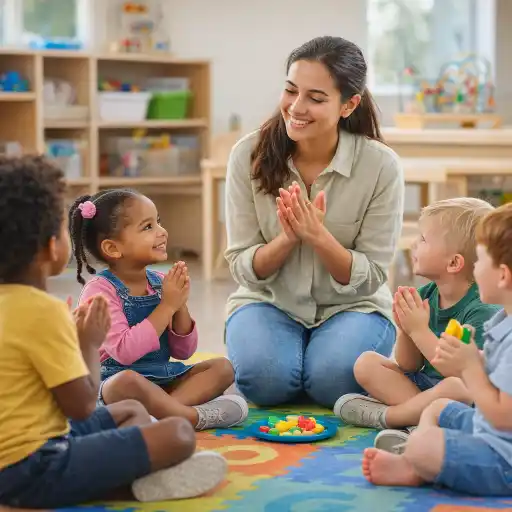
- Create micro‑rituals: a daily two‑minute gratitude circle or a ‘thank you’ song after snack.
- Embed reflection in routines: ask “Who helped you today?” during pick‑up conversations.
- 📝 Provide varied means of expression: drawing, role‑play, puppet scripts, or simple gratitude journaling for older preschoolers.
Pedagogical note: authentic gratitude is social and relational. Pair these classroom moves with staff training — courses like Supporting Social Learning: Creating Classrooms that Care Buy Now $24.00 and Opportunity for Growth: Emotional Development Buy Now $16.00 offer classroom language, routines, and coaching ideas to make gratitude practices sustainable. For a broader catalog of staff development focused on safety, teaching methods, and culturally responsive caregiving, see our Childcare training page.
What classroom activities reliably build gratitude skills?
Choose activities that are short, concrete, and repeatable. Examples that work across ages:
- Gratitude Jar or Wall: children add a photo, drawing, or note when they notice someone’s help.
- Thankfulness Tree: cut‑out leaves with one thing each child is thankful for (adapt from ChildCareEd’s activity guide).
- Service Projects: pack simple care kits, make cards for a nursing home, or collect gently used books — keep projects child‑friendly and short.
- Role‑play Scripts: practice saying “I appreciate you” or “Thank you for helping” with puppets or partners.
- Gratitude through Art: open-ended art prompts about what makes children feel cared for — related training: Open Heart, Open Art Buy Now $16.00.
Tip: build a predictable cadence (daily or weekly) so children get repeated practice. Use varied modalities — verbal, tactile, visual — so all learners can participate.
How can programs partner with families and honor cultural differences?
Gratitude is expressed differently across cultures and families. Start with respectful partnership: ask families how they talk about thankfulness and invite them to share traditions or preferred language. Communicate the classroom plan and offer opt‑in projects (some families prefer not to link activities to specific holidays). Practical steps:
- Send a short family note describing activities and an option to contribute a tradition or request an alternative for their child.
- Share classroom artifacts (photos, art) so families see how gratitude is taught in everyday moments.
- Offer family challenges: simple, home‑friendly prompts like “one thing we notice that makes our family feel thankful.”
- Provide staff with culturally responsive language — training such as Families, Communities, and Classrooms Buy Now $55.00 supports this work.
Remember inclusion: not all families celebrate the same holidays; keep activities value‑based (kindness, sharing) rather than religious or tied to a single tradition. state requirements vary - check your state licensing agency as you plan family outreach.
How do you measure progress, avoid pitfalls, and sustain the practice?
Measuring social growth can be simple and practical. Track small indicators such as frequency of named grateful statements, peer-helping incidents, and children’s use of emotion words. Use a weekly checklist or a quick tally during transitions. Avoid common mistakes:
- 🚫 Mistake: Praising generically (“Good job!”) without naming the prosocial act. Fix: name the behavior — “You gave your paintbrush — that was thoughtful.”
- 🚫 Mistake: Making gratitude a one-off lesson. Fix: embed prompts into routines and transitions so children practice regularly.
- 🚫 Mistake: Forcing gratitude through rewards or bribes. Fix: emphasize noticing others and reflecting on feelings—not material reward.
FAQs (quick):
- Q: How soon will I see change? A: Small shifts within weeks; culture change can take months with consistent routines.
- Q: What if a child resists saying “thank you”? A: Respect autonomy: offer alternatives like a thumbs‑up, or a card to draw. Model and narrate the behavior rather than forcing speech.
- Q: Can gratitude practice support behavior management? A: Yes — noticing prosocial acts reduces conflict and increases cooperative behavior over time.
- Q: Which staff training is most efficient? A: Start with a social‑emotional foundation such as Brighter Futures Buy Now $16.00 and add coaching modules like Supporting Social Learning Buy Now $24.00.
Conclusion
Teaching gratitude well means making it concrete, relational, and developmentally appropriate. By modeling specific language, embedding short rituals into daily routines, offering multiple ways for children to express thanks, and partnering with families in culturally responsive ways, programs can grow genuine #gratitude and #empathy across the classroom. Practical next steps: pick one routine to embed a gratitude prompt this week, train staff on consistent language, and consider courses such as Brighter Futures Buy Now $16.00, Families, Communities, and Classrooms Buy Now $55.00, and Open Heart, Open Art Buy Now $16.00 to sustain the practice. These steps will help your #children and #families create a classroom culture where appreciation is a natural part of daily life.
- CDA Home Visitor Subject Area 3 Part 3 Birth to 5
- Teacher-Child Interactions for Stronger CLASS® Outcomes
- Authentic Montessori in Action
- 45 Hour Preschool Methods and Materials
- Moving About the Classroom: Effective Transitions for Everyday
- Children at the Wheel: Emergent Curriculum
- CDA Bridge Bundle: Family Child Care without Portfolio Review
- CDA Bridge Bundle: Infant/Toddler without Portfolio Review
- CDA Bridge Bundle: Preschool without Portfolio Review
- Gift of Gratitude: Fostering Emotional Intelligence in Children through Acts of Kindness
- CDA Certification en Español: Recursos y Consejos para Educadores Bilingües
- Celebrating Teachers
- Cómo Trabajar en el Cuidado Infantil en Carolina del Norte: Requisitos y Pasos
- Cómo Ser Maestra de Preescolar en Illinois
- How can we teach community and country to young children in simple, respectful ways?
- How Can Early Childhood Educators Teach Gratitude in Authentic, Age‑Appropriate Ways?
- What Certification Do You Need to Teach Pre-K? Public School vs. Child Care Requirements
- How Do You Choose 10 Books for Your CDA Bibliography? Examples by Topic
- How Can You Tell If an Activity Is Developmentally Appropriate?
- What Is the Difference Between Early Childhood Education and Child Development?
- Made by Me! Labor Day Crafts for Preschoolers That Celebrate Hard Work
- Mawlid Around the World: How Kids Can Explore Different Traditions and Celebrations
- From Mealtime to Manners: How Cultural Influences Show Up in Everyday Child Care
- Labor Day Crafts for School-Age Kids That Go Beyond Coloring Pages
- What Are Age-Appropriate Ways to Teach Gratitude Before Thanksgiving?
- How Can Handmade Gifts Help Children Express Appreciation?
- How Can Writing and Art Activities Help Children Name What They Appreciate?
- How Can Children Recognize and Appreciate the Supportive Adults in Their Lives?
- How Can You Plan for Two Toddlers the Same Age but with Different Skills?
